

I’m thinking a bit more about AI… and I’m no Luddite, by the way. I’ve been an early adaptor since Roydon County Primary School got its first computer sometime in the 80s. Also, to be clear, I’m aware that AI, as a tool in the right hands, has the potential for good. In medical diagnosis, for example.
But…
Generative AI is different from what’s gone before. There’s the extractivist theft from people who make a living from their creativity. And the enormous amount of carbon it emits. And, of course, the way it can be used to create fake news, manipulate voters, creep under the radar of broadcast regulators and fundamentally re-write our relationship with the truth. Not to mention how it exponentially increases the advantages of those privileged with access to tech. And the fact that it makes us more productive (in capitalist terms) at a time when we really need to learn how to celebrate and sustain what we already have. Oh, and the fact that, at some point, it’ll pass the Turing test, and we’ll have a massive ethical and legal dilemma on our hands.
That, however, is not all.
This AI-generated dystopia sits within a much wider context of alienation and atomisation – from each other, from society and from nature – that has been gathering pace for centuries but has been accelerated by high-tech neoliberalism, from smartphones and Amazon to fake lawns, plastic-wrapped bananas and robot pets.
Of course, some of these mod cons offer huge, even life-saving benefits to individuals with specific needs. But their cumulative effect on society leads to a kind of Nature disconnection. And that’s what I want to talk about because I think AI has the potential to accelerate this to a frightening degree.
I don’t need to remind you that we’re on the verge of global calamity due to overconsumption, overproduction and the othering of Nature. Nor do I need to say that this calamity has been made possible by a monumental, collective act of tech-enabled self-deception. This, I suggest, allows us to exist in a fantasy, specifically a fantasy of disembodiment, in which we are profoundly disassociated from the realities of the many nestled ecosystems that we are part of and that we also contain. And I’m writing this because I think generative AI specifically accelerates our journey into this delusion.
I’m not a psychologist or an ecologist. I am willing – keen, in fact – to be wrong. And this blog post is very much an act of thinking aloud, which I hope will start a conversation. But here’s what worries me:
Generative AI offers us a simulacrum of creative achievement when we really need to reconnect with our authentic creativity. It’s easy and immersive, with a stranglehold hold on our attention that makes us forget the self-knowingness, the storytelling-ness, of our make-believe when really we need to take control of our stories and how we tell them. It asks us to reshape and airbrush our digital avatars until we feel our real bodies are sites of shame when we really need to reconnect with our physical needs, limits and abilities. Ultimately, it forces us deeper into a digital metaverse when we really need to reconnect with the physicality and materiality of our environment, our embodied selves, and the ecosystems we exist in.
I’m all for continued human evolution, but please make it less Neuromancer and more Children of Compost.
There are always exceptions, of course – artists who can use generative AI to challenge us in exciting and genuinely creative ways, although that doesn’t absolve the theft, the emissions and the rest. I’ve dabbled in generative AI a bit myself, so I’m not making any claims of innocence. It’s too powerful, seductive, intriguing and time-saving not to dip one’s toes in. In fact, the images above and in the slideshow below were made by putting phrases from this blog post into Stable Diffusion.
So where does that leave us?
Of course, this tech is all created as a lure to get us to part with our money and/or our data. And that’s pretty scary. But I think the implications of Nature disconnection are scarier.
Our overall direction of travel in this new world, with AI mediating so many of our connections to external reality, looks more and more like an accelerating slide towards a Matrix-like disembodied dystopia that swallows all aspects of our lives, distracting us with hyper-Debordian spectacle until there’s nothing of us or the rest of the world left to extract.
It’s a cliché to suggest that life is all a simulation – that we’re all figments of someone else’s dream or the creations of a vast alien experiment. But what if it’s the other way around, and we’re the authors? What if we’re choosing to take our solid, tangible, living reality – the one with dirt under its fingernails that can feel the sun on its skin, the one we need to survive, thrive and find joy – and let it atrophy as we become consumed and commoditised by an illusion?
Unless we decide that’s not what we want and stop playing along.
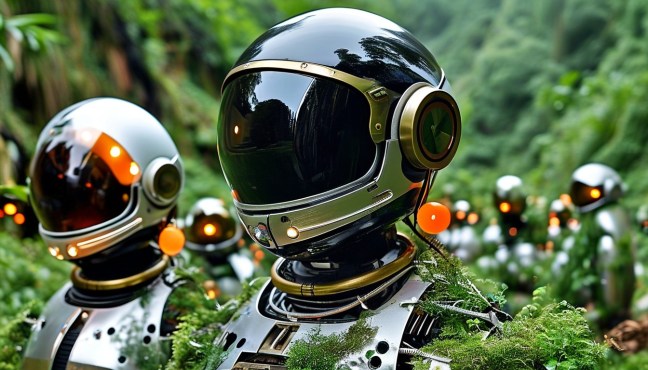
Prompt: a simulacrum of creative achievement, disconnect from our authentic creativity, reshaping and airbrushing our digital avatars until we lose sense of who we really are, destruction of the natural world, but make it less ‘Neuromancer’ and more ‘Children of Compost’ (style: realistic) 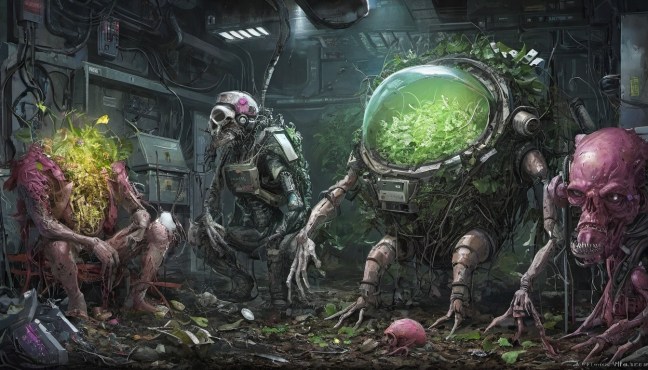
Prompt: show me posthuman evolution, but please make it less Neuromancer and more Children of Compost (style: none) 
Prompt: a spectacular Matrix-like dystopian scene with a digital machine extracting people, animals and plants from a ruined city (style: none) 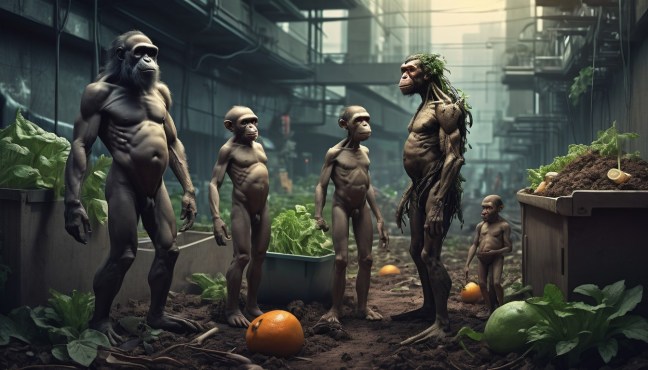
Prompt: human evolution, but please make it less cyberpunk and more Children of Compost (style: none) 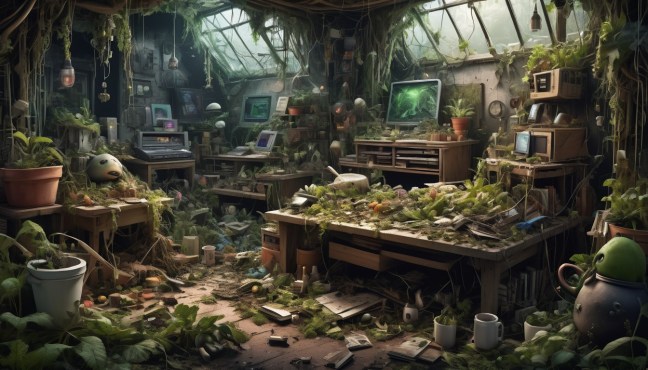
Prompt: a simulacrum of creative achievement, disconnect from our authentic creativity, reshaping and airbrushing our digital avatars until we lose sense of who we really are, destruction of the natural world, but make it less ‘Neuromancer’ and more ‘Children of Compost’ (style: none) 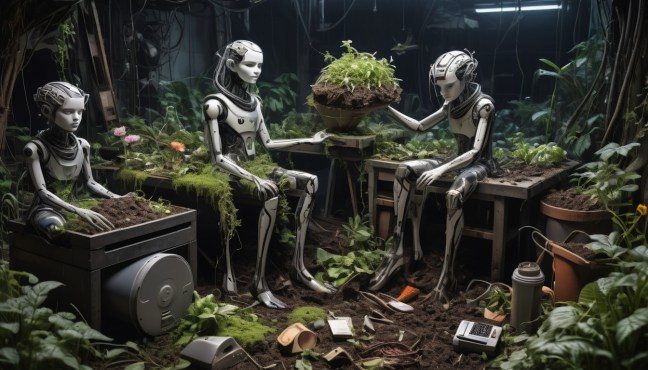
Prompt: a simulacrum of creative achievement, disconnect from our authentic creativity, reshaping and airbrushing our digital avatars until we lose sense of who we really are, destruction of the natural world, but make it less ‘Neuromancer’ and more ‘Children of Compost’ (style: none) 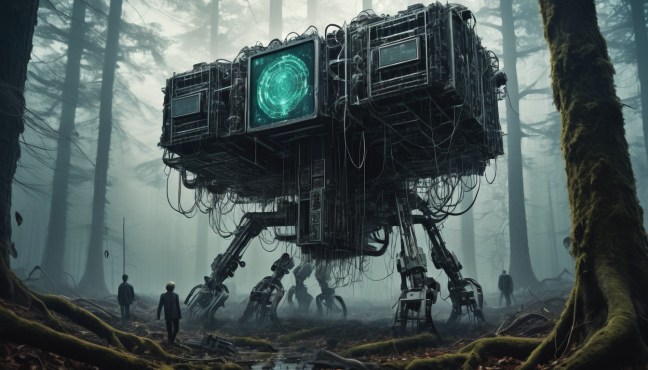
Prompt: a spectacular dystopian scene with a digital Matrix-like machine extracting life from a dead, haunted forest (style: none) 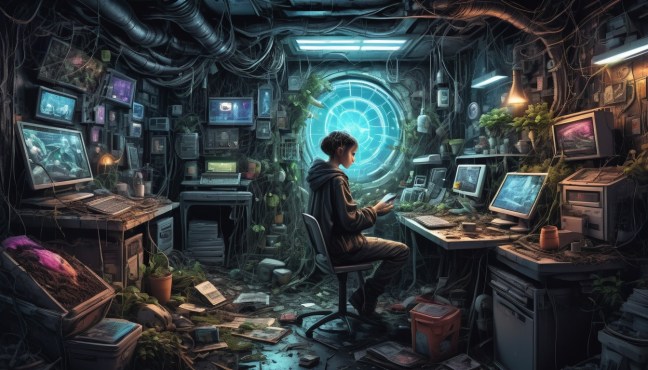
Prompt: a simulacrum of creative achievement, disconnect from our authentic creativity, reshaping and airbrushing our digital avatars until we lose sense of who we really are, but make it less ‘Neuromancer’ and more ‘Children of Compost’ (style: none) 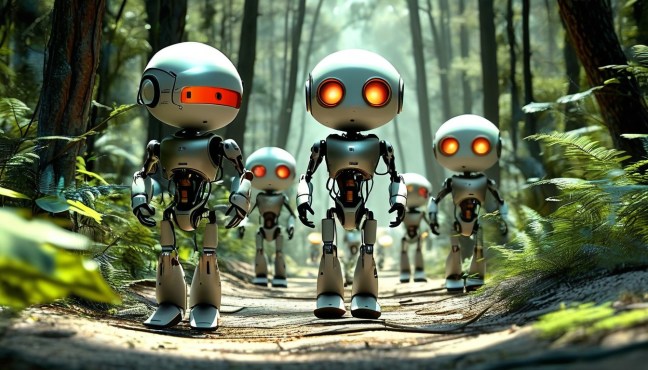
Prompt: show me posthuman evolution, but please make it less Matrix and more Children of Compost (style: realistic) 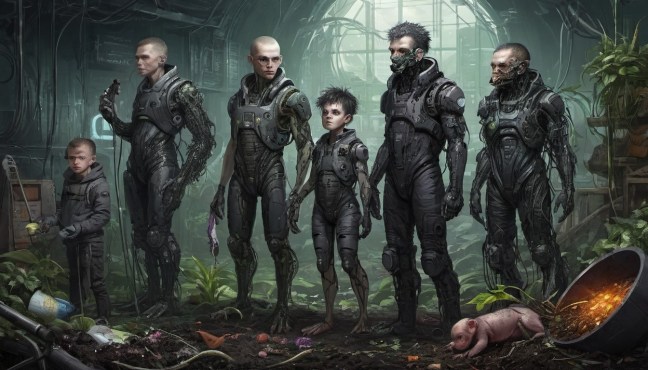
Prompt: human evolution, but please make it less Neuromancer and more Children of Compost (style: none) 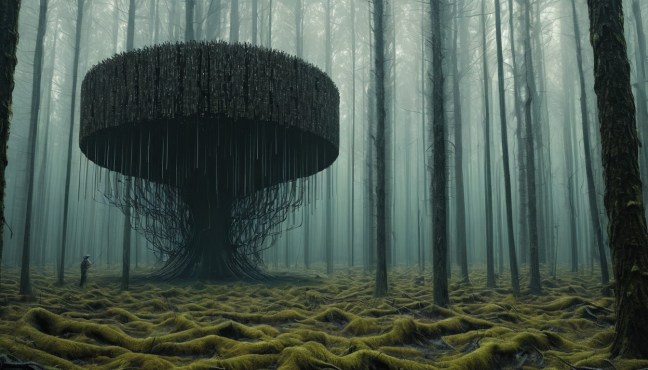
Prompt: a spectacular Matrix-like dystopia extracting life from a dead forest (style: none) 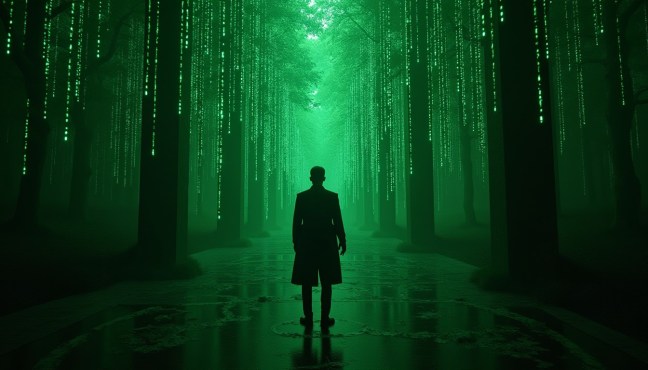
Prompt: a Matrix like dystopia of Debordian spectacle extracting life from a world with nothing left (style: default) 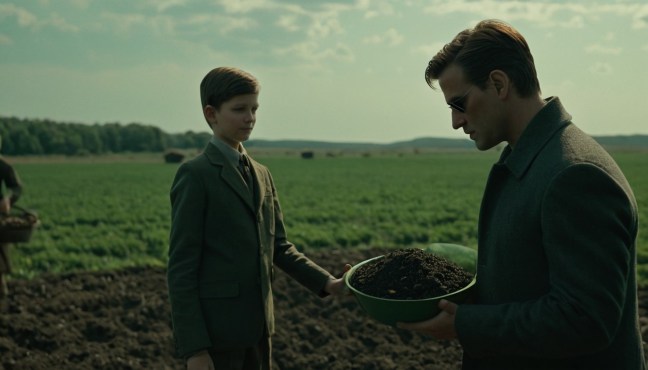
Prompt: show me posthuman evolution, but please make it less Matrix and more Children of Compost (style: cinematic)
This is the first of two blogposts on the dangers of generative AI from an ecological perspective: the second is here.
 Paul Burgess
One thought on “Generative AI and Nature Disconnection – some thoughts”