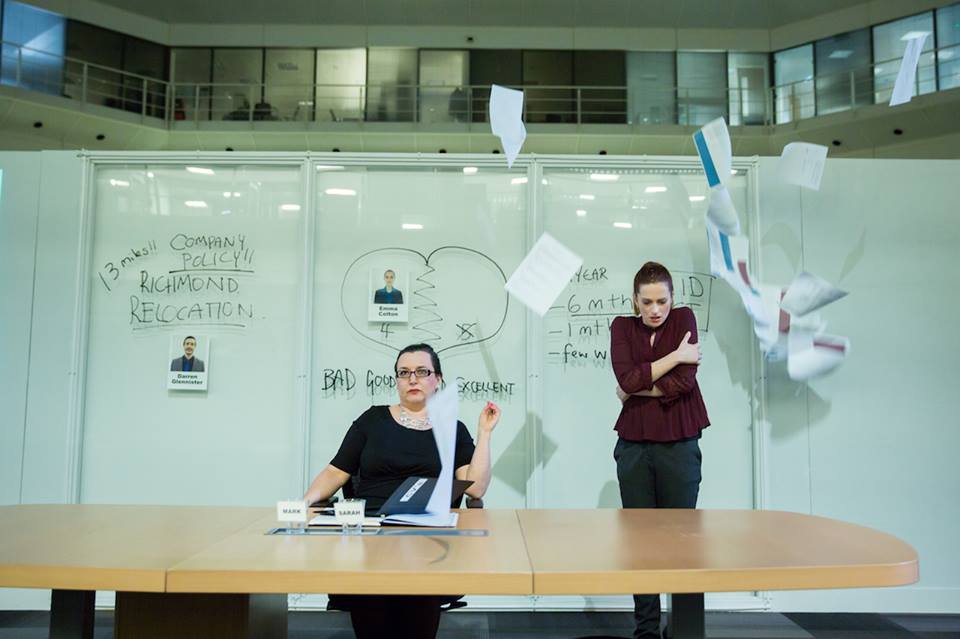
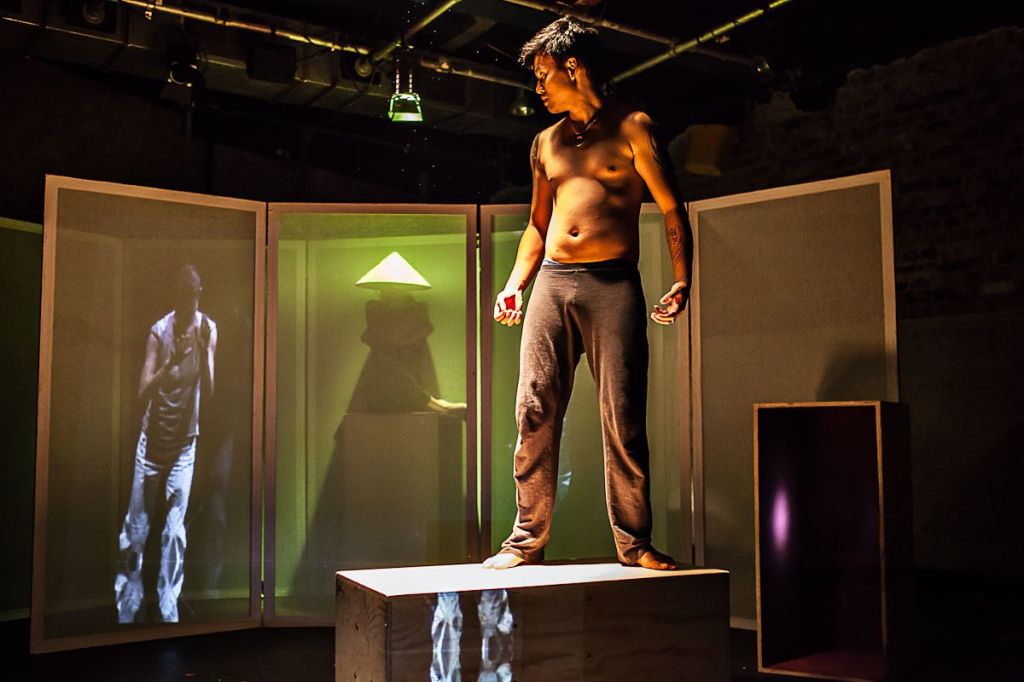
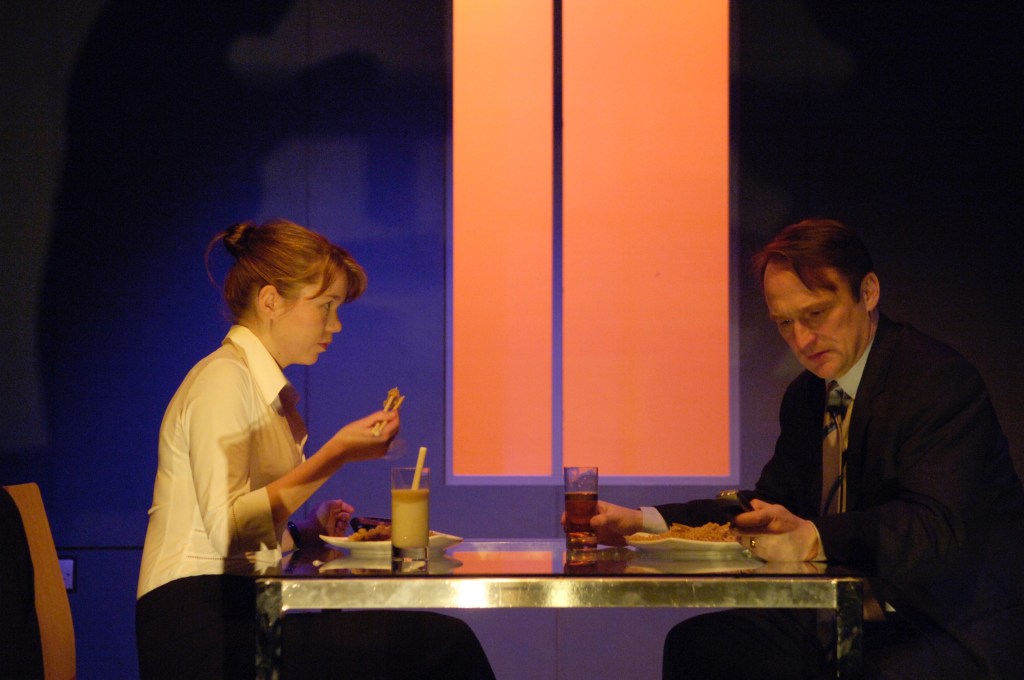
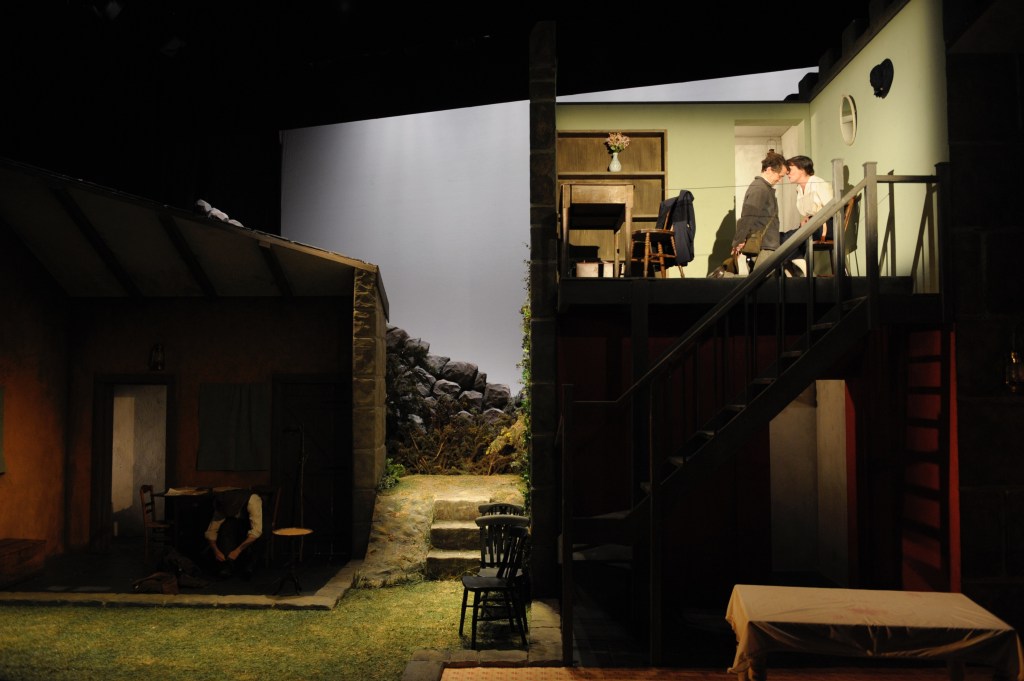
Welcome!

Here’s a quick selection of my work: use the menu to explore further or scroll down this page for my articles, posts, updates and other writings.
In Defence of the Quantitative: A Reflection on the Recent Eco-Creativity Symposium at the Royal Central School of Speech and Drama

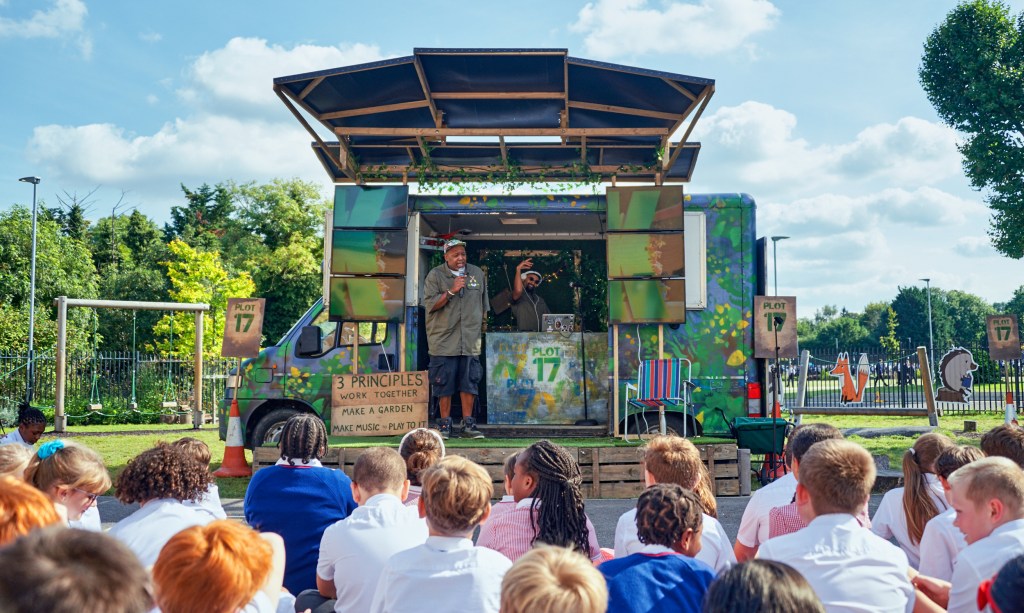
I was immensely privileged to be invited to Exploring Eco-Creativity Symposium: Rethinking Performing Arts Practices for a Climate-Changed Future. Hosted by the Centre for Performance, Technology, and Equity (PTEQ) at the Royal Central School of Speech and Drama (RCSSD) and Griffith University’s Performance + Ecology Research Lab (P+ERL), it took place in a seminar room in PTEQ’s unfinished new building on the RCSSD campus. It brought together academics and practitioners, including influential figures in ecoscenography and eco/climate dramaturgy within the Global North’s Anglophone theatre world, to hear papers and think about where we are.

I have been to many theatre industry events, and I have had visiting roles at several universities, delivering talks and workshops, but this was my first experience of the symposia and conference circuit, albeit a small and friendly one. I found it completely fascinating, not only in terms of papers and keynotes, all of which were highly engaging and some of which were profound, but also in understanding a bit more about how this area of academia works. The world of the Centre for Alternative Technology (CAT), where I recently studied for an MSc, may require full academic rigour, but is also a world of hands-on experiments, muddy boots, country pubs and late-night folk sessions. It feels a world away. Although my head is probably closer to RCSSD, it is CAT where my eco-heart feels more at home.

The seminar was also a fantastic opportunity to catch up with people in person, many of whom I rarely meet outside of digital space, and some of whom I had never met before. That said, the imposter syndrome that afflicts me in all areas of life apart from theatre design seemed especially magnified by the limbo in which I find myself currently, waiting for my MSc results while surrounded by so many holders of, and candidates for, PhDs. For now, a BA (hons) in English Language and Literature from the 1990s is my grandest academic accolade.

The symposium’s impressive array of academic achievement was also reflected in some of the performances discussed. And yet, while there were some inspiring examples of taking eco-creativity to the wider public, the seminar served as a reminder that much of this work in challenging norms and exploring new concepts is made by and for an intellectual elite. There’s nothing wrong with that per se – we need those safe spaces to explore and grow – but we should not overestimate their impacts, their potential to be scaled up, or their ability to bring about systemic change.

One thing, however, struck me most of all. A few people were talking about what can be summarised as moving beyond quantitative approaches. Broadly, the reasons for this are that we are struggling to get beyond basic improvements in our environmental sustainability and spending a lot of time and energy for fairly small returns, while our real skillset resides in making theatre, which is perhaps a more effective tool for addressing the emergency, and therefore a better use of our time. Each time, these sorts of arguments were met with nods and sounds of agreement and relief.

I do not know whether this response indicates a desire to sidestep quantitative assessment entirely or an acknowledgement that a quantitative approach is not enough on its own. It was probably a mixture, but I do not think we can afford to be complacent. Therefore, without knowing what people really think, I want to indulge in a preemptive pushback on the former, i.e. sidestepping the quantitative. I do not think it is ethically or aesthetically possible to make theatre without engaging with quantitative approaches. There are a few reasons for this, and I will take them one by one.

Continue reading In Defence of the Quantitative: A Reflection on the Recent Eco-Creativity Symposium at the Royal Central School of Speech and Drama

A Letter to Rushanara Ali

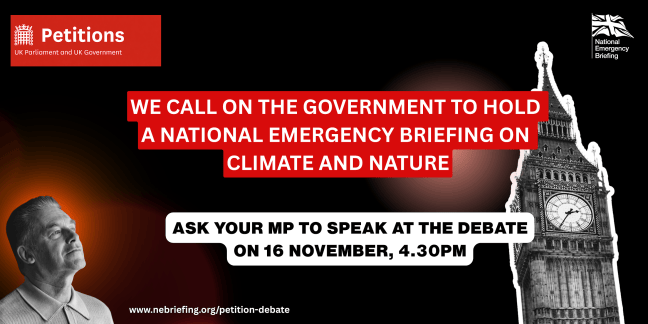
MPs are debating the call for a National Emergency Briefing. On Monday 16 November at 4.30pm, MPs will debate Chris Packham’s petition calling for a live, government-led briefing to the nation on the climate and nature crisis. Over 130,000 people have signed the parliamentary petition, calling for the public to be given clear, trusted information about the risks we face and what we can do about them.

Now we need MPs to turn up and hear the case. Please contact your MP and ask them to attend the debate, whatever party they represent. This isn’t about party politics. It’s about ensuring everyone has the information they need to understand the challenges ahead.

You can contact your MP here: https://www.nebriefing.org/petition-debate. I’ve contacted mine, and my letter is below. Please also share to help spread the word.


Dear Rushanara Ali,

As you know, we are facing a collapse of food supplies, security and a livable climate within the lifetime of many of your constituents. This is a national, indeed global, emergency, and the UK must show leadership, for the sake of its own survival as well as that of the planet. I’m therefore writing as your constituent regarding the petition debate on Monday 16 November at 4:30pm about whether the government should hold a live emergency briefing to the nation on the climate and nature crisis.

The threat we face is far more grave than COVID was, yet is taken with a fraction of the seriousness by the political class. Perhaps this is because its biggest victims are younger generations and people in the Global South. Voters, on the other hand, are taking it increasingly seriously. For a start, the petition behind this debate has over 130,000 signatories.

Continue reading A Letter to Rushanara Ali

A short work and studies update:

I finished my dissertation on sustainability assessment for scenery last week, and the experience was way more of an epic than it should have been. This is partly because personal circumstances led to a 5-month extension, conflicting demands and long, disruptive pauses. It was also because I got carried away and, er, sort of did the research for two dissertations – one on organisational barriers and one on Net Zero and circularity indicators. I’m not quite sure what kind of chimaera the result is, but all being well, I’ll end up with an MSc. Plus becoming part of the Centre for Alternative Technology family was amazing. What an incredible place!

So… ahem… I now have more availability to design shows. I turned a few projects down during my 3 years as a part-time student, but I do have to earn a living. I have teaching and graphic design side hustles, but scenography is what I love and what I do best. So as long as you’re committed to environmental sustainability, can pay at least the relevant Equity-negotiated rates, and have a production manager and a design budget, give me a shout! I’m ready for something ambitious, please.

I’m also keeping an eye out for practical research opportunities that connect to my MSc research and/or the work I’m doing with Ecostage. (Have you seen the Ecostage Framework yet?) And of course, if you want to have a chat about environmental sustainability, ecological thinking and the performing arts, I’m right here. But you might want to schedule a friend to phone you with a fake emergency in case I go on a bit.

Drawings for Barriers

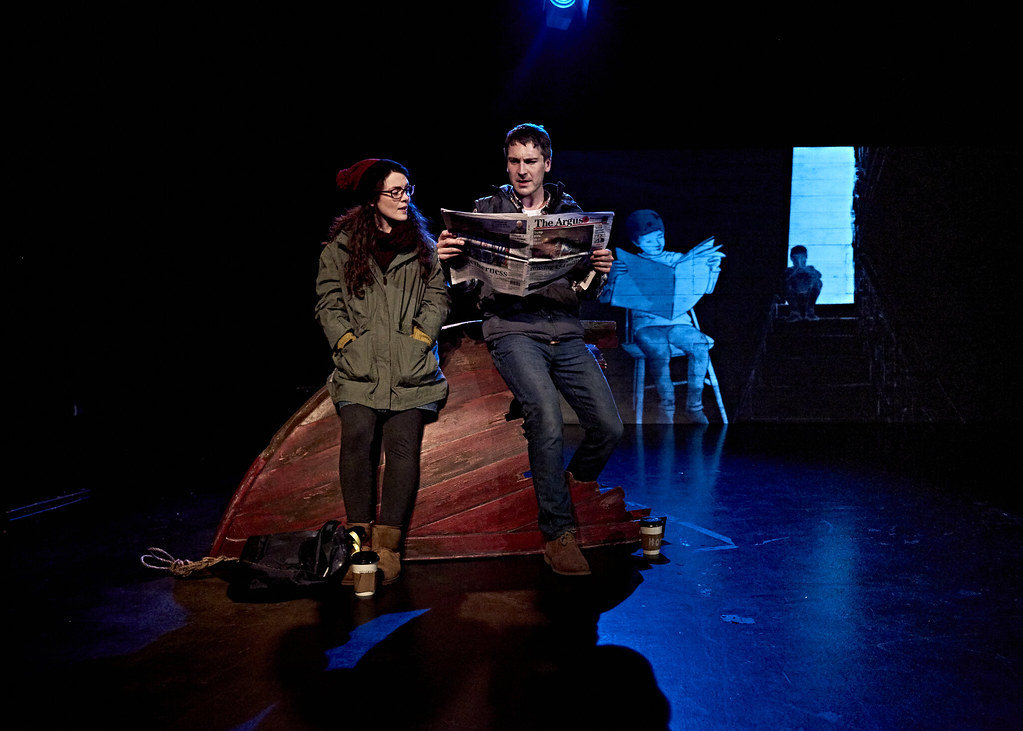
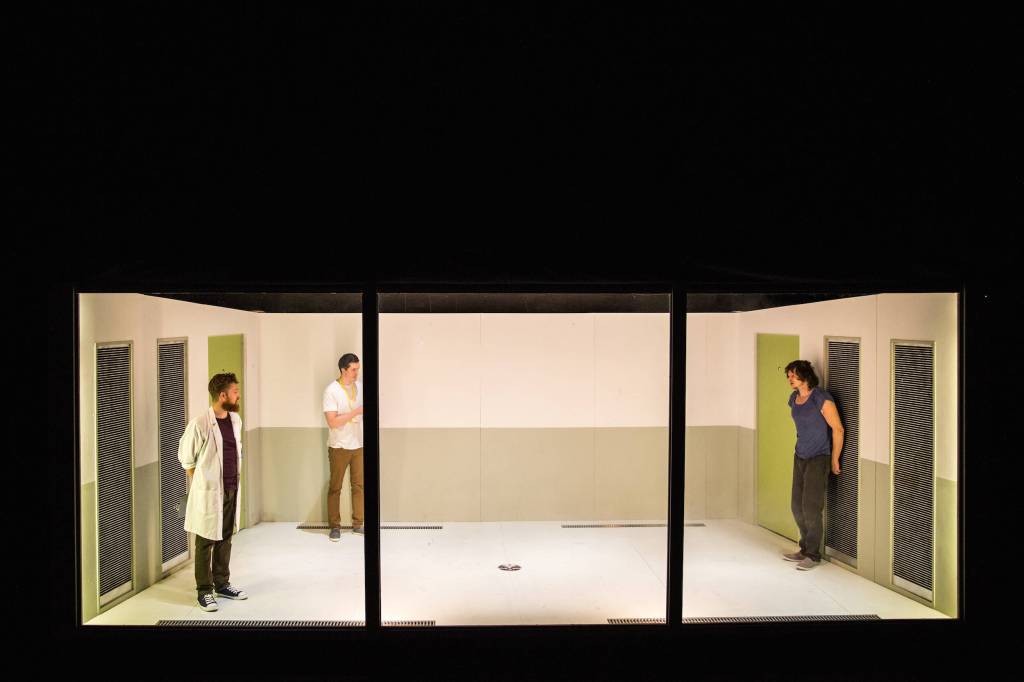
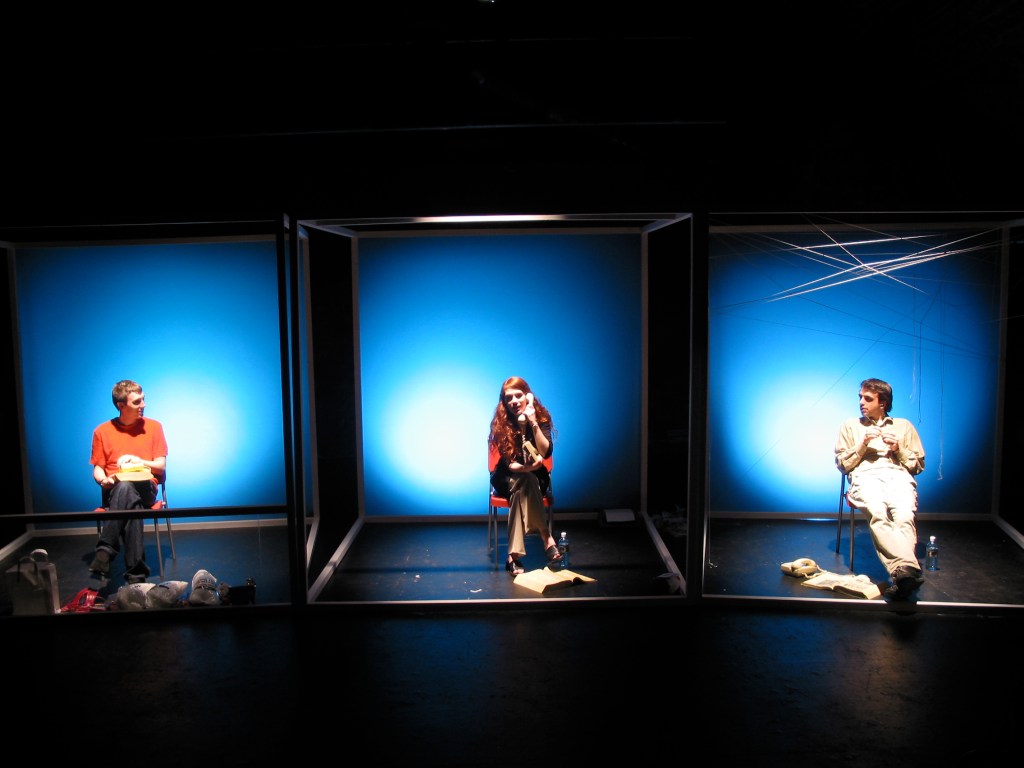
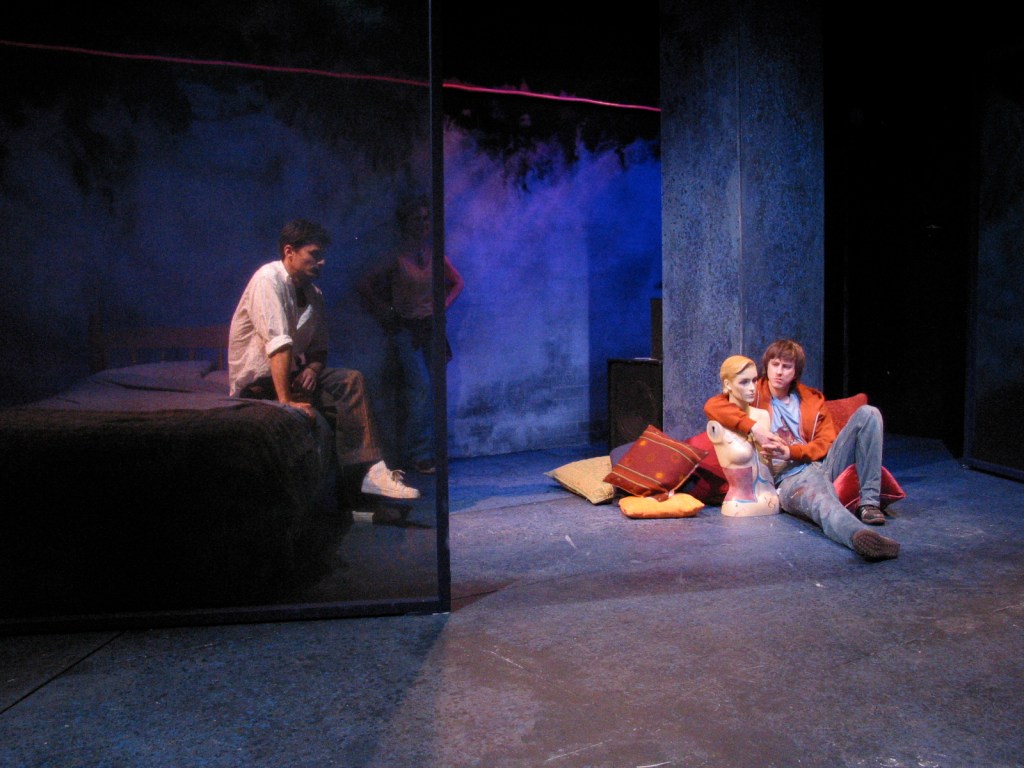
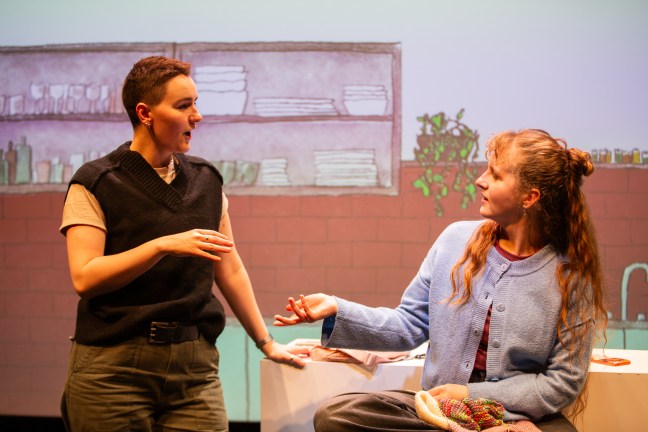
Barrier(s) is a powerful and intimate love story that ultimately dissects itself and becomes a joyfully iconoclastic critique of deaf representation on stage. I designed a claustrophobic set for it, with two screens enclosing the action like the titular barriers, enabling rapid location changes through projected hand-drawn backgrounds that shift between different times of day or night, or provide different angles on the same rooms. Interludes were accompanied by animations – again all hand-drawn. There were also hand-drawn animations for the interludes and montage sequences.

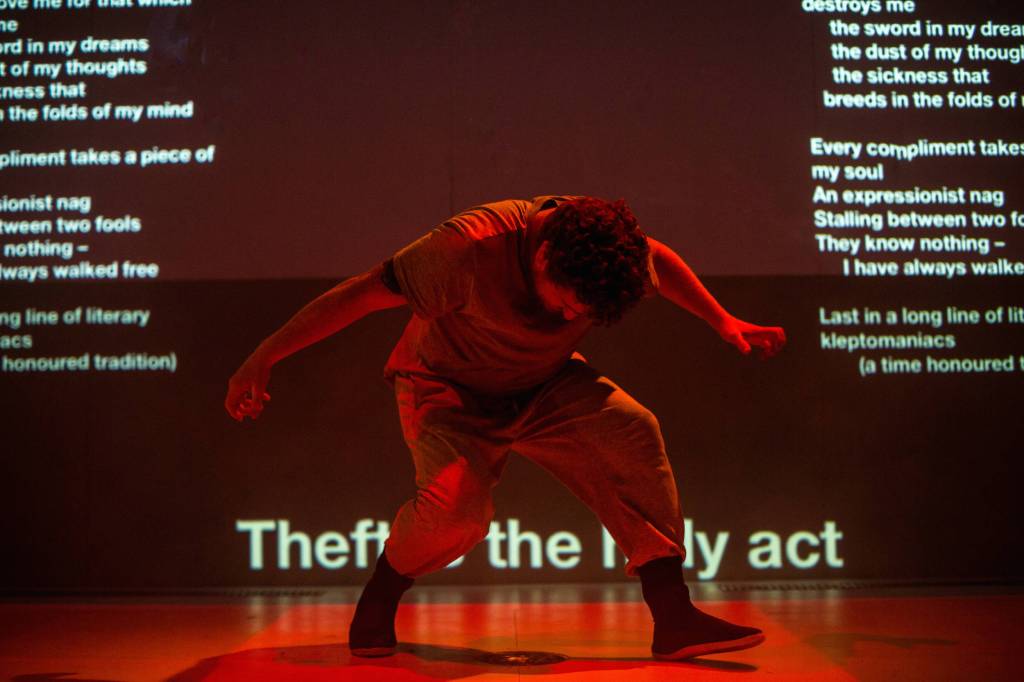
Deafinitely is deaf-led, and this show was mainly in BSL, but their work is always accessible to hearing audiences, so captions were also integrated into the projections, sometimes very simply and sometimes as text messages.

Barrier(s) opened at Birmingham Rep, and then toured to Home in Manchester and Camden People’s Theatre, London. There’s more about it here on the Deafinitely website.

I thought it might be nice to share some of my drawings for the projections, along with Becky Bailey’s production photos, but first, here are the credits:

Writer: Eloise Pennycott         
Director: Paula Garfield
Associate Director: Lynn Stewart-Taylor
Dramaturg: Rio Matchett
Set, Costume & Video Designer: Paul Burgess
Lighting Designer: Tom Mulliner
Sound Designer: Marie Zschommler
Assistant Costume Designer: Sophie Barnard
AV Programmer: Jasper Mattel           
Cast: Em Prendergast and Zoë McWhinney
Photographer: Becky Bailey

First off, here’s the artwork for three locations: Alana’s living room (day and night), a street and a bar. They were created with enough width to show the room from different angles. Windows were transparent so I could put different skies behind them. The figures in the bar were also on a separate layout so they could be faded out, enhancing the intimacy and intensity of the two characters’ date.

Continue reading Drawings for Barriers

Remembering David Hockney

Given the news, this deserves a re-blog. I studied one of Hockney’s opera designs at the Royal Opera House – Richard Strauss‘s Die Frau ohne Schatten – for an A-Level art project, not expecting to meet him. But I did, and he was incredibly helpful. We met four times in total. The whole thing was quite mind-blowing and doubtless shaped the rest of my life. You can read the full story in the original post.

I don’t necessarily agree with everything Hockney said, and I don’t like everything he produced – for me, his later work never quite matched his earlier brilliance – but that doesn’t take away from what a trailblazer he was – as an artist and for gay representation – and what a kind and generous man, nor from the fact that he produced some of the greatest art of his generation.

Time for another update

Things have been quite challenging recently, but I haven’t disappeared. So, what’s been going on?

Last year was dominated by my father’s illness, his passing away, and funeral. This was a beautiful, woodland burial, amongst friends both human and arboreal. 

I haven’t done a lot of designing, but I did design Deafinitely Theatre‘s show Barrier(s), which opened in Birmingham before touring to Manchester and London. It got some great reviews and audience responses. It was an unusual one for me, in that the set was very simple, and most of my work went into the video projections. I was also helped by a fantastic costume supervisor, Sophie Barnard, who ended up as assistant designer. That was in the autumn, and then, as every year, in February I worked on Deafinitely Youth Theatre’s half-term show.

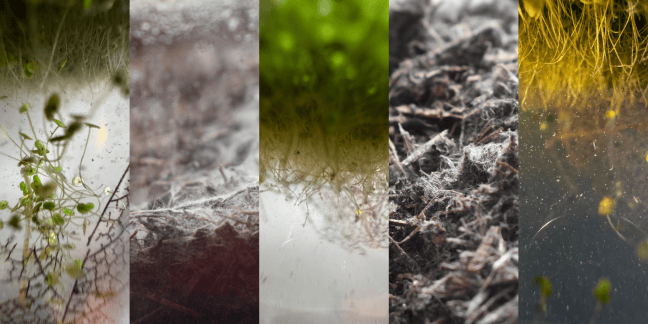
Over at Daedalus, we continued to develop the Dysbiosis project, with workshops in Sheffield and London, and exhibitions and performances at the Omnibus Theatre, Clapham, and the Queens Theatre, Hornchurch. I’m incredibly excited about this project, and you can find a lot more about it over on the Daedalus site. We also did a storytelling performance with some new tellers performing alongside some of our original group. A really beautiful show, it was as part of a Season of Bangla Drama, the annual Eastland festival that we are often involved with. Four of the performances can be found here.

Continue reading Time for another update

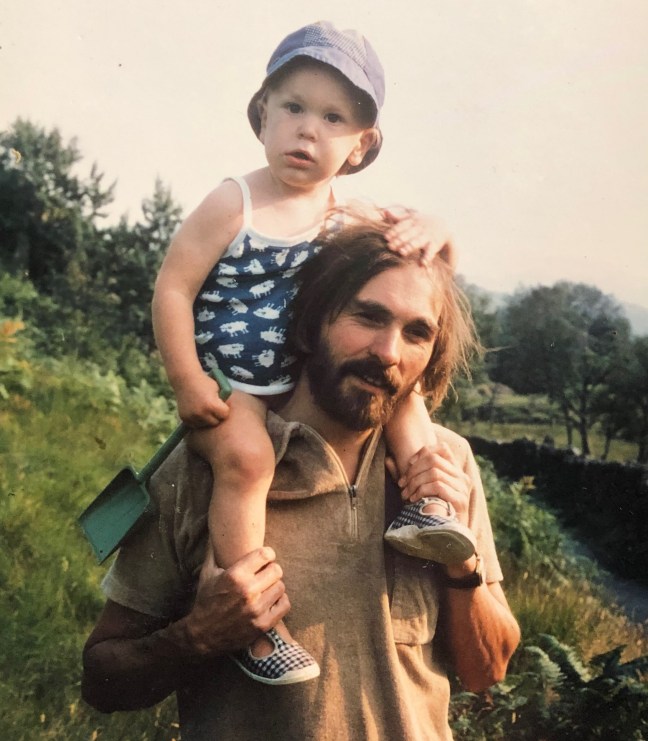
Remembering my father, Alan Burgess

I’ve always liked the idea of writing for The Guardian, which, despite my many disagreements with its editorial stances, is the paper I grew up with. It’s a sad irony that my first and perhaps only Guardian byline is my father’s obituary.

Dad passed away at the end of October, after a long struggle with hydrocephalus, and a much shorter decline in general health brought on, in part, I think, by being stuck in a hospital bed for around 6 weeks for a procedure the doctors eventually decided not to carry out. He remained bedbound after that.

He was a very remarkable man, but also very quiet and self-contained. It is not possible to sum up all that he was to everyone he interacted with. A lover of trees, a protector of the countryside, a seeker of wisdom, an incredible artist, a practitioner of meditation, and a teacher, mentor and friend to many; his art, his activism, and his philosophy were very much one.

Continue reading Remembering my father, Alan Burgess

Maybe AI can save us (by accident)

Given the rapid growth of generative AI and society’s addiction to manipulative, corporately controlled online platforms, you might think this is the end of skilled creativity. If anyone can make a film or a song or a novel in seconds, what’s left for skilled artists and craftspeople? 

Well, quite a lot, I think. 

Yes, we need to fight tooth and nail against the wholesale theft of our work by tech corporations, the loss of livelihoods, and the flooding of culture with soulless, vacuous simulacrums of creativity. Let alone the ecological damage and data harvesting. But I keep thinking about how MP3s and file sharing were going to kill live music, which has, in fact, flourished. At the time, it felt that, after the initial excitement waned, the ubiquity of downloads ended up increasing the value of in-person experience. 

Continue reading Maybe AI can save us (by accident)

Does environmentalism transcend left and right?

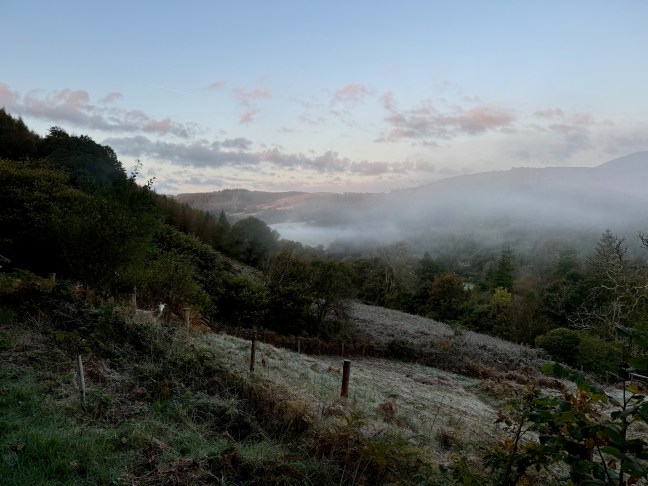
A view of hills shrouded by cloud, with a patch of early-morning sunlight, and a goat in the foreground

Back in the 90s when, as a teenager, I was first getting into green politics, it was often said that green would transcend the ‘grey’ politics of left and right. You don’t hear that much any more. Maybe we should. Is right-wing environmentalism part of the answer to the multiple ecological crises the world faces? Can we meaningfully create a consensus outside our socio-economic political differences and find ways to work together?

I’ve been thinking about this a lot recently because of a discussion on the topic I was part of. I will boil the conversation down to its two main arguments. The proposition, as it were, is that we exist in a bubble of other like-minded, progressive, evidence-led people while, in the wider world, people are falling for dishonest and divisive far-right rhetoric. It is as if we live in separate universes with entirely different understandings of reality. The counterargument is to acknowledge that people on the right also care about the environment – some of them, at least – and start to build a consensus that transcends the old left-right binary. You can have right-wing and left-wing environmental politics. Rightwing environmentalism might look like Tories caring about the countryside, for example, or eco-fascism, or a belief that capitalism will come up with a green technofix.

Continue reading Does environmentalism transcend left and right?

Lost in Improvement: a Quick Postcript to My Previous Post

Further to my thoughts on the dangers of generative AI not just to our livelihoods but to how we relate to Nature in its broadest sense, I also want to flag up a smaller issue I have with this new technology. The biggest impact of AI in my working life so far has been improved captioning, and spelling and grammar checks. They’re still quite* inaccurate, but as someone who learned to do a lot of things the long way because there were no other options (or no other affordable options), I appreciate how hugely time-saving they are. I appreciate how much they’re improving. The inaccuracy matters, though.

Most generative AI suggestions are great reminders that fundamentally, what this tech is doing is taking an input, comparing it to other similar things, and suggesting an option that’s closer to commonly used patterns. You end up with a grammatically correct piece of text that, at best, has had its individuality sanded away and, at worst, means something entirely in contradiction to what you’re trying to say. In the case of Grammarly, for example, it offers to ‘improve’ your text, but really, it’s a kind of normalisation.

For transparency, I should say that I use Grammarly regularly, and its spelling and grammar checks are the best I’ve found, though I reckon I only accept 75-80% of the suggestions, and I’ve never been happy with the generative AI suggestions.

It’s the latter I want to highlight. I tried re-writing a paragraph from my previous post with Grammarly’s generative AI. Here’s the original:

Continue reading Lost in Improvement: a Quick Postcript to My Previous Post