In Defence of the Quantitative: A Reflection on the Recent Eco-Creativity Symposium at the Royal Central School of Speech and Drama
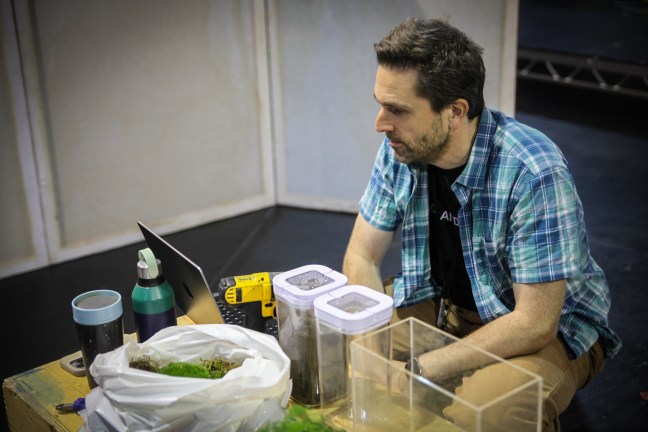
I was immensely privileged to be invited to Exploring Eco-Creativity Symposium: Rethinking Performing Arts Practices for a Climate-Changed Future. Hosted by the Centre for Performance, Technology, and Equity (PTEQ) at the Royal Central School of Speech and Drama (RCSSD) and Griffith University’s Performance + Ecology Research Lab (P+ERL), it took place in a seminar room in PTEQ’s unfinished new building on the RCSSD campus. It brought together academics and practitioners, including influential figures in ecoscenography and eco/climate dramaturgy within the Global North’s Anglophone theatre world, to hear papers and think about where we are.

I have been to many theatre industry events, and I have had visiting roles at several universities, delivering talks and workshops, but this was my first experience of the symposia and conference circuit, albeit a small and friendly one. I found it completely fascinating, not only in terms of papers and keynotes, all of which were fascinating and some of which were profound, but also in understanding a bit more about how this area of academia works. The world of the Centre for Alternative Technology (CAT), where I recently studied for an MSc, may require full academic rigour, but is also a world of hands-on experiments, muddy boots, country pubs and late-night folk sessions. It feels a world away. Although my head is probably closer to RCSSD, it is CAT where my eco-heart feels more at home.

The seminar was also a fantastic opportunity to catch up with people in person, many of whom I rarely meet outside of digital space, and some of whom I had never met before. That said, the imposter syndrome that afflicts me in all areas of life apart from theatre design seemed especially magnified by the limbo in which I find myself currently, waiting for my MSc results while surrounded by so many holders of, and candidates for, PhDs. For now, a BA in English from the 1990s is my grandest academic accolade.

The symposium’s impressive array of academic achievement was also reflected in some of the performances discussed. While there were inspiring examples of taking eco-creativity to the wider public, the seminar served as a reminder that much of the work framed as challenging norms and exploring new paradigms is made by and for an intellectual elite. There’s nothing wrong with that per se – we need those safe spaces to explore and grow – but we should not overestimate their impacts, their potential to be scaled up, or their ability to bring about systemic change.

One thing, however, struck me most of all. A few people were talking about what can be summarised as moving beyond quantitative approaches. Broadly, the reasons for this are that we are struggling to get beyond basic improvements in our environmental sustainability and spending a lot of time and energy for fairly small returns, while our real skillset resides in making theatre, which is perhaps a more effective tool for addressing the emergency, and therefore a better use of our time. Each time, these sorts of arguments were met with sounds of agreement and relief.

I do not know whether this response indicates a desire to sidestep quantitative assessment entirely or an acknowledgement that a quantitative approach is not enough on its own. It was probably a mixture, but I do not think we can afford to be complacent. Therefore, without knowing what people really think, I want to indulge in a preemptive pushback on the former, i.e. sidestepping the quantitative. I do not think it is ethically or aesthetically possible to make theatre without engaging with quantitative approaches. There are four reasons for this, and I will take them one by one.

Continue reading In Defence of the Quantitative: A Reflection on the Recent Eco-Creativity Symposium at the Royal Central School of Speech and Drama
Time for another update

Things have been quite challenging recently, but I haven’t disappeared. So, what’s been going on?

Last year was dominated by my father’s illness, his passing away, and funeral. This was a beautiful, woodland burial, amongst friends both human and arboreal. 

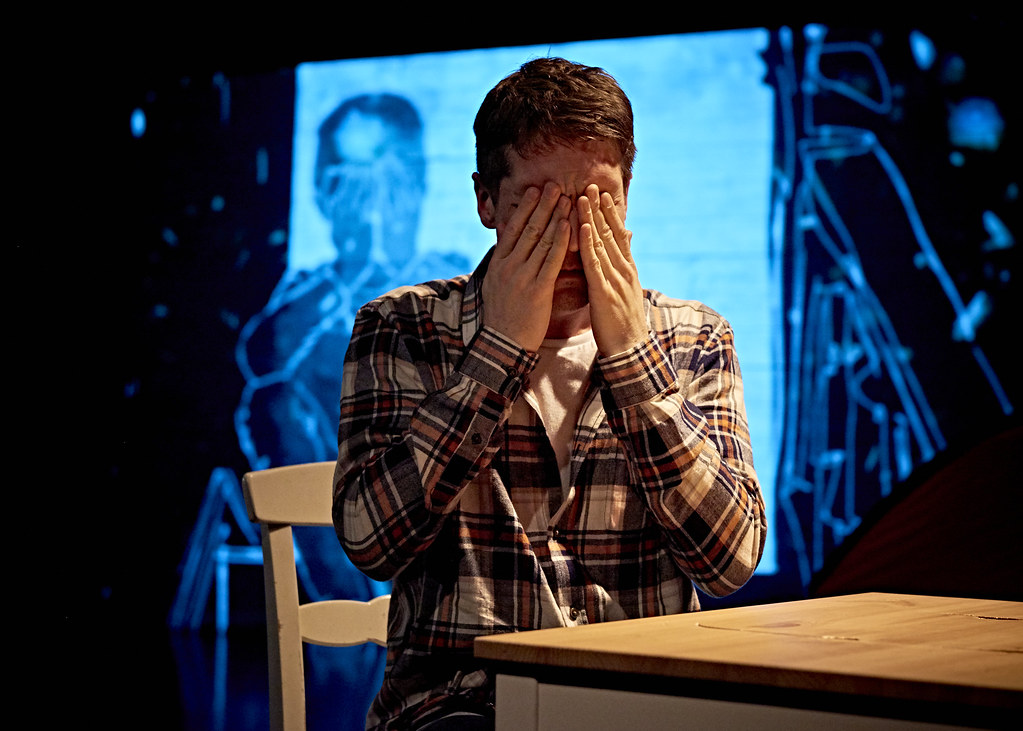
I haven’t done a lot of designing, but I did design Deafinitely Theatre‘s show Barrier(s), which opened in Birmingham before touring to Manchester and London. It got some great reviews and audience responses. It was an unusual one for me, in that the set was very simple, and most of my work went into the video projections. I was also helped by a fantastic costume supervisor, Sophie Barnard, who ended up as assistant designer. That was in the autumn, and then, as every year, in February I worked on Deafinitely Youth Theatre’s half-term show.

Over at Daedalus, we continued to develop the Dysbiosis project, with workshops in Sheffield and London, and exhibitions and performances at the Omnibus Theatre, Clapham, and the Queens Theatre, Hornchurch. I’m incredibly excited about this project, and you can find a lot more about it over on the Daedalus site. We also did a storytelling performance with some new tellers performing alongside some of our original group. A really beautiful show, it was as part of a Season of Bangla Drama, the annual Eastland festival that we are often involved with. Four of the performances can be found here.

Continue reading Time for another update

Lockdown update

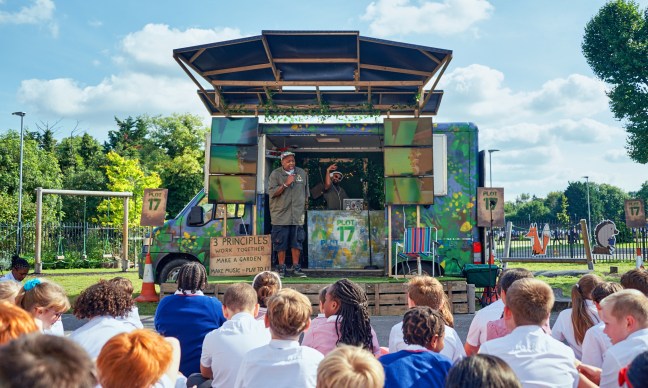
(Top photo: Kenny Baraka with DJ Conrad Kira in Plot 17. Photo: Suzi Corker)

I was asked to summarise, briefly, what I got up to during lockdown. But I couldn’t. It was too varied, and lots of things required some explanation. I guess everyone knows that the theatre sector has been hit very hard by the pandemic. Many workers have left to get sensible, less precarious, less stressful jobs. I haven’t. But I have, as they say, diversified. Perhaps, I thought to myself, that’s worth a blogpost. So here goes.

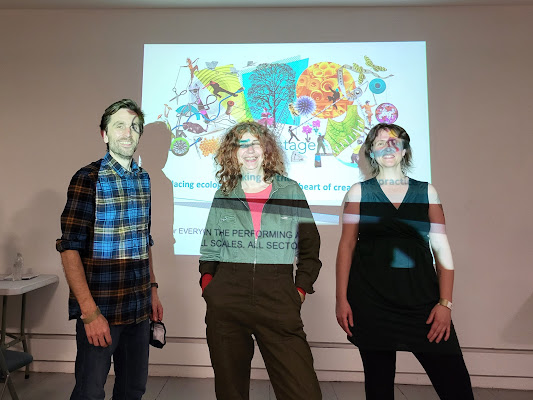
Myself, Andrea Carr and Mona Kastell at the Ecostage Launch, CCA Glasgow, during COP26. (Photo: Kanatip Soonthornrak)

To start with, I used the opportunity afforded by the Self-Employment Income Support Scheme to help set up the Society of British Theatre Designers’s first working group on sustainability, taking on the role of co-ordinator. I also become one of the directors of Ecostage, an initiative for supporting ecological thinking in the performing arts. Along with Andrea Carr, Mona Kastell, Ruth Stringer and some volunteers, I helped rebuild the project from the ground up as a go-to platform for green-minded performing arts professionals. The new website, ecostage.online, was launched at COP26 last month. Various other advisory roles then followed, including helping gather material for The Green Book, joining the advisory panel on sustainability for the Queens Theatre Hornchurch and informally helping co-ordinate knowledge-sharing with other sustainable performing arts groups around the world. 

In the past I’ve joked that, because of the huge disconnect between workload and pay in the sector, my ideal working model would be to get some kind of stipend, then offer my services for free as I see fit. SEISS felt a bit like that, and for a while I was almost a full-time volunteer.

Continue reading Lockdown update

Latest blogpost for the SBTD: The Green Book

I’ve been on the committee of the Society of British Theatre Designers (SBTD) for quite a few years now, and just before the pandemic I was one of a small team of designers that, as a result of a roundtable we organised at the V&A during our Staging Places exhibition, set up a new working group for the SBTD to focus on sustainability. Now called the Sustainable Design Group (SDG), it has nearly 60 members and regular four-weekly meetings, with various subgroups (materials, costume, training etc.).

Through the SDG, I also got involved with Ecostage and am now part of core team re-imagining the Ecostage principles and pledge, along with creating a new website. I’ll be sure to tell you a lot more about all this once the website has launched.

Being part of these two projects has led to me being stupidly busy while many of my theatre colleagues were getting into baking and houseplants, and I do feel as though maybe I should have taken more of a chance to breath. But it has also been deeply rewarding and has led to all sorts of interesting connections in the UK and internationally.

One particularly interesting thing over the last few months has been contributing to the creation of The Green Book. This is a project to create an authoritative guide to sustainable theatre for the UK sector. Part One is out in beta form for you to download and trial. Led by the theatre architect Paddy Dillon, working with Buro Happold, it was initiated by the Theatres Trust and the ABTT. I’ve written about it in more detail in my latest post for the SBTD.

The cover image for the SBTD blogpost, which is in the background of the cover image for this post, is from a project by SDG member and amazing designer Alison Neighbour: the original image with an explanation and full credits can be found in the post itself.

If you do have feedback on Part One, I’ve offered to compile any feedback that comes in through the SDG, so feel free to contact me and I’ll add it to our group’s feedback document, which I’ll pass on to Paddy and his team.

Meanwhile there’s lots of other stuff in the pipeline from the various things I’m involved with, ranging from the Ecostage website launch to new design-focused carbon literacy training. Plus some actual design work is creeping hesitantly back… Fingers crossed for that.

In the meantime, if you work in theatre, please have a read of my SBTD blogpost, then download The Green Book and give it a test run.

Light Waves, Dark Skies

I designed this show a few years ago and posted briefly about it at the time, chiefly to flag up a blog post I wrote about it for the National Theatre Wales Community Blog. But I just realised I never put the production photos up on the website. I’ll add a couple to my portfolio page, but here’s the complete set.

It was a great project, not just because of the lovely final show but also because the process was so open and democratic, and we really got to experiment. I really pushed myself as a result, and I think that showed, particularly in the video design.

Light Waves Dark Skies at Chapter Arts, Cardiff.

A We Made This Production, co-produced by Pontardawe Arts Centre

We Made This: Matt Ball, Katie Bingham, Paul Burgess, Catherine Dyson, Jacqui George, Gwawr Loader, Connor Lovejoy, Cis O’Boyle, Nia Skyrme & Morgan Thomas

Performers/ Perfformwyr: Catherine Dyson, Gwawr Loader & Morgan Thomas

Stage & Production Manager/ Rheolwr Llwyfan a Chynhyrchu: Jacqui George

Designer/ Cynllunydd: Paul Burgess

Lighting Designer/Cynllunydd Goleuo: Connor Lovejoy (Light Designer for R&D: Cis O’Boyle)

Sound Designer/  Cynllunydd Sain: Sam Jones

Full details: http://wemadethis.org.uk/light-is-like/credits/

COVID-19 Contingency Plan for Gerrard Winstanley’s True and Righteous Mobile Incitement Unit — Daedalus Theatre Company

We’ve postponed Mobile Incitement, the project I’m currently directing for Daedalus Theatre Company… Here’s the official statement.

We hope you’re all well and staying safe. We’ve had to reschedule our activities, and we really only have one active project at the moment: Gerrard Winstanley’s True and Righteous Mobile Incitement Unit, which was to start touring in June, with a second leg in the autumn. We’re working on the basis that we should…

via COVID-19 Contingency Plan for Gerrard Winstanley’s True and Righteous Mobile Incitement Unit — Daedalus Theatre Company

Love and Information

I’ve just done a great project with Pegasus Young Company: a production of Carol Churchill’s Love and Information, directed by Corinne Micallef. The cast members were a great ensemble, highly supportive of each other, and really engaged with the piece at a conceptual level. It was really collaborative and we had some great discussions about how the design should work dramaturgically, as well as working through stuff practically, including with the modelbox.

I pulled together a bunch of images from my process for the marketing team to use, including a video of my sketchbook. And I thought I would share them here. Continue reading Love and Information

Staging Places: UK Design for Performance

A big part of my life recently has been the Staging Place project.

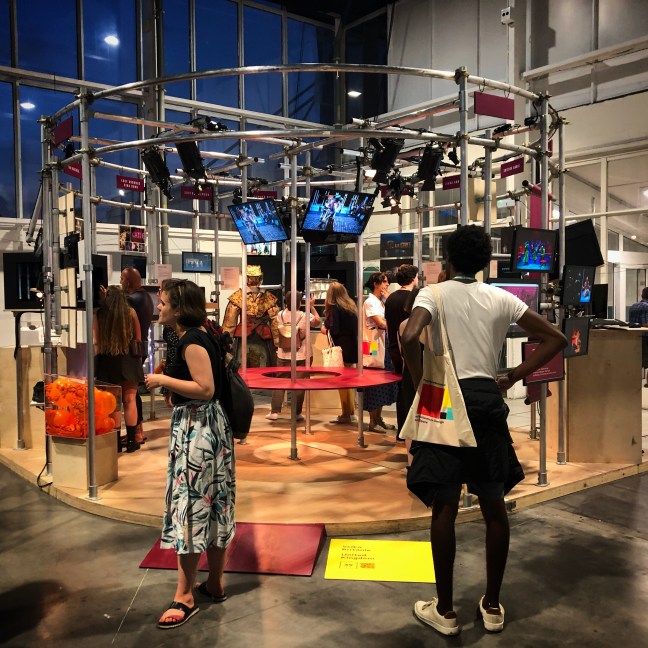
The Prague Quadrennial (PQ) is the world’s leading exhibition of design for performance. It’s an amazing thing: professional and student displays from all over the globe, talks, discussions, performances, exhibitions… The UK has traditionally done well at it too, frequently winning major prizes, though this is pretty much never reported in the UK press.

It’s also become something of a tradition for us to show the display at the V&A Museum in London after bringing it back from Prague. And sometimes to tour it to other venues in the UK.

The Society of British Theatre Designers takes the lead on this rather complex project. I’m on the SBTD committee but I didn’t want to get too involved as it’s very time consuming.

Reader, I got very involved. Continue reading Staging Places: UK Design for Performance

Designing Deafinitely Theatre’s 4.48 Psychosis

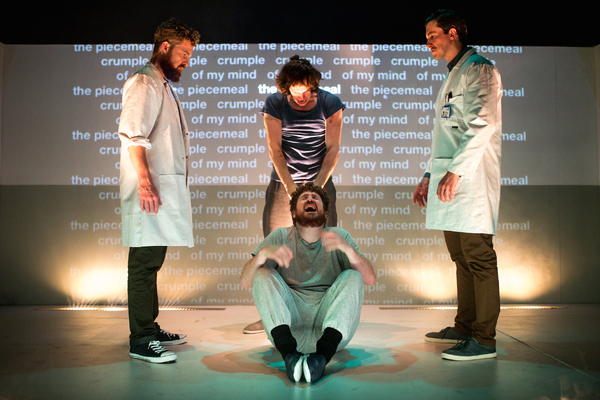
We’ve been getting some very enthusiastic responses from audience members for our production of Sarah Kane’s 4.48 Psychosis, and some great reviews, so I thought it might be worth sharing some thoughts on my design process.

The play is hard to read on the page: hard in two senses of the word. It’s gruelling emotionally but also abstracted, opaque, fractured and ambiguous. It’s constructed from fragments of naturalistic dialogue, inner monologue and poetry, all shored up into a kind of barrier against obvious interpretation. The author’s own distressing experiences are rendered into a set of cyphers that hide her personal truths from the people watching, reading or making a performance of the play. The temptation, therefore, is to try to find the key to unlock the code and expose her original meanings, but this seems to me to be a pointless – and impossible – quest. Instead, each production should create its own key, and decode these fragments into a new set of meanings that resonate for the artists involved. That’s very much what happened here, with director Paula Garfield’s emphasis on two overlapping crises of mental health – one amongst the deaf population and one amongst men – and the communication failures and lack of comprehension that exacerbate them. Continue reading Designing Deafinitely Theatre’s 4.48 Psychosis

Let’s Talk About Participation

I’ve missed shows I really wanted to see because the threat of audience participation made me so anxious. And yet, at Daedalus and elsewhere, I make participatory theatre. Is this hypocrisy?

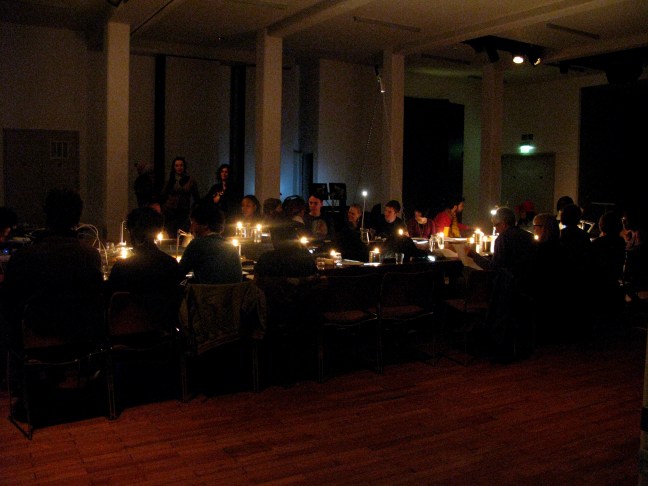
My view of participation is that it shouldn’t be about persuading or pressuring people to do things. It should be even less about picking on people, forcing participation on them. It’s about creating an environment in which people can find their own degree of involvement as equals. This might be because you advertise the piece as participatory so they know what they’re letting themselves in for, such as Shunt, Metis or Punchdrunk. But I want to talk about performances where people come to see a show but we, the artists, want them to have not the experience of a well-made performance but also a deeper kind of engagement. Continue reading Let’s Talk About Participation