Given the news, this deserves a re-blog. I studied one of Hockney’s opera designs at the Royal Opera House – Richard Strauss‘s Die Frau ohne Schatten – for an A-Level art project, not expecting to meet him. But I did, and he was incredibly helpful. We met four times in total. The whole thing was quite mind-blowing and doubtless shaped the rest of my life. You can read the full story in the original post.
I don’t necessarily agree with everything Hockney said, and I don’t like everything he produced – for me, his later work never quite matched his earlier brilliance – but that doesn’t take away from what a trailblazer he was – as an artist and for gay representation – and what a kind and generous man, nor from the fact that he produced some of the greatest art of his generation.
Time for another update
Things have been quite challenging recently, but I haven’t disappeared. So, what’s been going on?
Last year was dominated by my father’s illness, his passing away, and funeral. This was a beautiful, woodland burial, amongst friends both human and arboreal.
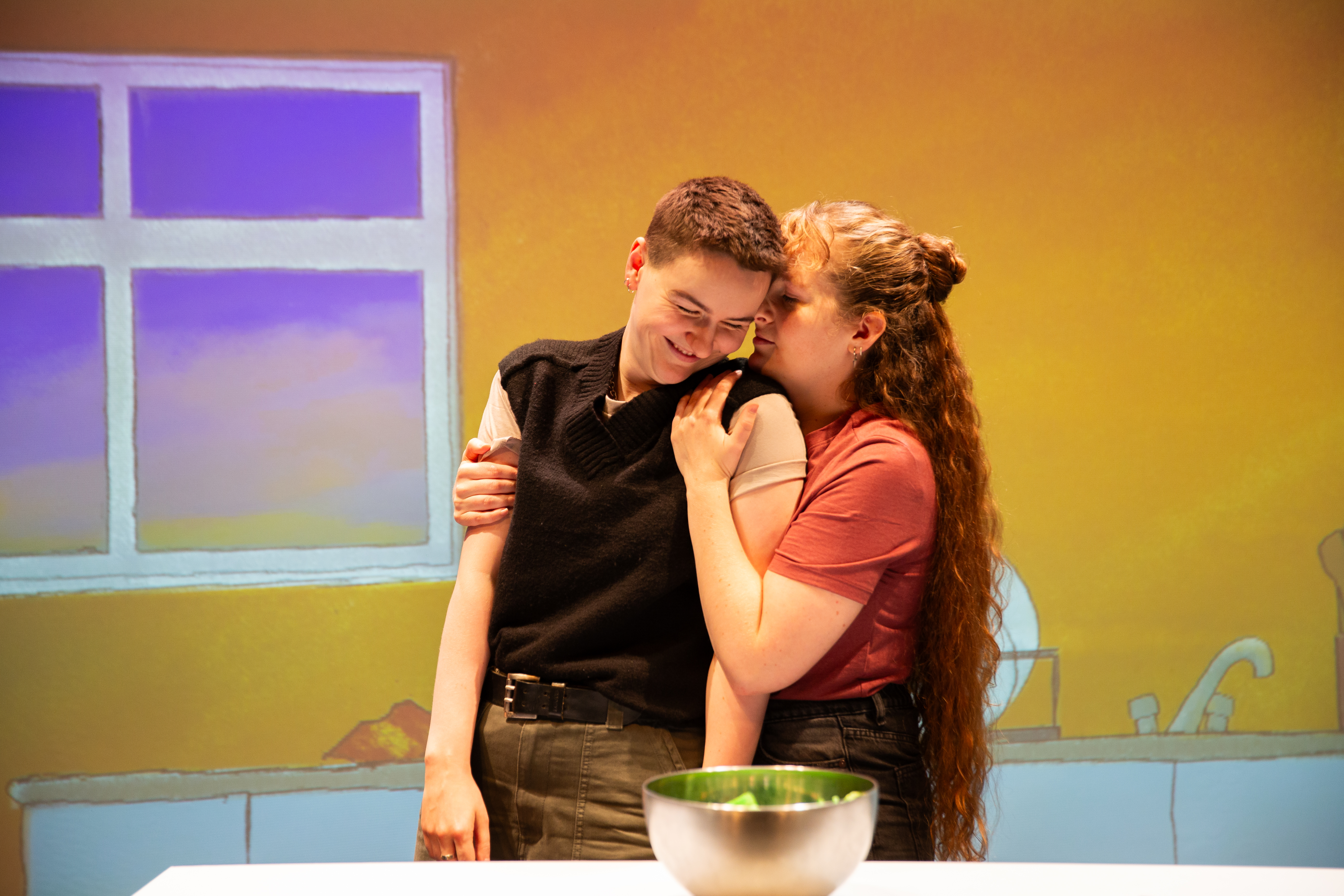
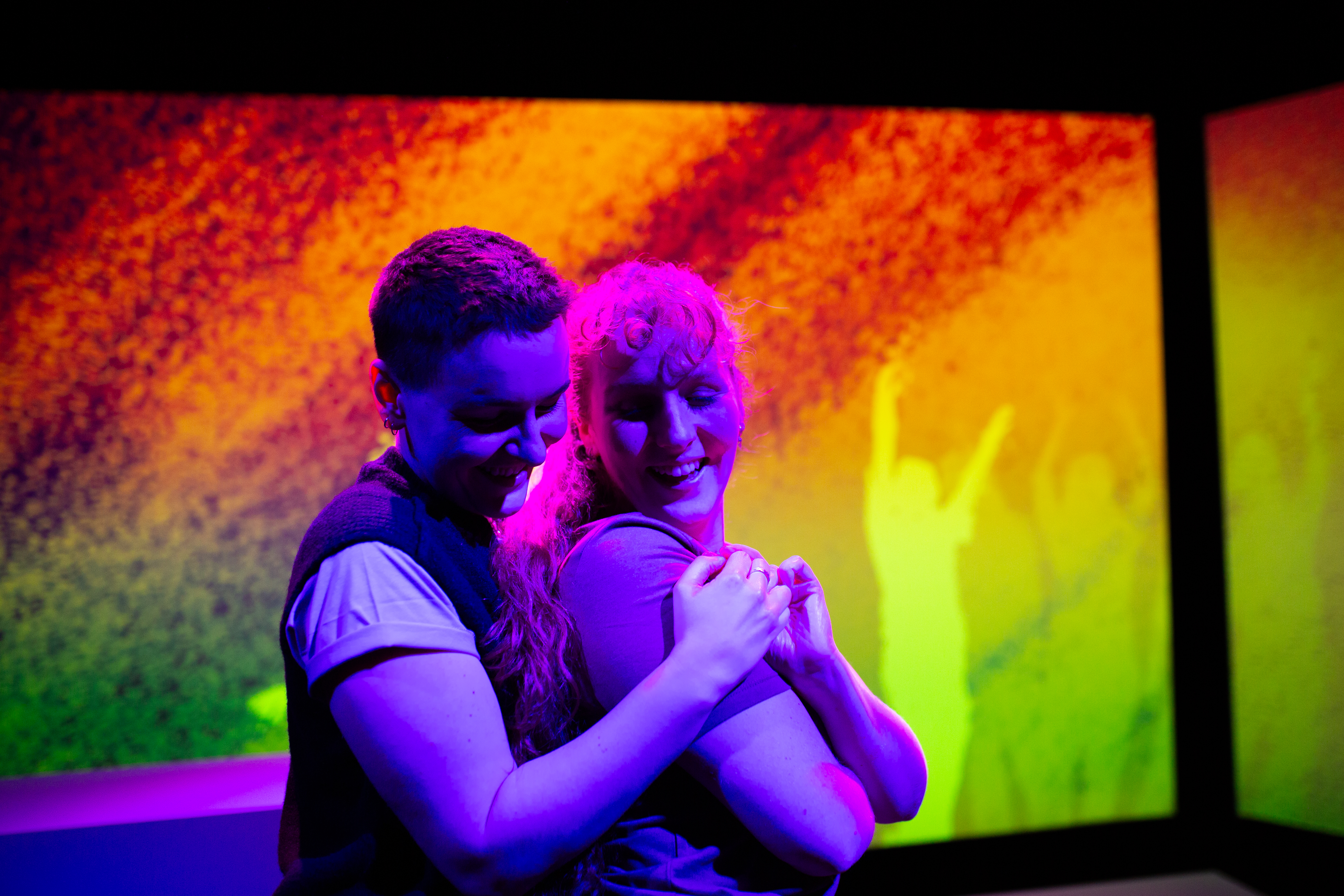
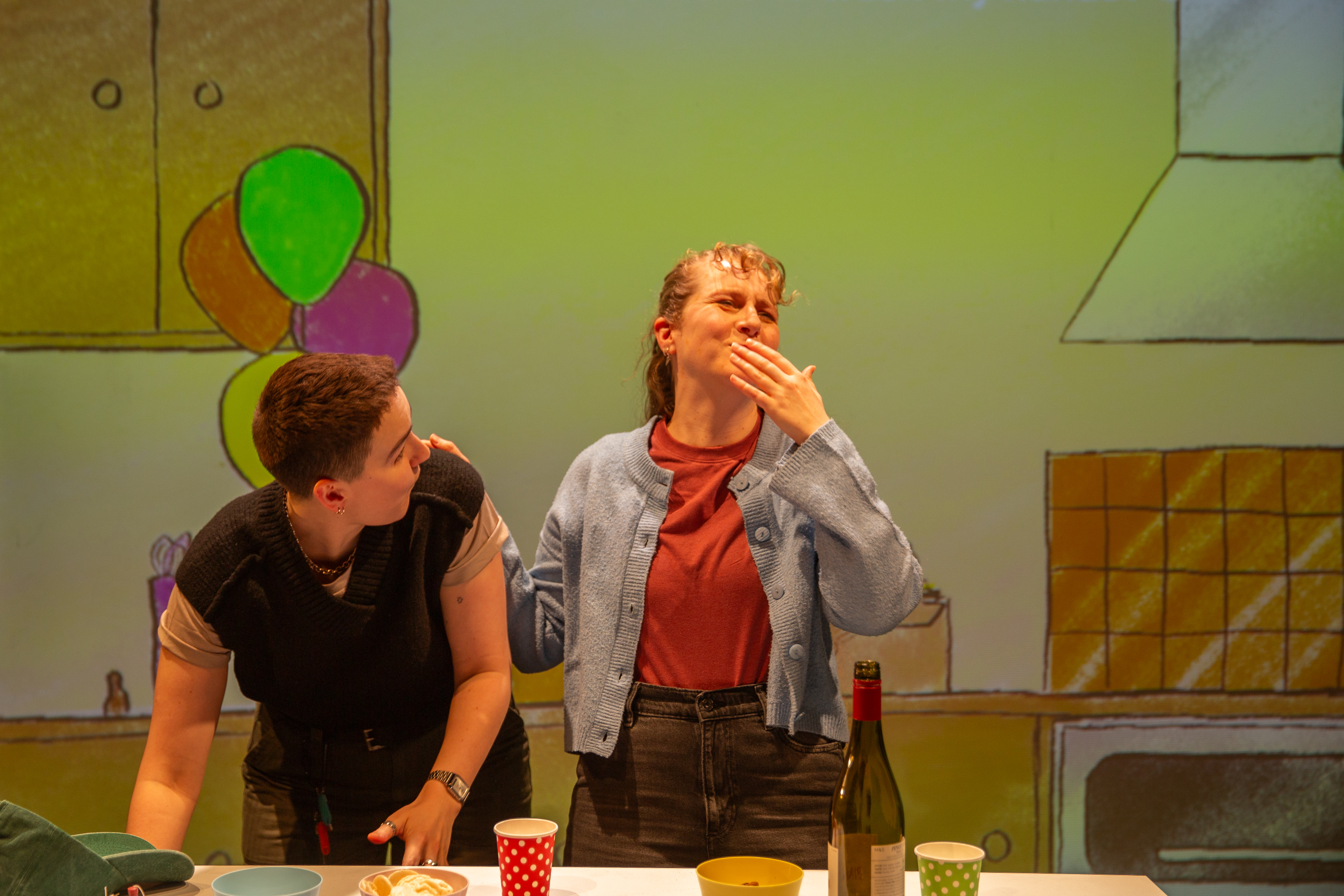
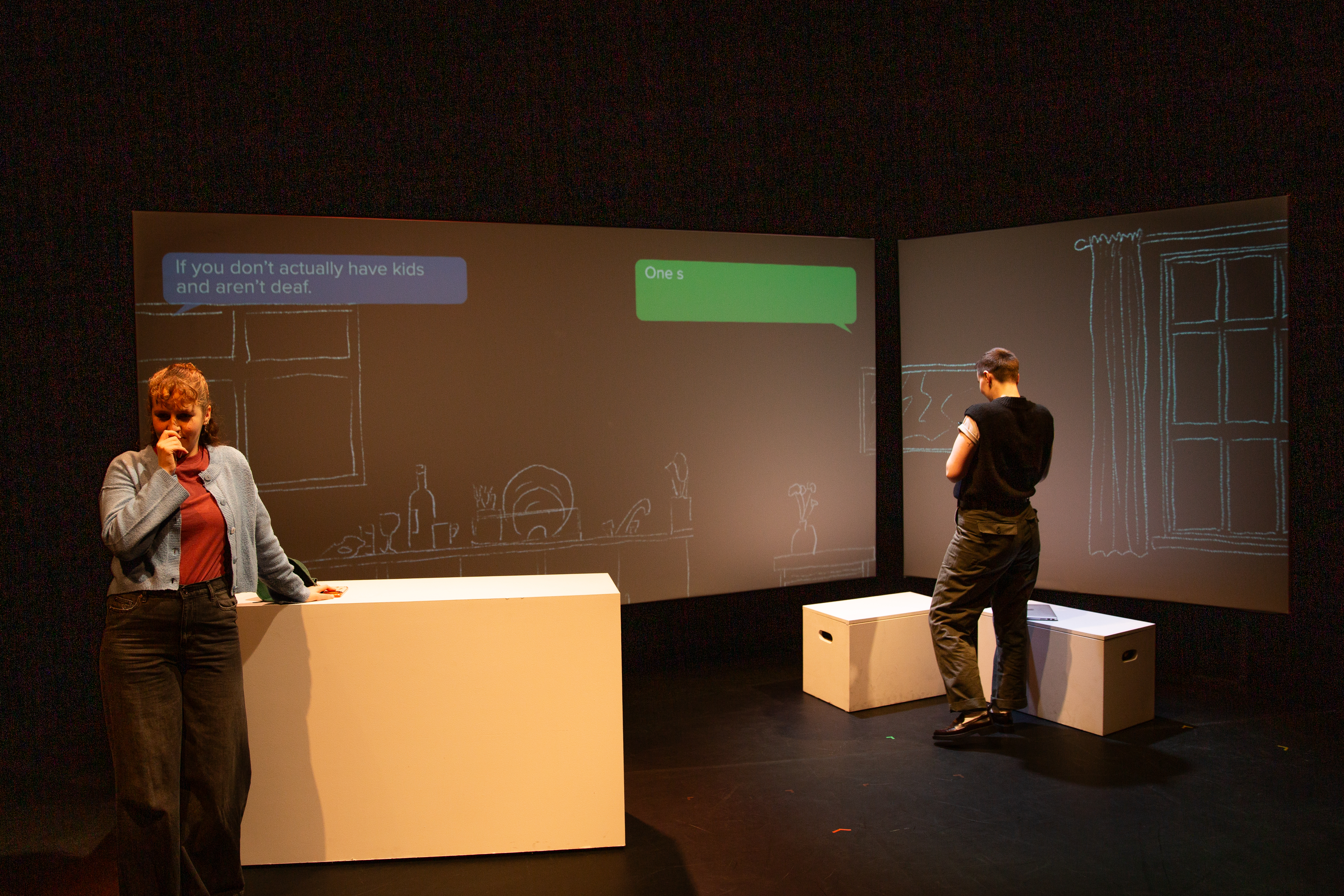
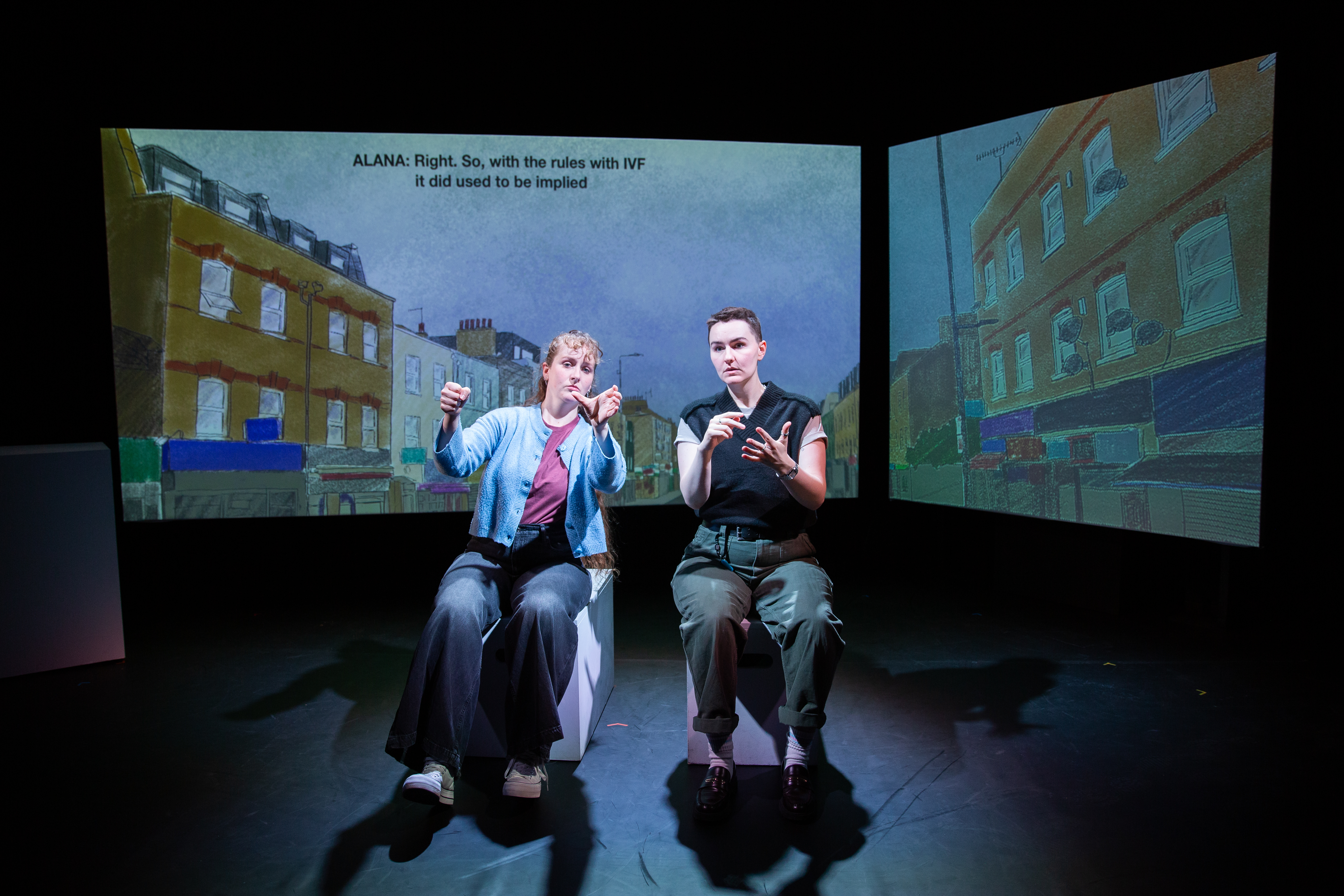
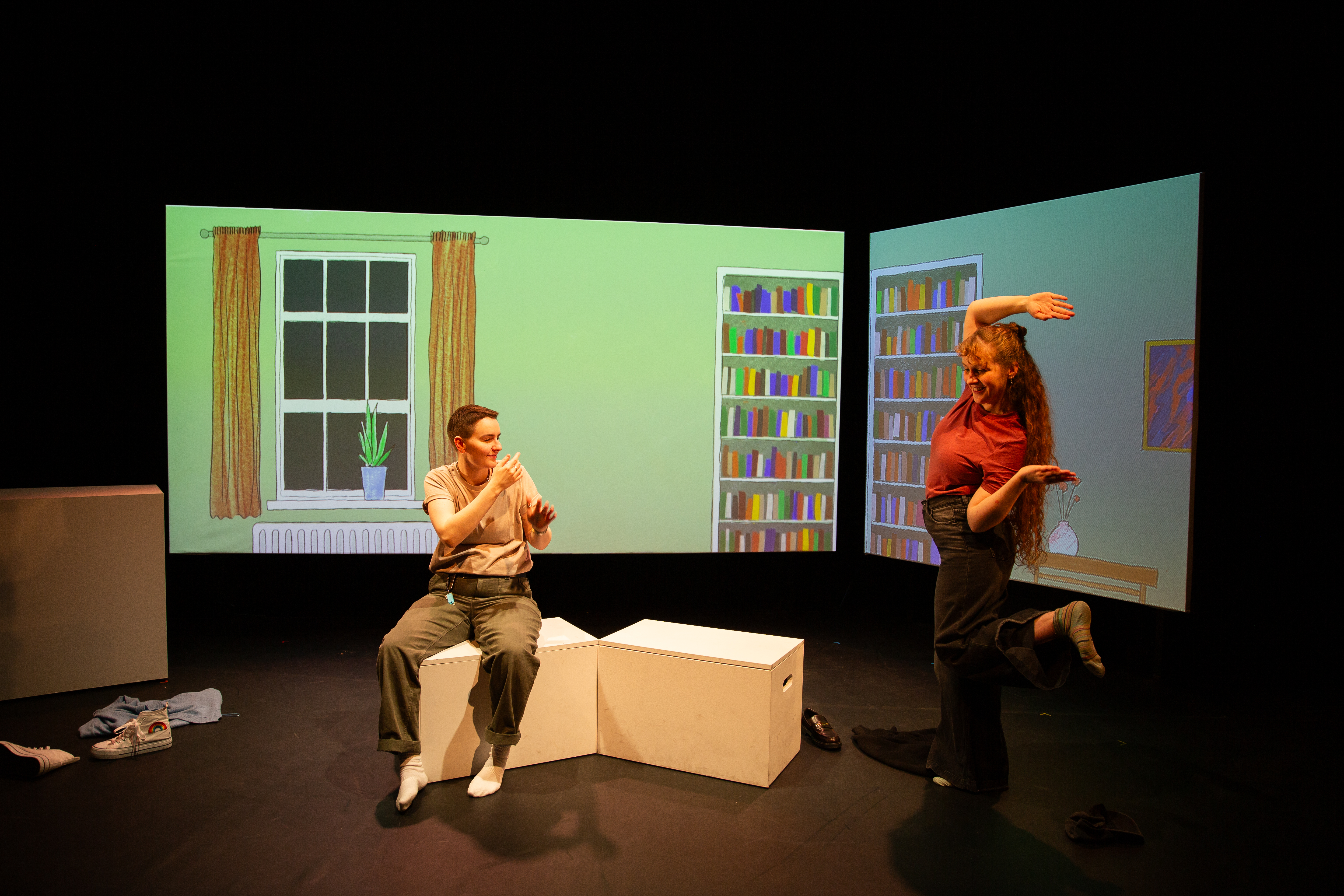
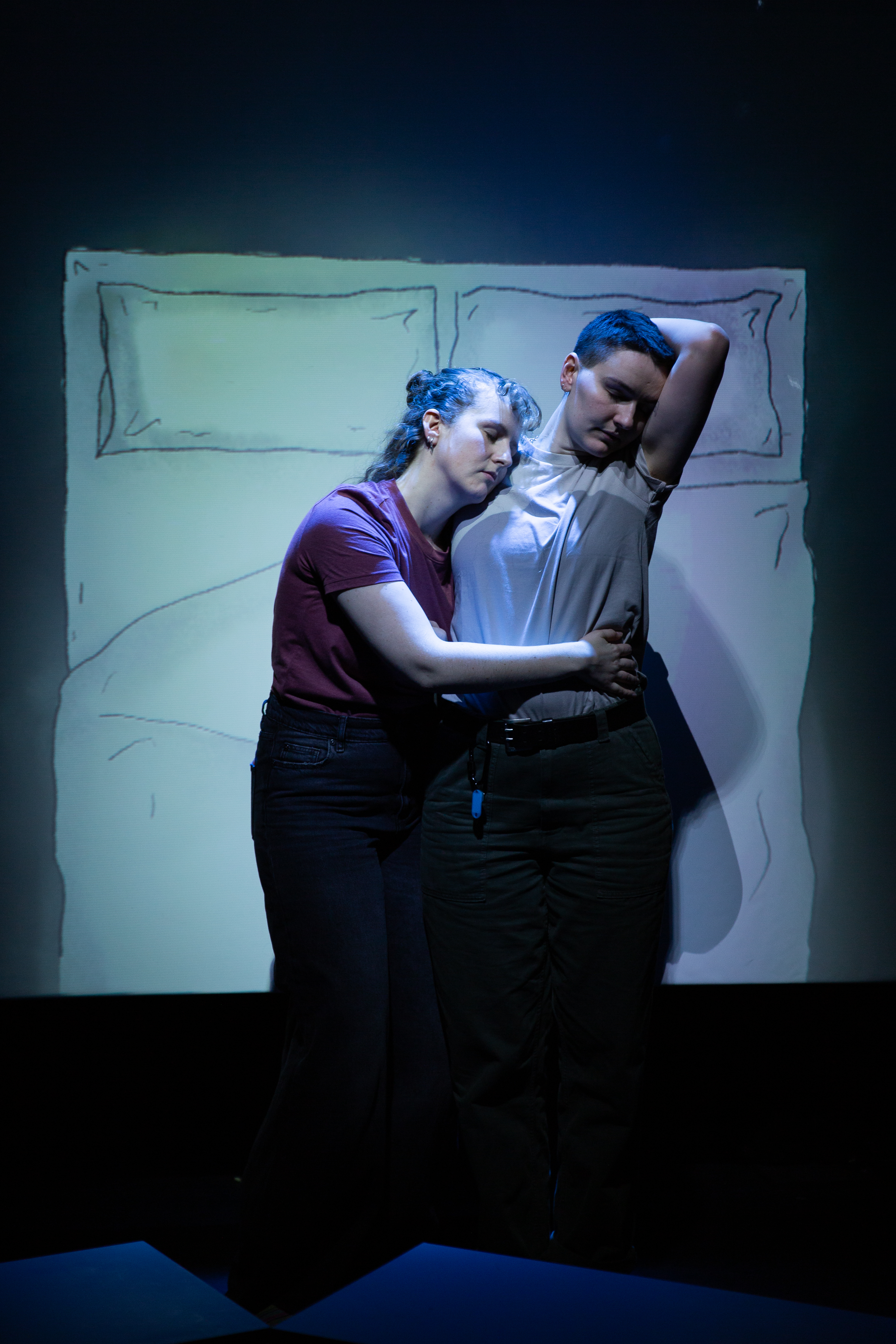
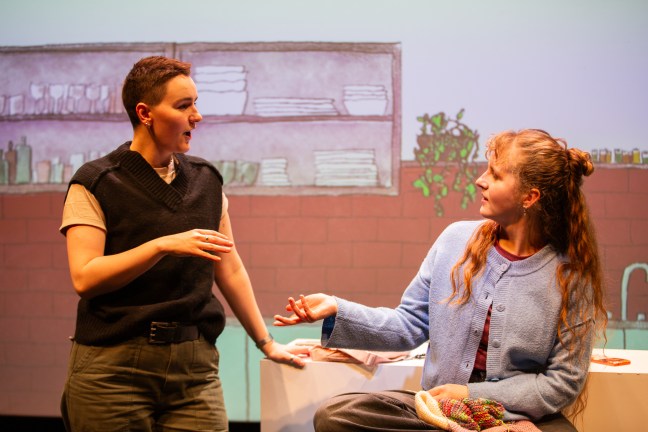
I haven’t done a lot of designing, but I did design Deafinitely Theatre‘s show Barrier(s), which opened in Birmingham before touring to Manchester and London. It got some great reviews and audience responses. It was an unusual one for me, in that the set was very simple, and most of my work went into the video projections. I was also helped by a fantastic costume supervisor, Sophie Barnard, who ended up as assistant designer. That was in the autumn, and then, as every year, in February I worked on Deafinitely Youth Theatre’s half-term show.
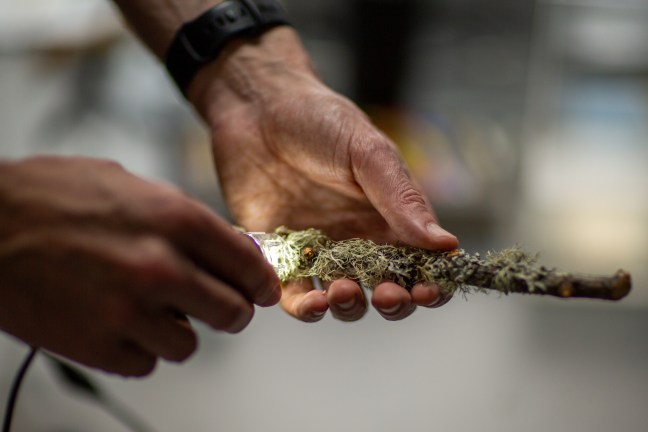
Over at Daedalus, we continued to develop the Dysbiosis project, with workshops in Sheffield and London, and exhibitions and performances at the Omnibus Theatre, Clapham, and the Queens Theatre, Hornchurch. I’m incredibly excited about this project, and you can find a lot more about it over on the Daedalus site. We also did a storytelling performance with some new tellers performing alongside some of our original group. A really beautiful show, it was as part of a Season of Bangla Drama, the annual Eastland festival that we are often involved with. Four of the performances can be found here.
Continue reading Time for another updateA Tree for the Barbican
This project was an absolute joy.
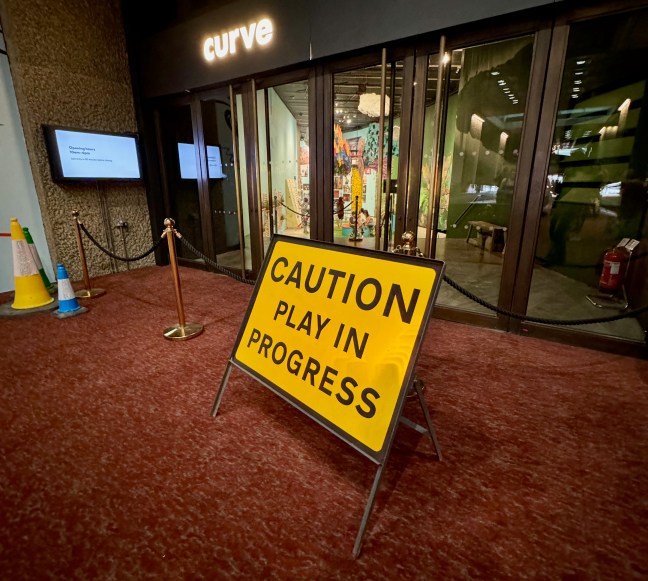
I was invited to create a tree from children’s imagination as part of Our Street, a project by the Barbican Centre’s Communities and Neighbourhoods team. They had an opportunity between Very Serious Arts Exhibitions to transform the prestigious Curve gallery space into an ‘anti-exhibition’ for local families over the summer holiday. This would be a space where kids can play and make stuff without being told to be quiet, respectful, and not touch anything. But it would also be created by artists channelling all their skill, experience, and creativity into making a space for childish imagination and playfulness to be let loose.
A class from St Luke’s Primary, just up the road, had been brought on board as consultant for the project, so I joined a creative session led by members of the Barbican team at the school, and got the kids drawing the most weird and wonderful trees they could conjure up. I then adapted, working with sustainable set builders Footprint Scenery and the Barbican to come up with something practical as well as dramatic and celebratory.
The other major partner in this was Eletric Pedals, run by Colin Tonks. Electric Pedals creates a range of amazing pedal-power things, including outdoor discos for school playgrounds powered entirely by the kids. Part of my brief was working with them to create special effects for the tree. After trying a few things out, Colin, who, let’s face it, is a bit of a genius, came up with thunder, lightning and some individually selectable park sounds, all powered by two bikes and a hand crank.
Here’s some pics from the process.
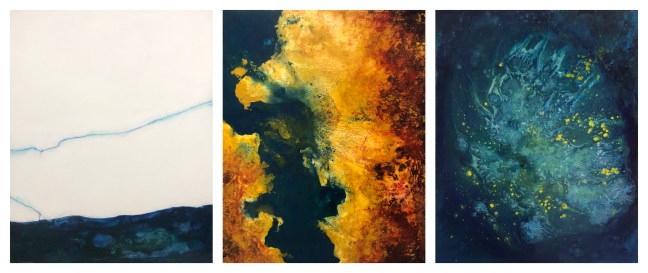
Continue reading A Tree for the BarbicanA climate triptych (and some thoughts on painting)
I take painting pretty seriously. It hugely informs my theatre design work, and I’ve frequently created video material from it. The work I did for the Dulwich Picture Gallery commission was a kind of digitally animated painting (involving a lot of very real painting on a wall). I’ve done several painting commissions. My first pocket money job was scenic painting at Harlow Playhouse.
Allow me a brief tangent, as I’ve just noticed a nice parallel. The pocket money job at Harlow Playhouse came about because I did work experience there aged 14. They must have liked what I did because occasionally, over the next few years, they got me in after school if they were short-handed on a paint call. My first properly paid work in theatre was, rather similarly, after doing a work placement. This was at Shakespeare’s Globe. They kept me on as an assistant in the wardrobe, where I worked on several ‘original practice’ techniques, including painstaking work slashing patterns in silk. I also helped source calico, silk, leather, pewter buttons and other period-appropriate items, and got an excellent working knowledge of London as a result. It was a really fantastic job, to be honest, and it led me eventually to design the sets for a full-scale Globe show.
Continue reading A climate triptych (and some thoughts on painting)Plot 17 x Hello Stranger
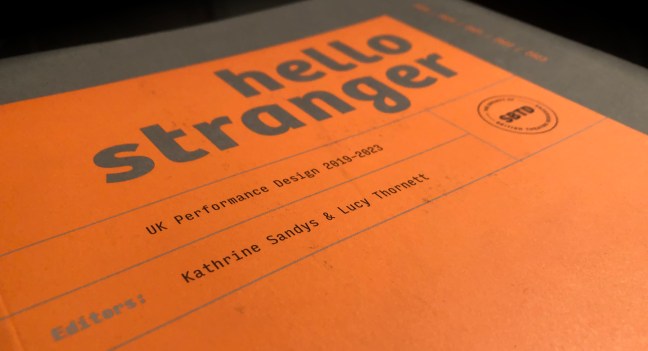
Every four years The Society of British Theatre Designers celebrates UK theatre design with a combination of books, exhibitions and events. This also feeds into the UK display at the Prague Quadrennial.
Last time round, we had an exhibition at the V&A, which included my design for Deafinitely Theatre’s 4.48 Psychosis. This time round, it’s a three-part publication series including a catalogue representing the breadth and diversity of UK theatre design, and a programme of regional events and exhibitions.
My entry this time round is the set – a converted horsebox, in fact – that I designed for Plot17. One of my favourite projects, it’s a mobile hip-hop block party for ages 7+, travelling the world raising awareness, inspiring action and spreading the message of “making things green”. The lead artist on the project, Kenny Baraka, is himself a force of nature, producing amazing lyrics and inspiring the youth up and down the land. It’s a great show, made a brilliant team, but it’s also a doing something really important by making the business of caring about nature and the environment accessible and cool for thousands of kids. And it’s out touring again this year.
Continue reading Plot 17 x Hello StrangerDavid Hockney helped me with my schoolwork
The 1985 Hockney Paints the Stage exhibition at the Hayward Gallery made a huge impression on me as a child. When I came to choosing a topic for my ‘A’ Level art project, and I saw that Hockney was designing a new production for the Royal Opera House, I knew what I had to do.
The new production was Richard Strauss’s Die Frau Ohne Schatten, directed by John Cox, with whom Hockney had already worked on several operas including the celebrated Rake’s Progress, a harmony of music and scenography that makes it one of the most perfect operatic designs I’ve seen.
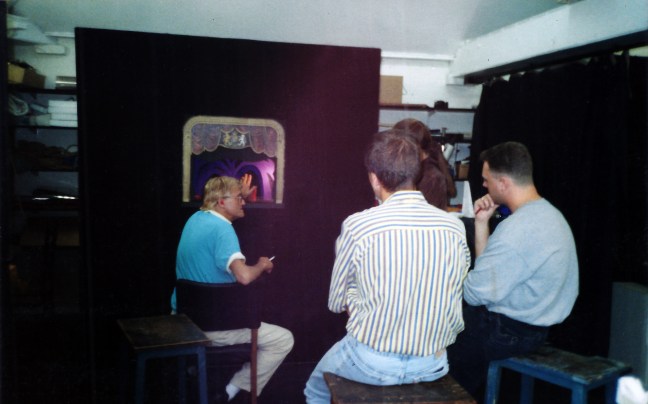
I wrote to the Opera House and Susan Usher, head of production, very generously invited me to watch a design meeting. At the end of that meeting I was told I could come to a further meeting attended by Hockney. A few days later I was in the production office at Covent Garden, a few feet away from one of titans of my teenage world, with his blue and red hearing aids and a personal supply of camomile tea bags. By this stage there was a close-to-final model but it wasn’t Hockney’s own. He’d made one at 1:8 scale. The ROH had then made the rather more accurate 1:25 version we were now looking at. At one point it became apparent that he had to remake the Emperors’ throne. ‘I can’t work this size – too niggly for me!’ he declared. He ended up making it at 1:8 when he got back to LA, and sending it over to be scaled down.
Continue reading David Hockney helped me with my schoolworkDysbiosis in development
I was incredibly pleased with how this went. I had the idea just before Covid but then decided to step up and focus on promoting environmentally sustainable design in the theatre sector. Between the Society of British Theatre Designers working group, Ecostage and everything else, this has rather taken over my life! However, the reason I stick with a career in this precarious and often badly-paid sector – and the reason I want it to be sustainable in all senses of the word – is the creativity. Dysbiosis sits right on the overlap between ecology and art. Thanks to Queens generously giving us space, we did a week of experimentation with some really wonderful creative practitioners. Such a privilege!
Here’s a summary from the Daedalus website:
A call for collaborators
Queens Theatre Hornchurch, where I’m on the Environmental Responsibility Subcommittee, is committed to the idea that its journey towards environmental sustainability should be reflected in its creative output. As part of this, David Shearing led This Story is True for Most of Us as part last summer’s the Blueprint Festival. I was a creative associate on the project, which took a vegan meal on the theatre’s roof as a basis for an exploration of time, locality, ecology and – of course – our relationship with food.
Now QTH has given me space to start developing a new piece of theatre. I don’t know what the end result will be, except that it will be open, accessible and connected to the community. But I do know where we’re starting; by looking at our relationship with Nature through the lenses of language, culture and queer ecology. This is how I like to work, starting with research and, by applying my design process to the directing process, working collaboratively to find a logic and a shape to the piece.
Continue reading A call for collaboratorsEcological Values
Given some of the awkward conversations I’ve had over the course of my career, I’ve added something to my website about my values, my expectations, and what I bring to the proverbial table. It’s very much a work-in-progress which I’ll doubtless keep refining. Do please feel free to let me know your thoughts!
Lockdown update
(Top photo: Kenny Baraka with DJ Conrad Kira in Plot 17. Photo: Suzi Corker)
I was asked to summarise, briefly, what I got up to during lockdown. But I couldn’t. It was too varied, and lots of things required some explanation. I guess everyone knows that the theatre sector has been hit very hard by the pandemic. Many workers have left to get sensible, less precarious, less stressful jobs. I haven’t. But I have, as they say, diversified. Perhaps, I thought to myself, that’s worth a blogpost. So here goes.

To start with, I used the opportunity afforded by the Self-Employment Income Support Scheme to help set up the Society of British Theatre Designers’s first working group on sustainability, taking on the role of co-ordinator. I also become one of the directors of Ecostage, an initiative for supporting ecological thinking in the performing arts. Along with Andrea Carr, Mona Kastell, Ruth Stringer and some volunteers, I helped rebuild the project from the ground up as a go-to platform for green-minded performing arts professionals. The new website, ecostage.online, was launched at COP26 last month. Various other advisory roles then followed, including helping gather material for The Green Book, joining the advisory panel on sustainability for the Queens Theatre Hornchurch and informally helping co-ordinate knowledge-sharing with other sustainable performing arts groups around the world.
In the past I’ve joked that, because of the huge disconnect between workload and pay in the sector, my ideal working model would be to get some kind of stipend, then offer my services for free as I see fit. SEISS felt a bit like that, and for a while I was almost a full-time volunteer.
Continue reading Lockdown update