A Letter to Rushanara Ali

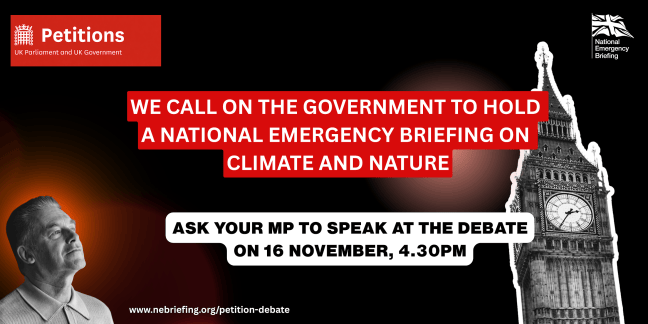
MPs are debating the call for a National Emergency Briefing. On Monday 16 November at 4.30pm, MPs will debate Chris Packham’s petition calling for a live, government-led briefing to the nation on the climate and nature crisis. Over 130,000 people have signed the parliamentary petition, calling for the public to be given clear, trusted information about the risks we face and what we can do about them.

Now we need MPs to turn up and hear the case. Please contact your MP and ask them to attend the debate, whatever party they represent. This isn’t about party politics. It’s about ensuring everyone has the information they need to understand the challenges ahead.

You can contact your MP here: https://www.nebriefing.org/petition-debate. I’ve contacted mine, and my letter is below. Please also share to help spread the word.


Dear Rushanara Ali,

As you know, we are facing a collapse of food supplies, security and a livable climate within the lifetime of many of your constituents. This is a national, indeed global, emergency, and the UK must show leadership, for the sake of its own survival as well as that of the planet. I’m therefore writing as your constituent regarding the petition debate on Monday 16 November at 4:30pm about whether the government should hold a live emergency briefing to the nation on the climate and nature crisis.

The threat we face is far more grave than COVID was, yet is taken with a fraction of the seriousness by the political class. Perhaps this is because its biggest victims are younger generations and people in the Global South. Voters, on the other hand, are taking it increasingly seriously. For a start, the petition behind this debate has over 130,000 signatories.

What so many of us want to see is a briefing introduced by the Prime Minister and delivered by independent experts, so everyone gets clear, trusted information about the risks to our homes, jobs and communities, and what we can do about those risks. It is surely a government’s responsibility to inform the population when there is a crisis, and to lead on preparedness and adaptation. This is beyond party politics. This is an emergency.

I have been involved in campaigning on the environment since I was a teenager in the late 80s and early 90s, firstly because I followed the science and secondly because I was brought up in the Labour movement. I was taught the values of social justice and care for people and planet. It is distressing and incomprehensible to me that, even in Labour, so few politicians appear to understand that they cannot negotiate with physics, and so many are prepared to sacrifice our future in the name of what? The discredited economics of limitless growth? Career advancement? Political cowardice? But the evidence is overwhelming: seven out of nine critical planetary boundaries have been crossed.  It could not be clearer. We must change our economy and lifestyles on our own terms, or catastrophe will do it for us.

Will you be remembered as one of a generation of politicians that ignored the evidence and warnings of experts, and led this country towards collapse? I am disappointed to see that you have not yet joined the Parliamentary Call nor yet signed the EDM. Please attend the debate, hear the case, and back the call for a briefing.

Yours sincerely,

Paul Burgess
Update on my sustainability work (and other things)

As many of you will know, I’ve been prioritising my work on sustainability recently. Building on the voluntary work for Ecostage and the Society of British Theatre Designers that I’ve been doing since before the pandemic, I’m now nearly halfway through a part-time MSc at the Centre for Alternative Technology.

I look forward to having more availability for design work next year, and applying the sustainability principles and practices I’ve been learning and developing. In the meantime, as some of you haven’t heard from me in a while, I’d like to share an update.

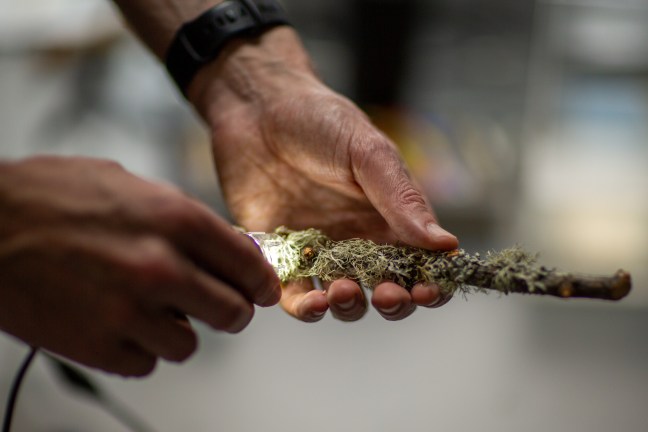
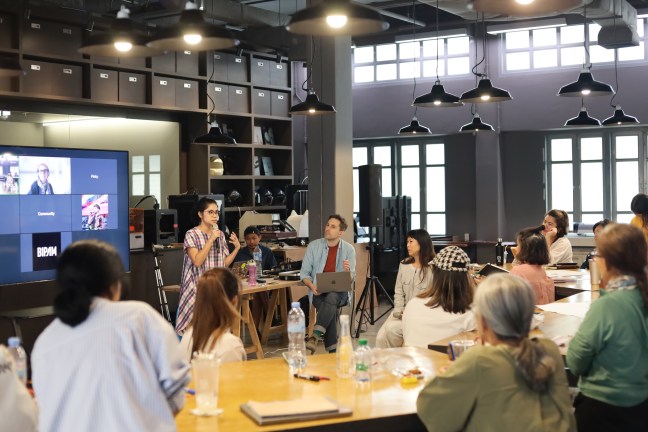
Working with the SBTD and Footprint Scenery, I co-organised and co-facilitated Makers and Designers Assemble! at the National Theatre. As the title suggests, this event brought theatre designers and makers together to talk about how better to support each other’s efforts to work in a more environmentally responsible way. There was a particular emphasis on circular economy; in fact, the event was part of Circular Economy Week. It started some exciting conversations beyond the event itself… which was precisely the aim!

Continue reading Update on my sustainability work (and other things)

Dysbiosis in development

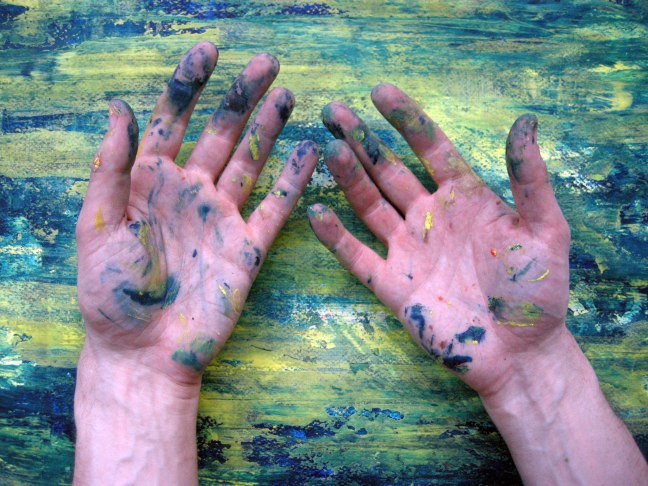
I was incredibly pleased with how this went. I had the idea just before Covid but then decided to step up and focus on promoting environmentally sustainable design in the theatre sector. Between the Society of British Theatre Designers working group, Ecostage and everything else, this has rather taken over my life! However, the reason I stick with a career in this precarious and often badly-paid sector – and the reason I want it to be sustainable in all senses of the word – is the creativity. Dysbiosis sits right on the overlap between ecology and art. Thanks to Queens generously giving us space, we did a week of experimentation with some really wonderful creative practitioners. Such a privilege!

Here’s a summary from the Daedalus website:

Recent and Current Reading

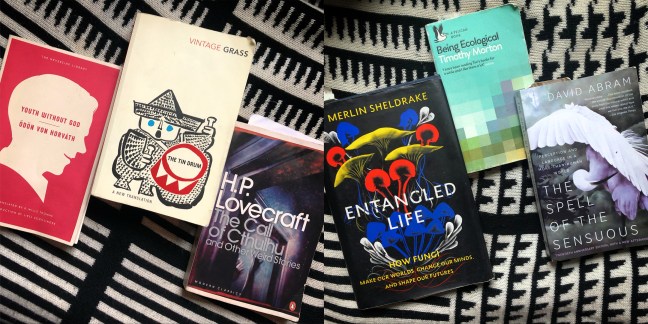
OK, I thought I’d share my recent and current reading. Starting with fiction.

Youth Without God (thanks Jono C-S for the recommendation) is fascinating read. Somewhat driven by ideas at the expense of character depth, it’s nonetheless powerful and evocative. Historically interesting too, and a disturbing window onto human behaviour as the Nazis gained power. Plenty of lessons for today.

Reading Youth Without God made me realise how little German literature I’ve read. Quite a few plays I suppose, but not many novels. Anyway… The Tin Drum has been on my reading list for yonks, so I finally got round to it. And yeah, what a wild ride. Incredible. Disturbing. Epic. Definitely joining its compatriot The Magic Mountain in my informal and unnumbered list of favourite ever books.

Continue reading Recent and Current Reading

Ecological Values

Given some of the awkward conversations I’ve had over the course of my career, I’ve added something to my website about my values, my expectations, and what I bring to the proverbial table. It’s very much a work-in-progress which I’ll doubtless keep refining. Do please feel free to let me know your thoughts!

Fly, you fools! (or How Popular Culture Can Help Tell the Climate Crisis Story)

We win or lose through the stories we tell. They’re what changes the world. And the most important story we need to tell today is the one that gets the people of Planet Earth to take meaningful action on the ecological breakdown.

The stories we’re offering now, however, aren’t working.

It’s fine to tell those who respect science about how we’re on track for catastrophe, because they understand evidence. It’s fine to tell those already awake to social and environmental injustice how climate change is driven by our economic system and the power structures that maintain it, because that fits their existing worldview. But what’s the story for everyone else?

Humans are brilliant at denial. Being able to put aside thoughts of suffering and mortality, to compartmentalise and not feel everyone else’s suffering too deeply, helps keep us sane. It seems that’s how the majority of people respond when faced with the facts of impending apocalypse too, and it’s understandable. Climate change is deeply frightening and it’s coming at us like juggernaut with broken brakes.

Continue reading Fly, you fools! (or How Popular Culture Can Help Tell the Climate Crisis Story)