Drawings for Barriers

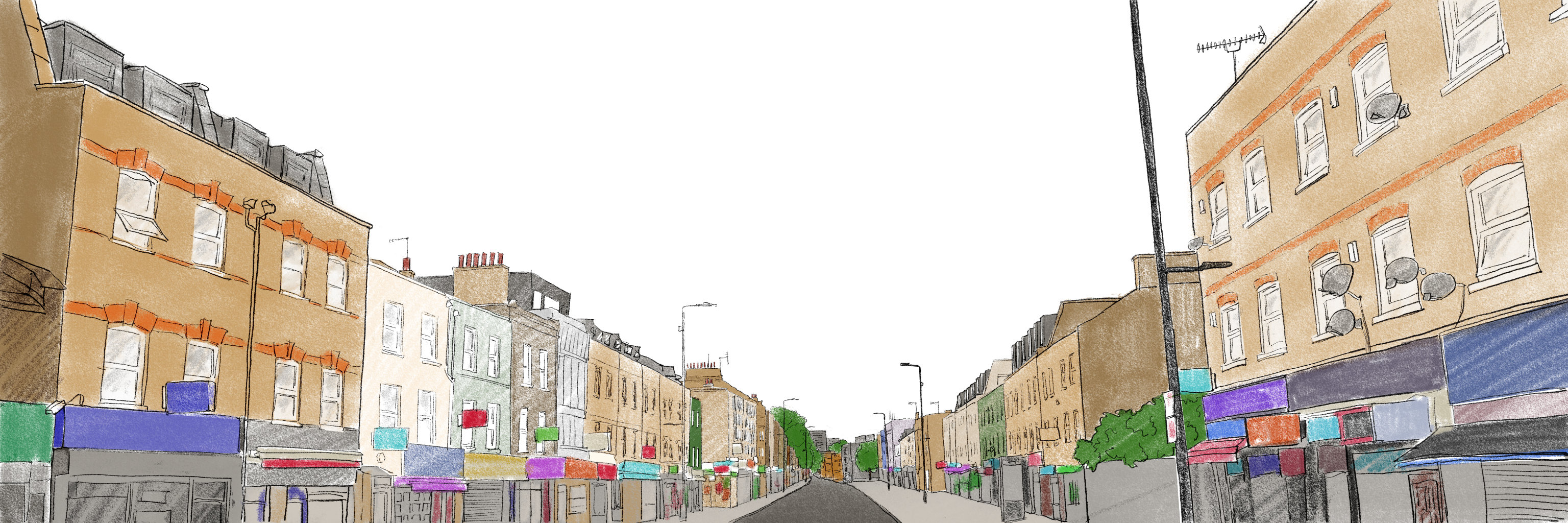
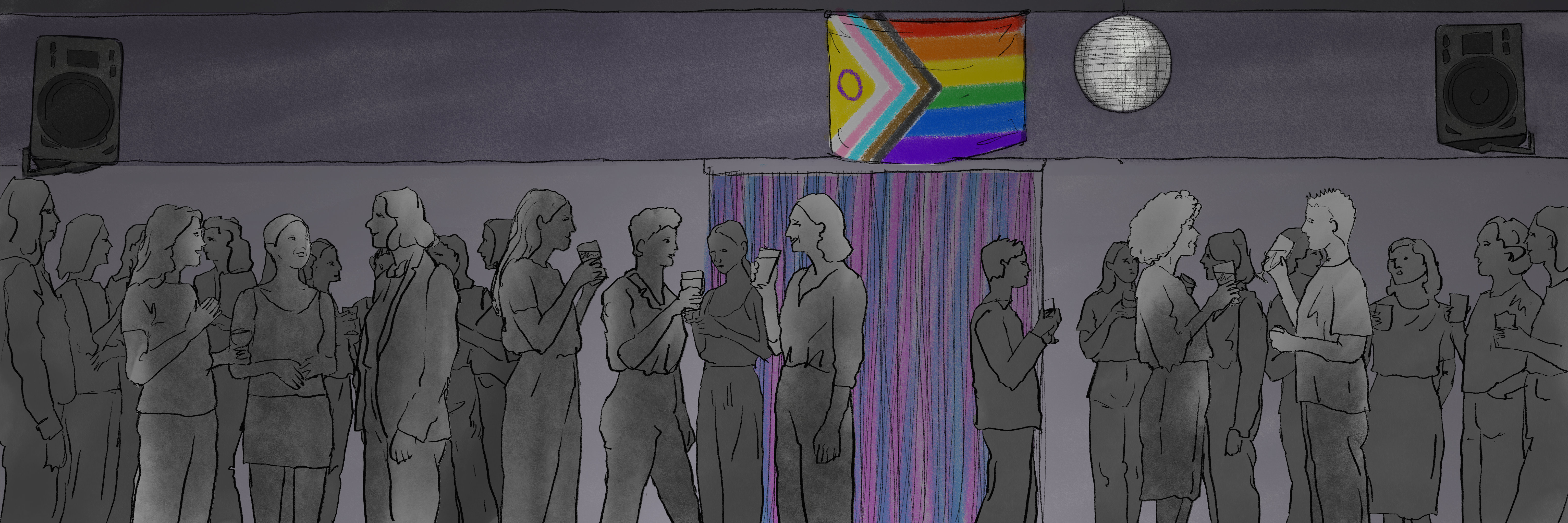
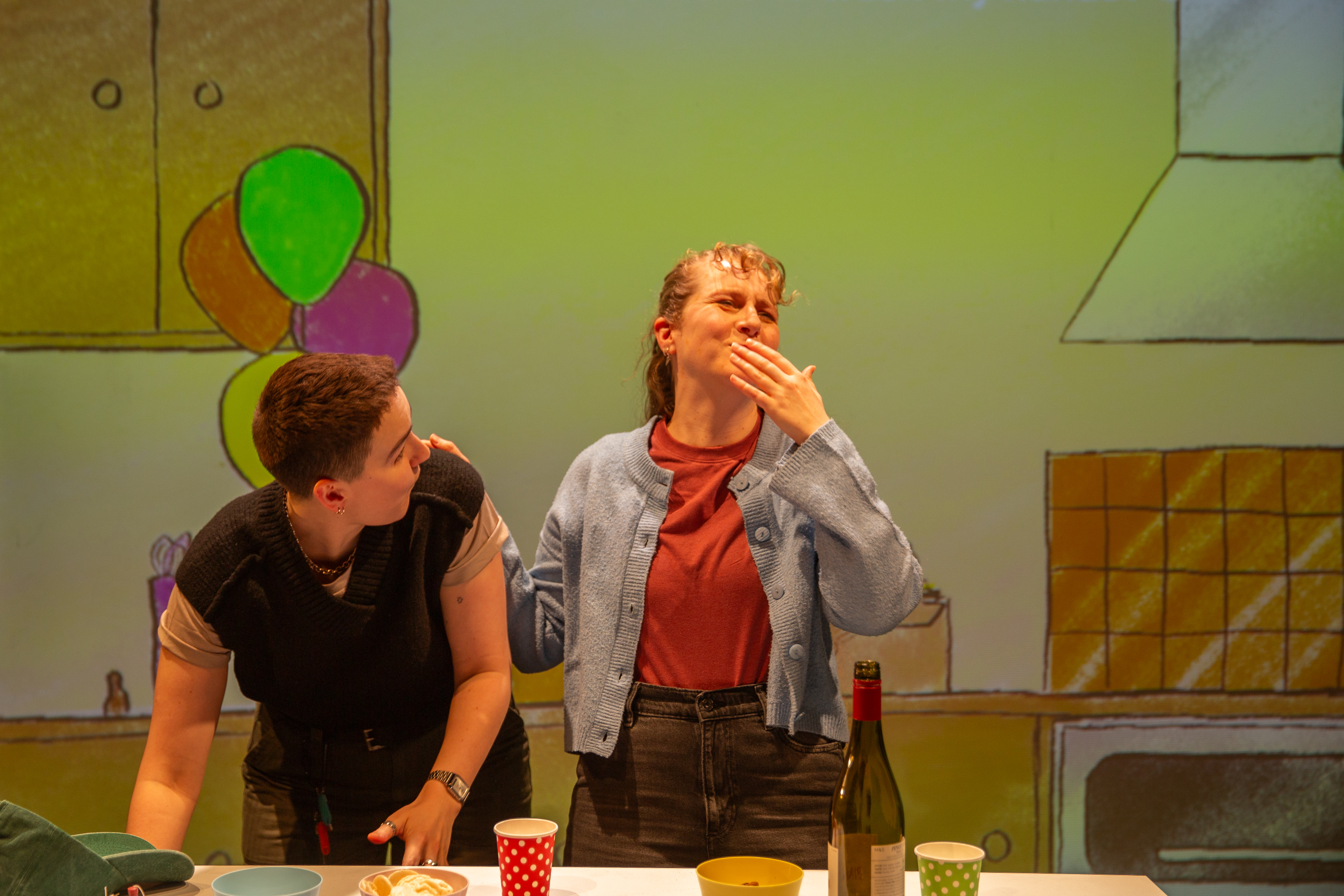
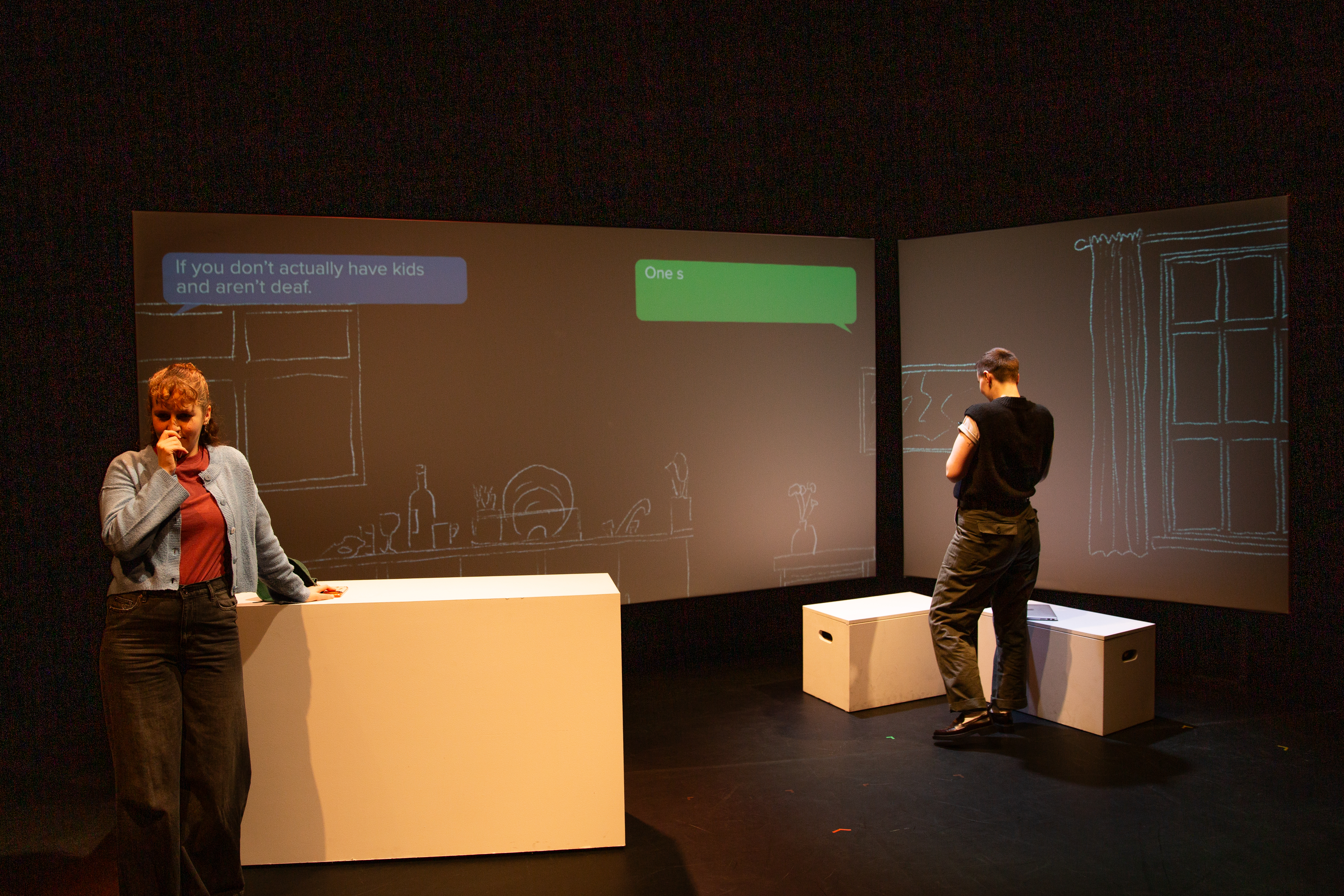
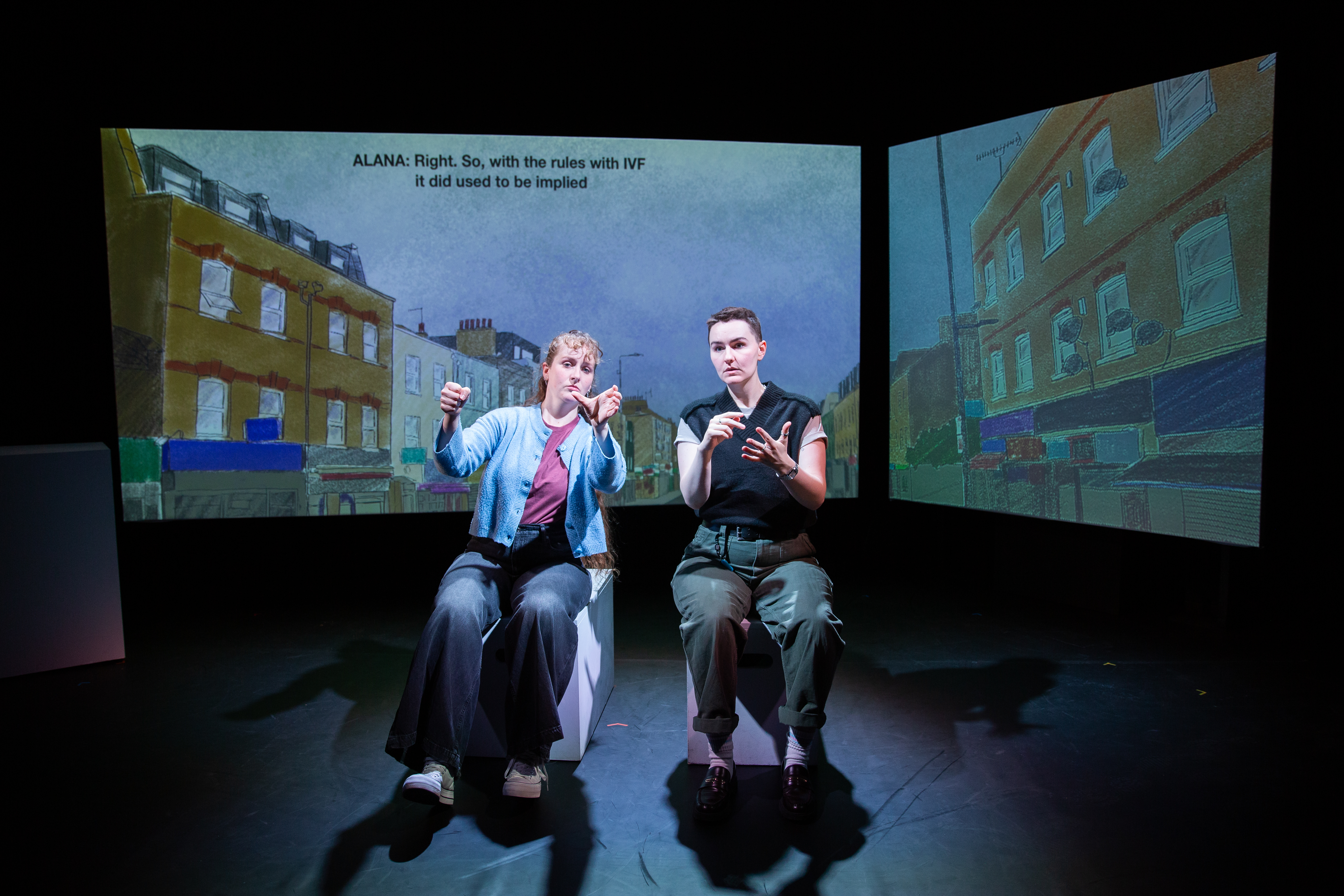
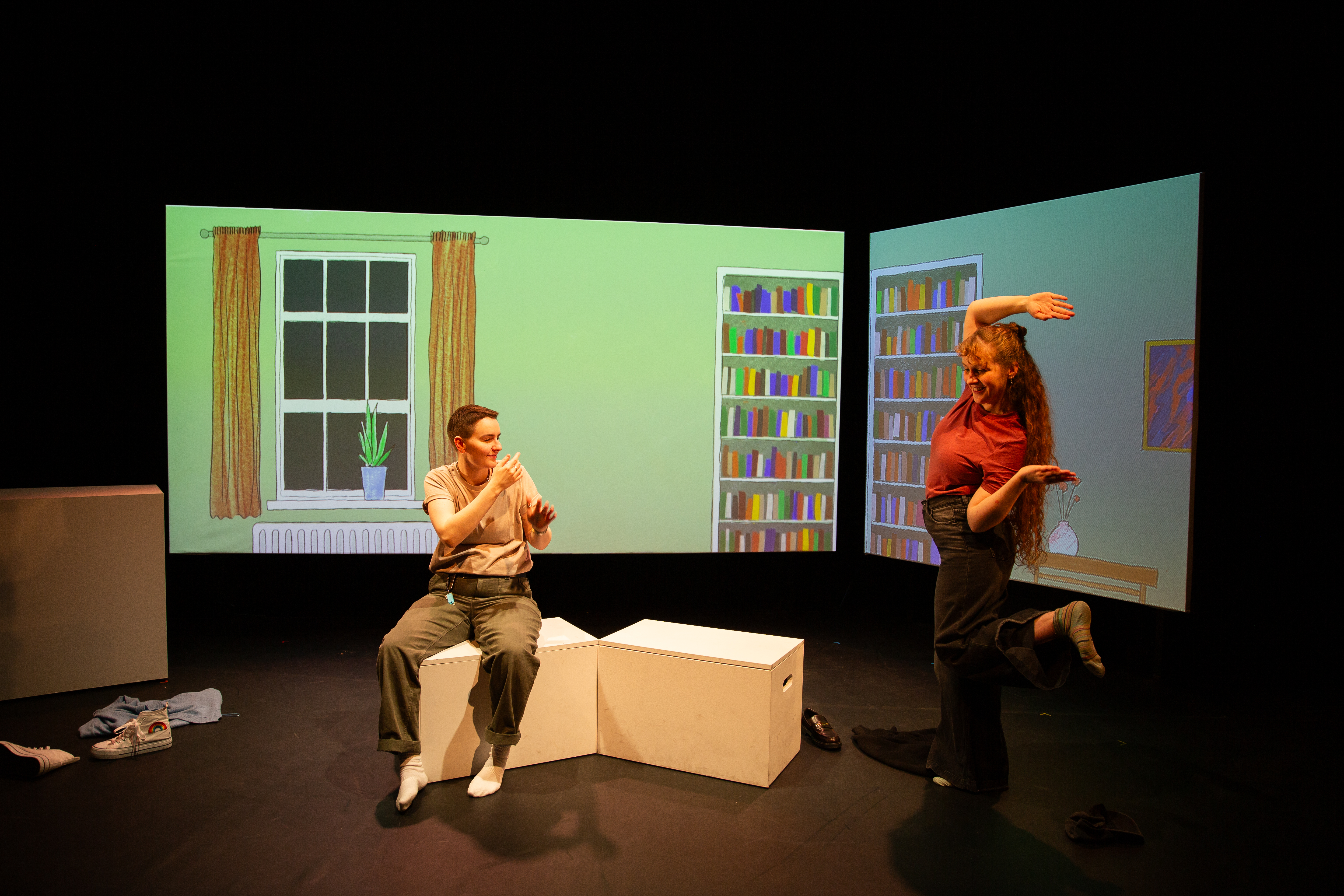
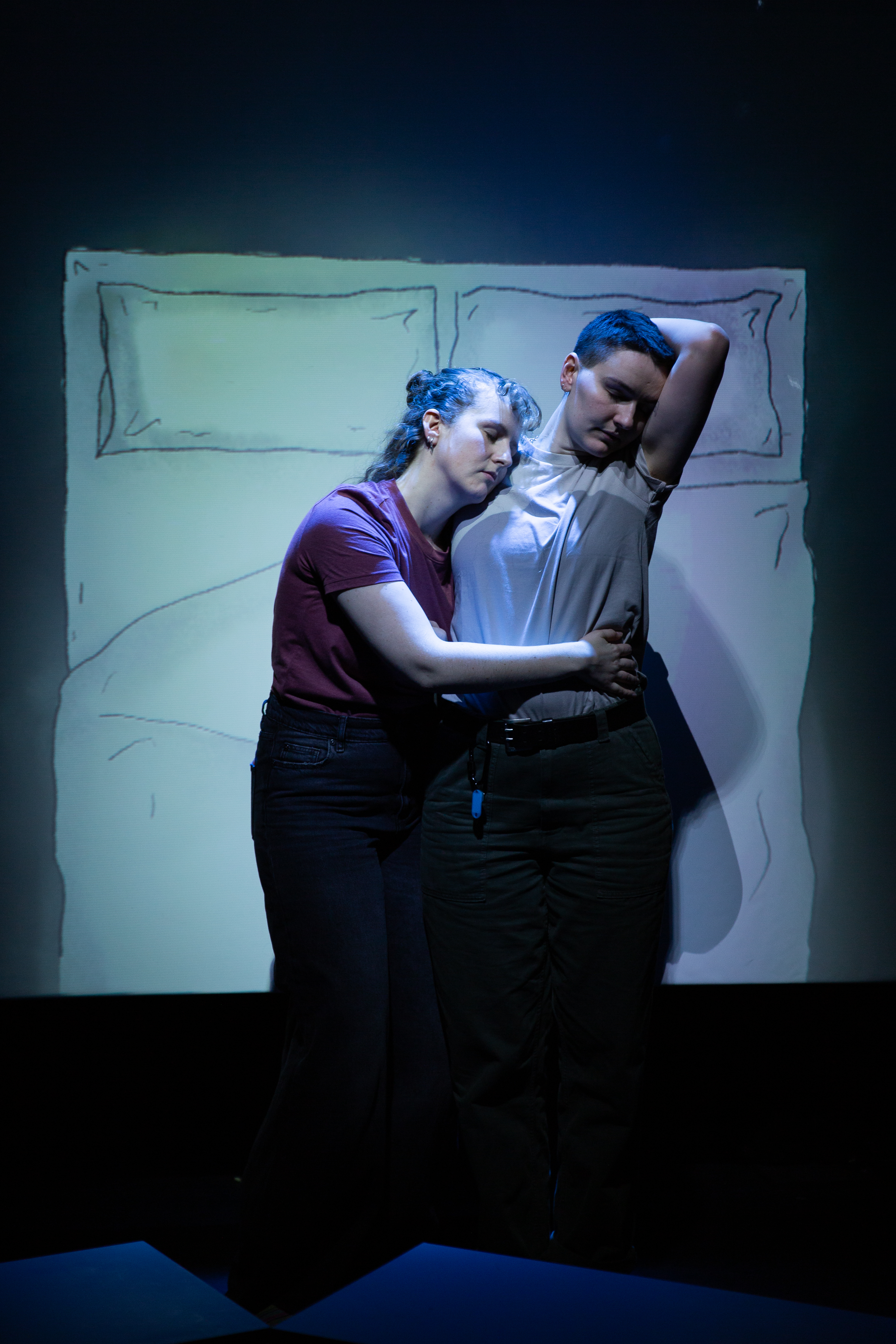
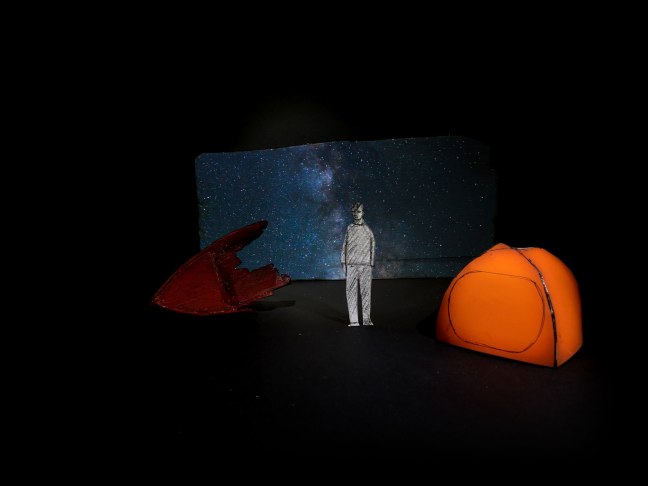
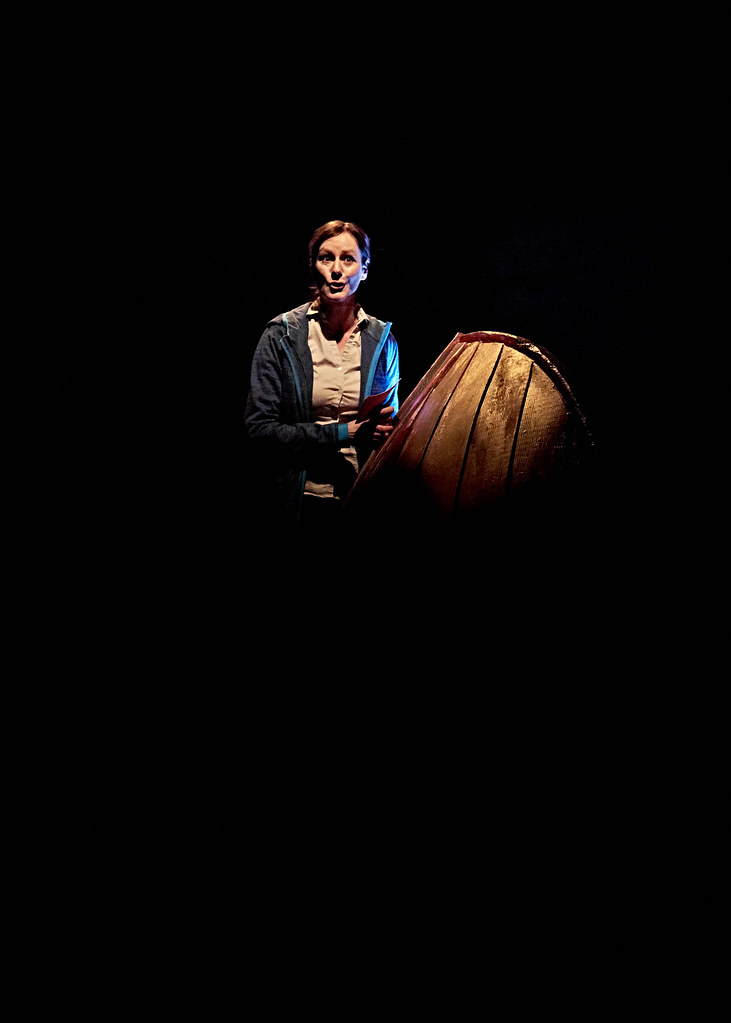
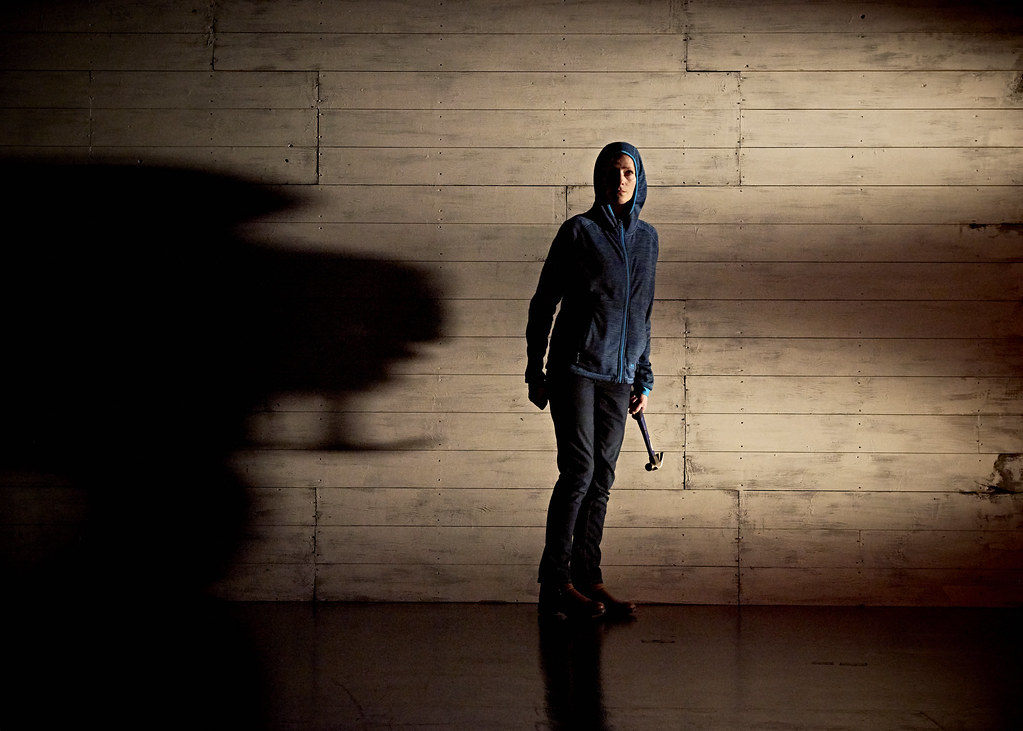
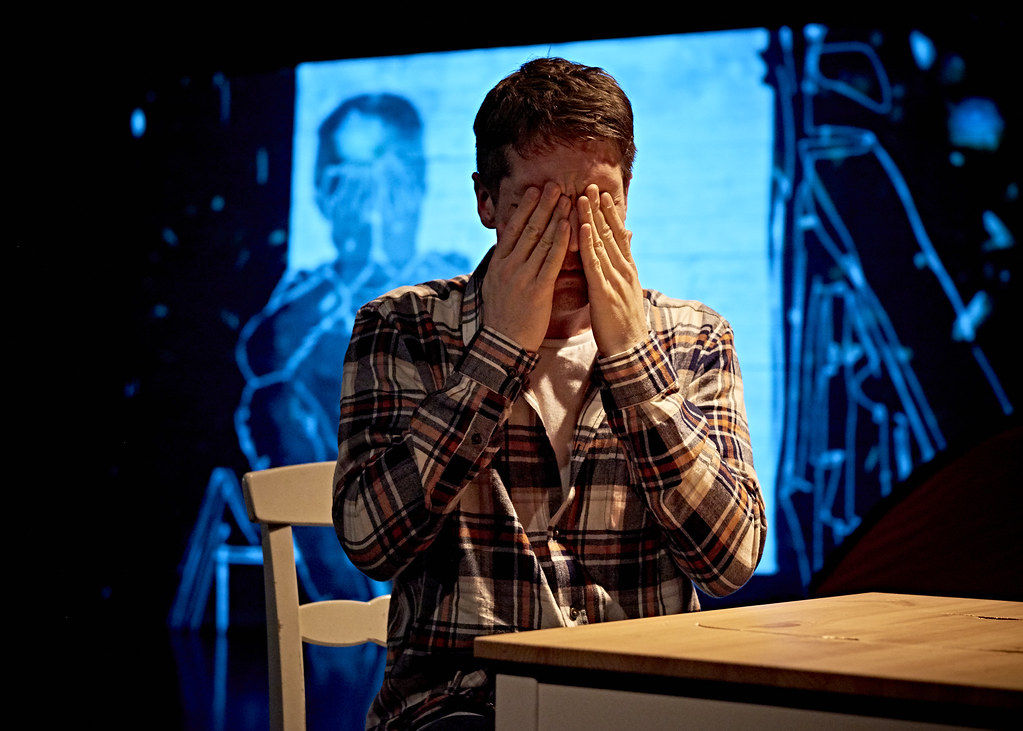
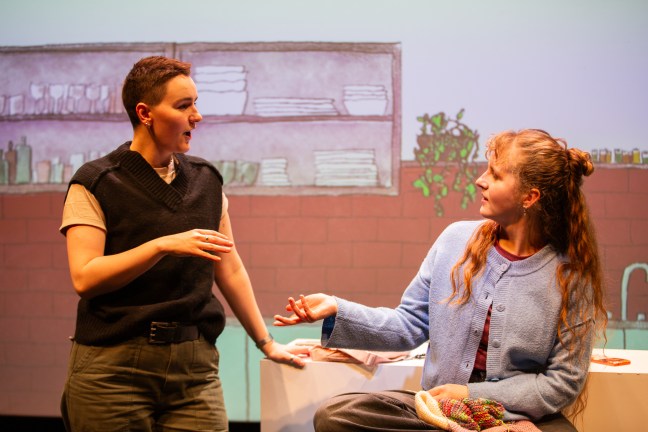
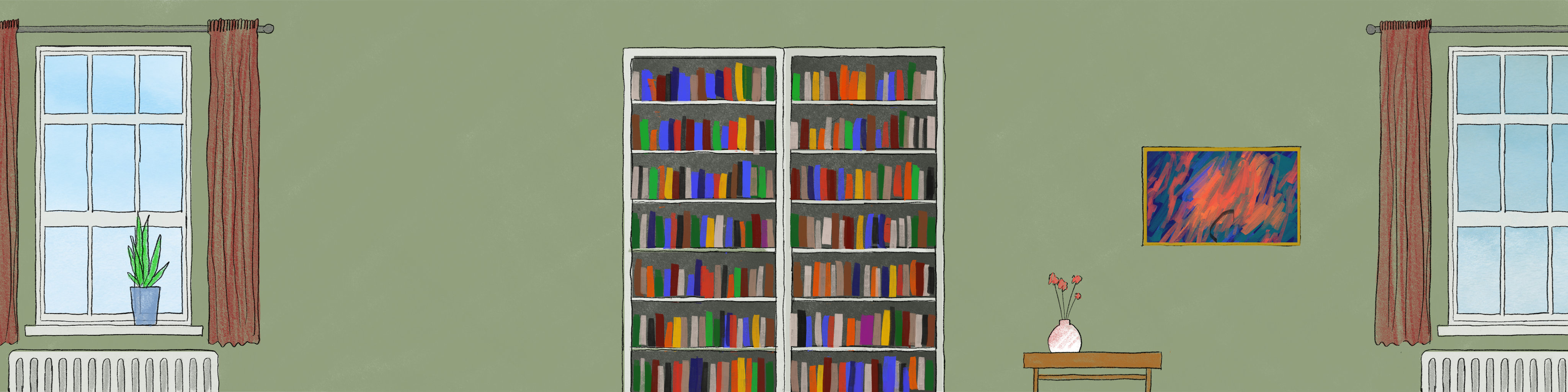
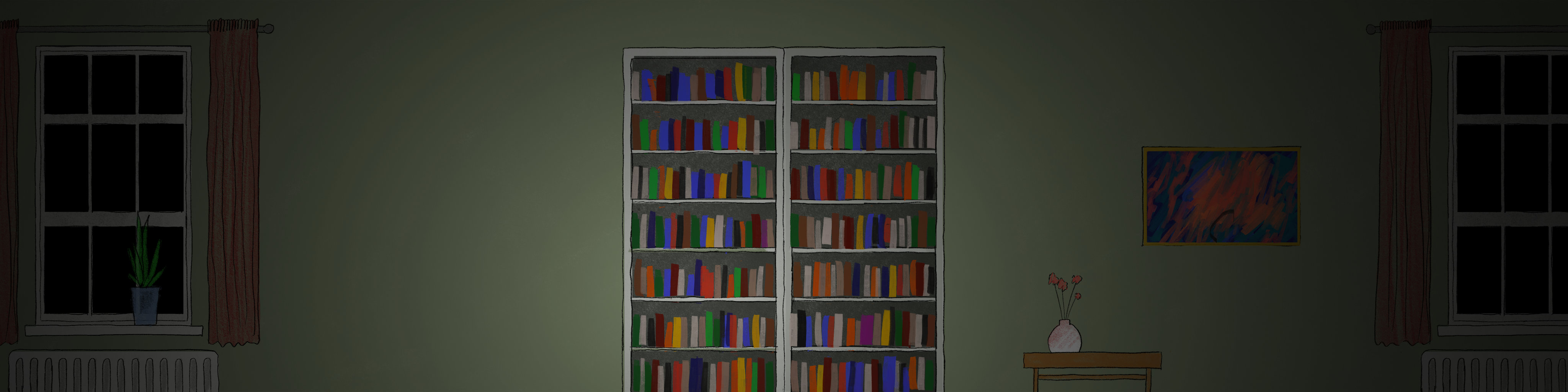
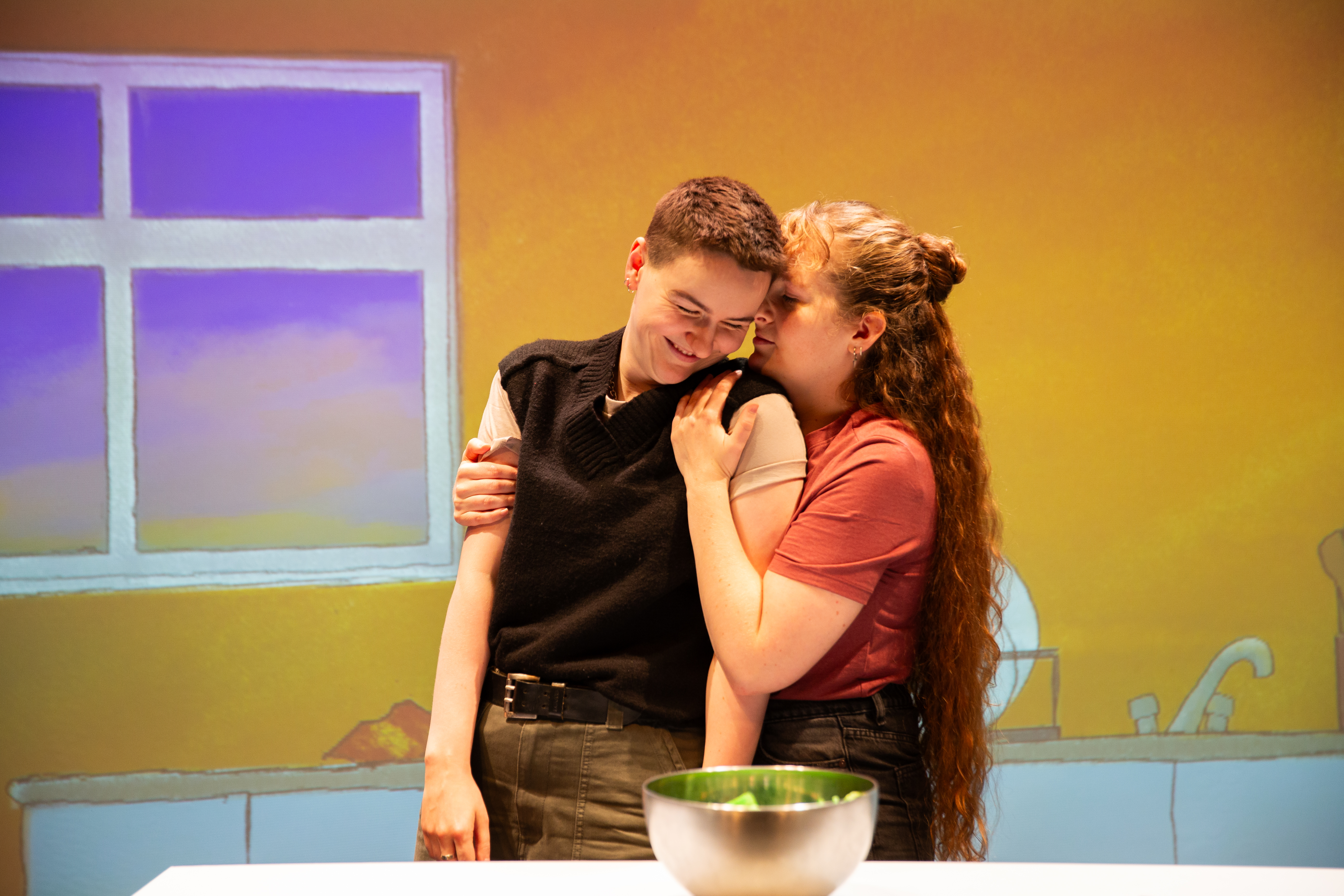
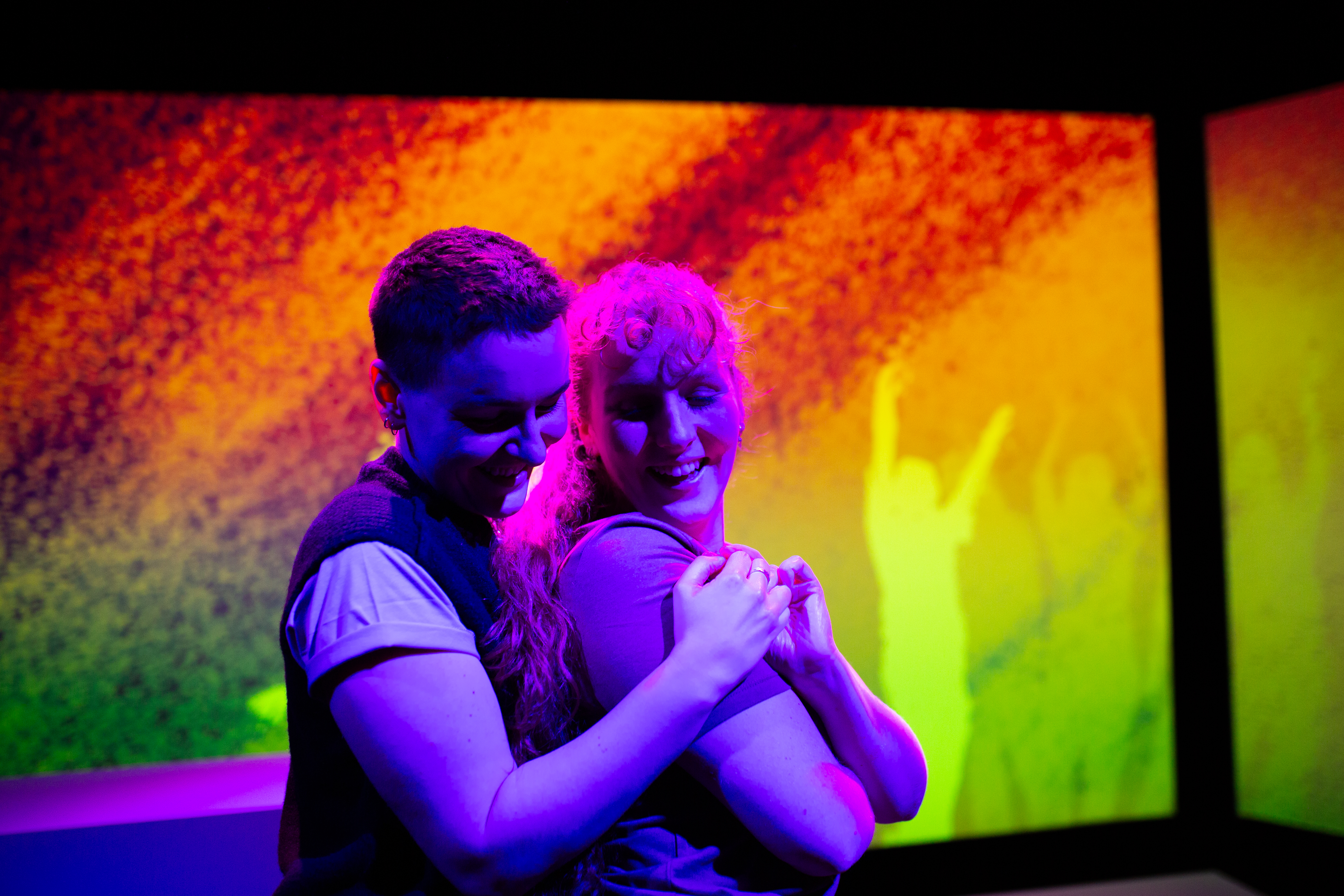
Barrier(s) is a powerful and intimate love story that ultimately dissects itself and becomes a joyfully iconoclastic critique of deaf representation on stage. I designed a claustrophobic set for it, with two screens enclosing the action like the titular barriers, enabling rapid location changes through projected hand-drawn backgrounds that shift between different times of day or night, or provide different angles on the same rooms. Interludes were accompanied by animations – again all hand-drawn. There were also hand-drawn animations for the interludes and montage sequences.

Deafinitely is deaf-led, and this show was mainly in BSL, but their work is always accessible to hearing audiences, so captions were also integrated into the projections, sometimes very simply and sometimes as text messages.

Barrier(s) opened at Birmingham Rep, and then toured to Home in Manchester and Camden People’s Theatre, London. There’s more about it here on the Deafinitely website.

I thought it might be nice to share some of my drawings for the projections, along with Becky Bailey’s production photos, but first, here are the credits:

Writer: Eloise Pennycott         
Director: Paula Garfield
Associate Director: Lynn Stewart-Taylor
Dramaturg: Rio Matchett
Set, Costume & Video Designer: Paul Burgess
Lighting Designer: Tom Mulliner
Sound Designer: Marie Zschommler
Assistant Costume Designer: Sophie Barnard
AV Programmer: Jasper Mattel           
Cast: Em Prendergast and Zoë McWhinney
Photographer: Becky Bailey

First off, here’s the artwork for three locations: Alana’s living room (day and night), a street and a bar. They were created with enough width to show the room from different angles. Windows were transparent so I could put different skies behind them. The figures in the bar were also on a separate layout so they could be faded out, enhancing the intimacy and intensity of the two characters’ date.
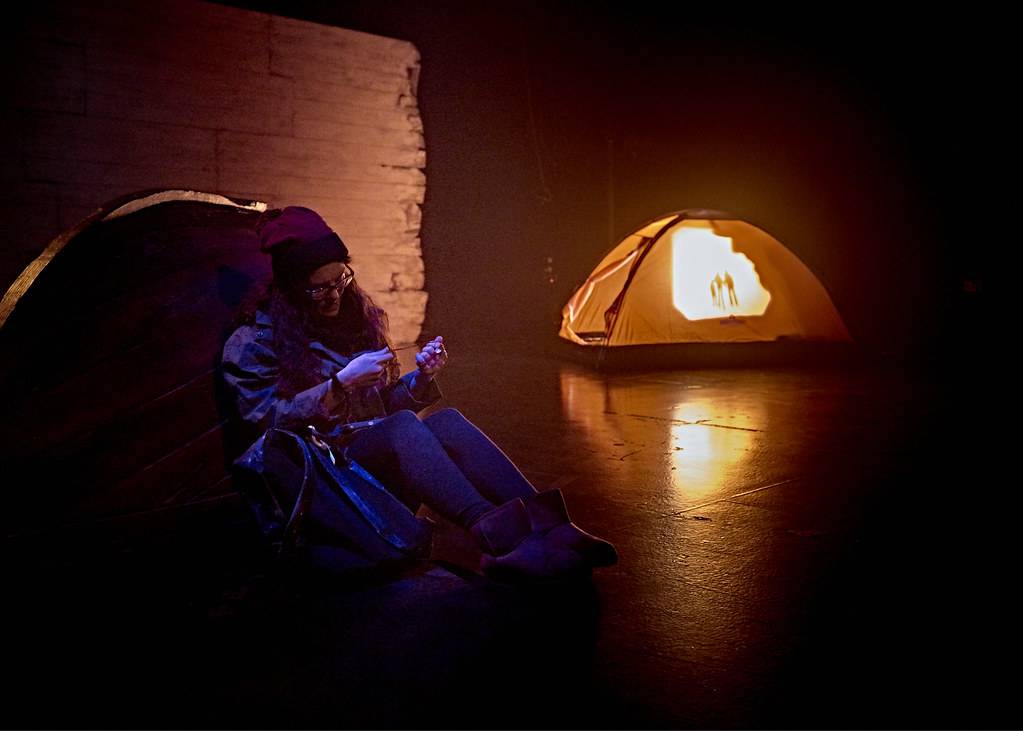
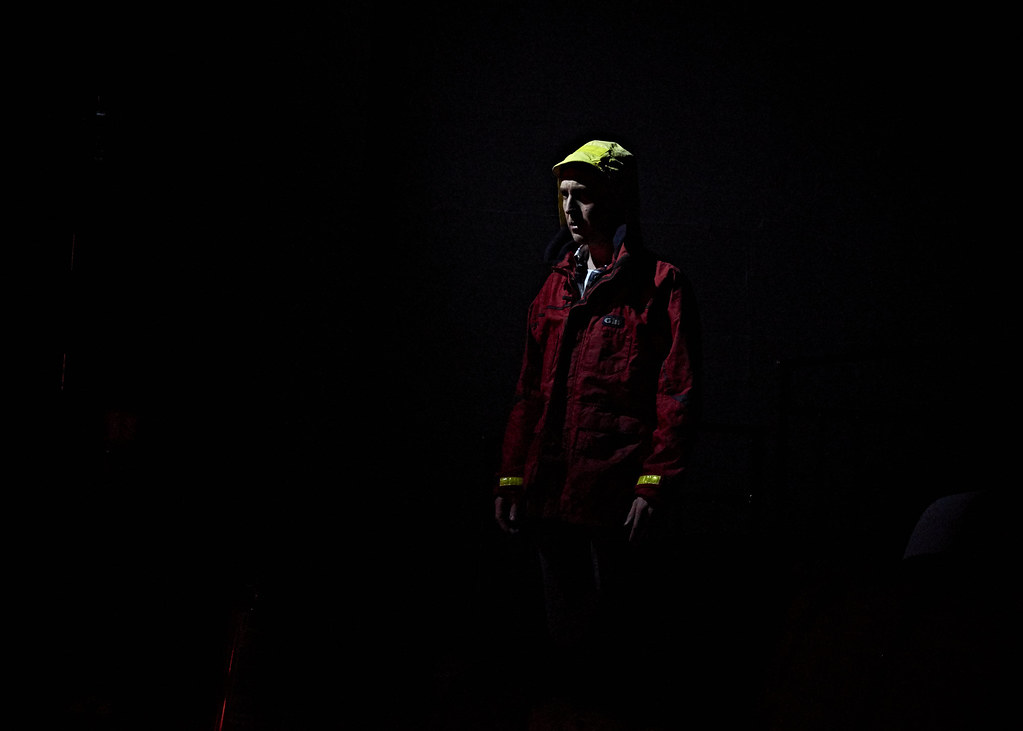
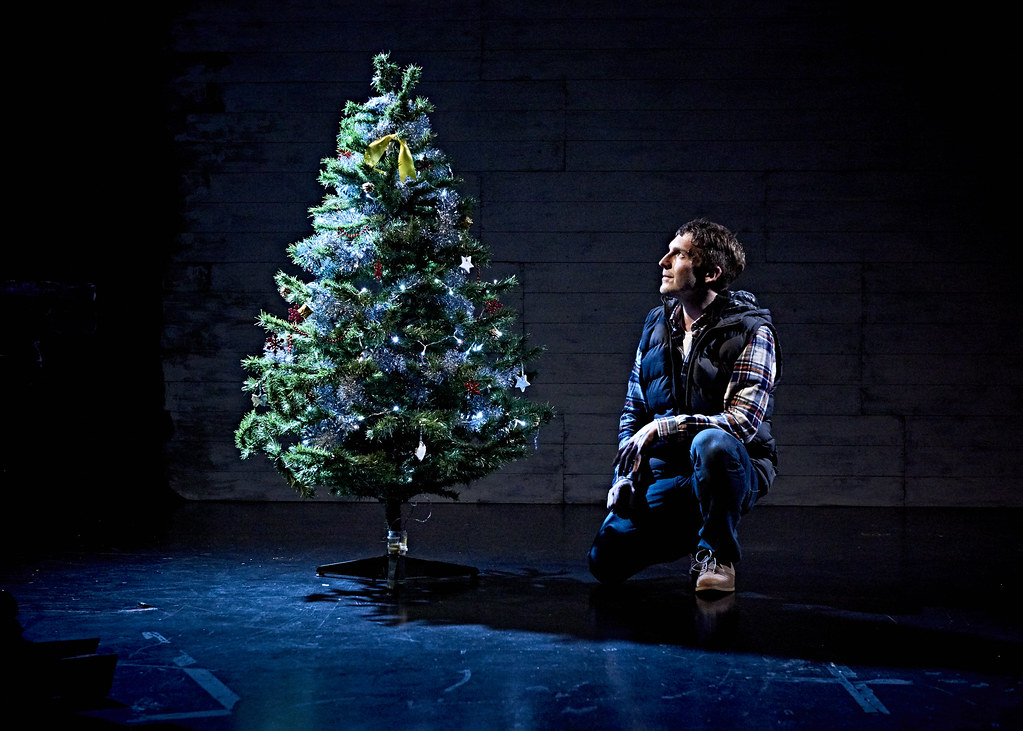
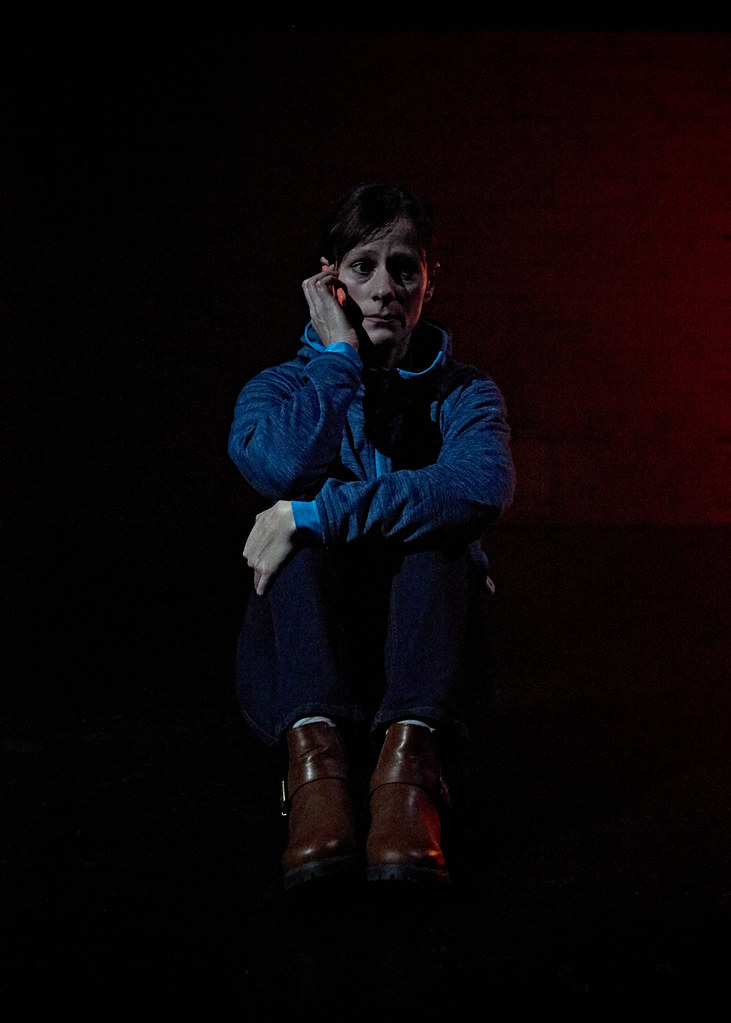
And now, some of Becky’s excellent photos. I hope this play gets a lot more life. It’s got some great observational writing, but it’s also kind of meta and pretty punk too. But I’m being careful to avoid spoilers.
A Tree for the Barbican

This project was an absolute joy.

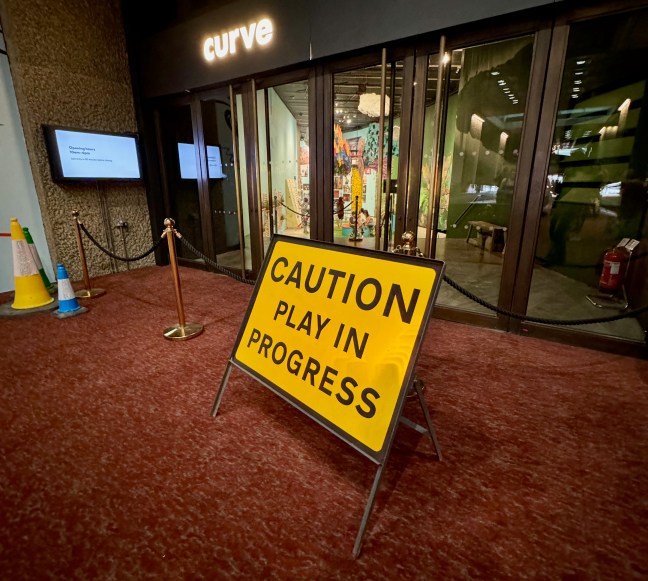
I was invited to create a tree from children’s imagination as part of Our Street, a project by the Barbican Centre’s Communities and Neighbourhoods team. They had an opportunity between Very Serious Arts Exhibitions to transform the prestigious Curve gallery space into an ‘anti-exhibition’ for local families over the summer holiday. This would be a space where kids can play and make stuff without being told to be quiet, respectful, and not touch anything. But it would also be created by artists channelling all their skill, experience, and creativity into making a space for childish imagination and playfulness to be let loose.

A class from St Luke’s Primary, just up the road, had been brought on board as consultant for the project, so I joined a creative session led by members of the Barbican team at the school, and got the kids drawing the most weird and wonderful trees they could conjure up. I then adapted, working with sustainable set builders Footprint Scenery and the Barbican to come up with something practical as well as dramatic and celebratory.

The other major partner in this was Eletric Pedals, run by Colin Tonks. Electric Pedals creates a range of amazing pedal-power things, including outdoor discos for school playgrounds powered entirely by the kids. Part of my brief was working with them to create special effects for the tree. After trying a few things out, Colin, who, let’s face it, is a bit of a genius, came up with thunder, lightning and some individually selectable park sounds, all powered by two bikes and a hand crank.

Here’s some pics from the process.

Continue reading A Tree for the Barbican

David Hockney helped me with my schoolwork

The 1985 Hockney Paints the Stage exhibition at the Hayward Gallery made a huge impression on me as a child. When I came to choosing a topic for my ‘A’ Level art project, and I saw that Hockney was designing a new production for the Royal Opera House, I knew what I had to do.

The new production was Richard Strauss’s Die Frau Ohne Schatten, directed by John Cox, with whom Hockney had already worked on several operas including the celebrated Rake’s Progress, a harmony of music and scenography that makes it one of the most perfect operatic designs I’ve seen. 

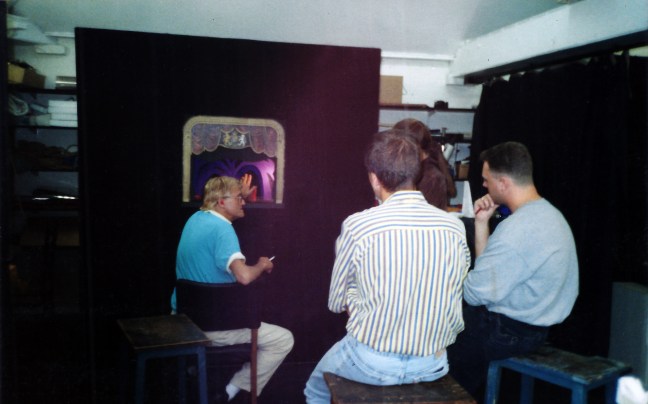
I wrote to the Opera House and Susan Usher, head of production, very generously invited me to watch a design meeting. At the end of that meeting I was told I could come to a further meeting attended by Hockney. A few days later I was in the production office at Covent Garden, a few feet away from one of titans of my teenage world, with his blue and red hearing aids and a personal supply of camomile tea bags. By this stage there was a close-to-final model but it wasn’t Hockney’s own. He’d made one at 1:8 scale. The ROH had then made the rather more accurate 1:25 version we were now looking at. At one point it became apparent that he had to remake the Emperors’ throne. ‘I can’t work this size – too niggly for me!’ he declared. He ended up making it at 1:8 when he got back to LA, and sending it over to be scaled down.

Continue reading David Hockney helped me with my schoolwork

Ecological Values

Given some of the awkward conversations I’ve had over the course of my career, I’ve added something to my website about my values, my expectations, and what I bring to the proverbial table. It’s very much a work-in-progress which I’ll doubtless keep refining. Do please feel free to let me know your thoughts!

Bubble Dreams: the movie

Actually a lovely (and very short) film about how Carolyn Defrin and I made Bubble Dreams, an interactive video installation for Tessa Jowell Health Centre, London, commissioned by Dulwich Picture Gallery. Have a watch, and if you’re in the Dulwich area, pop in. It’s in the children’s waiting area; you’ll need to ask to be let in.

I can’t post this without also mentioning the amazing team we worked with: creative technologist Rob Hall, production manager Thomas Wilson, painting assistant Carly Brownbridge and children’s workshop leader Holly Dabs. Particular thanks also to Dulwich Picture Gallery’s Alexander Moore for being so supportive and maintaining such a good balance between the needs of the commissioner and artistic freedom.

Environmental ethics and artistic practice: can they speak the same language? What does environmentally careful design look like?

This is the text I prepared for the above-named panel, at Making Theatre Green, at the National Theatre, London, 6th June 2022. What I actually said was inevitably a little different, but this version is clearer to read than a transcript with all my ums, errs, omissions and mistakes!


When I was around 12 or 13, I dug out my old Playmobil figures and made scale model sets for them. They’re quite close to 1:25, actually! I first painted the back wall of the school hall for a show when I was about 15. An early starter, you might think?

Well. According to a newspaper clipping, my mum found the other day, I got a brief write-up in the Harlow Star, aged 10, for saving up my pocket money to plant trees. 

And, frankly, it escalated from there.

So… I’ve been involved in environmental campaigning longer than I’ve been designing shows. But the crazy thing is how, until a few years ago, I totally compartmentalised the two.

Why did it take so long for me to bring these two obsessions together?

Continue reading Environmental ethics and artistic practice: can they speak the same language? What does environmentally careful design look like?

Assistant designer needed

Edit: the callout is closed early. It’s genuinely humbling how many amazing, talented people applied.

Here’s the call:

Assistant designer needed for Cece’s Speakeasy, a night of entertainment with storytellers, poets and musicians sharing new work that explores hope and action during the climate emergency. And the possible end of cocoa and coffee. The piece is being made and shown at The Albany, Deptford.

You will ideally be based in or near the SE London area and available for a minimum of 4 days pro rata in the second half of June. Prepping stuff at the venue from 21st June, with the get-in on 28th and the show opening on 30th. Key areas I need help with are sourcing/adapting costume and painting set, but there’s scope to be involved more widely, according to your interests. An enthusiasm for sustainable theatre design would be beneficial, as we are seeking to make this production as green as we can.

Students and recent graduates are welcome to apply; it’s fine to be learning/developing skills on the job and you will be supported by me and the team. But you will also need to be happy getting on with stuff independently.

We are particularly interested in working with artists that have a connection to cocoa and coffee growing countries.

£100 per day.

Deadline 12 noon Mon 14th June. No particular process for applying! Just drop me a line if you’re interested, and feel free to spread the word.

And while we’re on the subject, the callout for a creative assistant for East is also still live. [Edit: this callout has now closed but do always feel free to get in touch about Daedalus projects]

Latest blogpost for the SBTD: The Green Book

I’ve been on the committee of the Society of British Theatre Designers (SBTD) for quite a few years now, and just before the pandemic I was one of a small team of designers that, as a result of a roundtable we organised at the V&A during our Staging Places exhibition, set up a new working group for the SBTD to focus on sustainability. Now called the Sustainable Design Group (SDG), it has nearly 60 members and regular four-weekly meetings, with various subgroups (materials, costume, training etc.).

Through the SDG, I also got involved with Ecostage and am now part of core team re-imagining the Ecostage principles and pledge, along with creating a new website. I’ll be sure to tell you a lot more about all this once the website has launched.

Being part of these two projects has led to me being stupidly busy while many of my theatre colleagues were getting into baking and houseplants, and I do feel as though maybe I should have taken more of a chance to breath. But it has also been deeply rewarding and has led to all sorts of interesting connections in the UK and internationally.

One particularly interesting thing over the last few months has been contributing to the creation of The Green Book. This is a project to create an authoritative guide to sustainable theatre for the UK sector. Part One is out in beta form for you to download and trial. Led by the theatre architect Paddy Dillon, working with Buro Happold, it was initiated by the Theatres Trust and the ABTT. I’ve written about it in more detail in my latest post for the SBTD.

The cover image for the SBTD blogpost, which is in the background of the cover image for this post, is from a project by SDG member and amazing designer Alison Neighbour: the original image with an explanation and full credits can be found in the post itself.

If you do have feedback on Part One, I’ve offered to compile any feedback that comes in through the SDG, so feel free to contact me and I’ll add it to our group’s feedback document, which I’ll pass on to Paddy and his team.

Meanwhile there’s lots of other stuff in the pipeline from the various things I’m involved with, ranging from the Ecostage website launch to new design-focused carbon literacy training. Plus some actual design work is creeping hesitantly back… Fingers crossed for that.

In the meantime, if you work in theatre, please have a read of my SBTD blogpost, then download The Green Book and give it a test run.

Light Waves, Dark Skies

I designed this show a few years ago and posted briefly about it at the time, chiefly to flag up a blog post I wrote about it for the National Theatre Wales Community Blog. But I just realised I never put the production photos up on the website. I’ll add a couple to my portfolio page, but here’s the complete set.

It was a great project, not just because of the lovely final show but also because the process was so open and democratic, and we really got to experiment. I really pushed myself as a result, and I think that showed, particularly in the video design.

Light Waves Dark Skies at Chapter Arts, Cardiff.

A We Made This Production, co-produced by Pontardawe Arts Centre

We Made This: Matt Ball, Katie Bingham, Paul Burgess, Catherine Dyson, Jacqui George, Gwawr Loader, Connor Lovejoy, Cis O’Boyle, Nia Skyrme & Morgan Thomas

Performers/ Perfformwyr: Catherine Dyson, Gwawr Loader & Morgan Thomas

Stage & Production Manager/ Rheolwr Llwyfan a Chynhyrchu: Jacqui George

Designer/ Cynllunydd: Paul Burgess

Lighting Designer/Cynllunydd Goleuo: Connor Lovejoy (Light Designer for R&D: Cis O’Boyle)

Sound Designer/  Cynllunydd Sain: Sam Jones

Full details: http://wemadethis.org.uk/light-is-like/credits/

Staging Places at the V&A

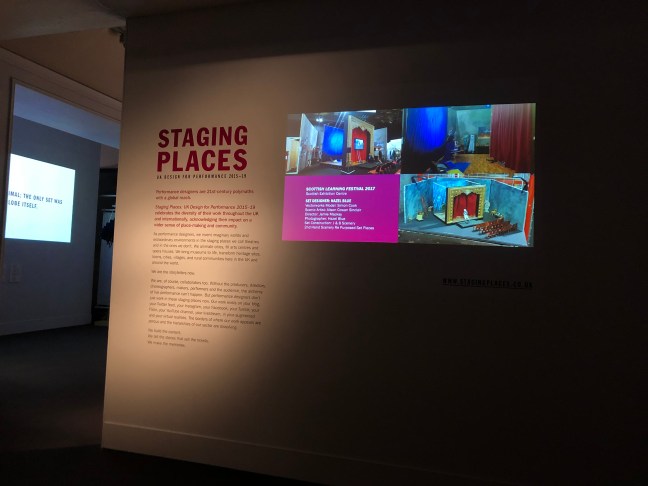
You only have till the middle of March to catch Staging Places at the V&A. Curated by Fiona Watt and designed by Andreas Skourtis, it’s a great exhibition that not only reflects design for performance by practitioners active in the UK over the last four years, but also delves into and attempts to demystify the design process. In the same open and exploratory spirit, the exhibition design incorporates a round table, at which we’re hosting events and discussions. Follow The Society of British Theatre Designers on Twitter, Instagram or Facebook to keep up-to-date. Or better still, join!

Panos Andrianos has made a teaser video for the exhibition, with sound by design by Romanos Papazotos:

Continue reading Staging Places at the V&A