Lost in Improvement: a Quick Postcript to My Previous Post

Further to my thoughts on the dangers of generative AI not just to our livelihoods but to how we relate to Nature in its broadest sense, I also want to flag up a smaller issue I have with this new technology. The biggest impact of AI in my working life so far has been improved captioning, and spelling and grammar checks. They’re still quite* inaccurate, but as someone who learned to do a lot of things the long way because there were no other options (or no other affordable options), I appreciate how hugely time-saving they are. I appreciate how much they’re improving. The inaccuracy matters, though.

Most generative AI suggestions are great reminders that fundamentally, what this tech is doing is taking an input, comparing it to other similar things, and suggesting an option that’s closer to commonly used patterns. You end up with a grammatically correct piece of text that, at best, has had its individuality sanded away and, at worst, means something entirely in contradiction to what you’re trying to say. In the case of Grammarly, for example, it offers to ‘improve’ your text, but really, it’s a kind of normalisation.

For transparency, I should say that I use Grammarly regularly, and its spelling and grammar checks are the best I’ve found, though I reckon I only accept 75-80% of the suggestions, and I’ve never been happy with the generative AI suggestions.

It’s the latter I want to highlight. I tried re-writing a paragraph from my previous post with Grammarly’s generative AI. Here’s the original:

Continue reading Lost in Improvement: a Quick Postcript to My Previous Post

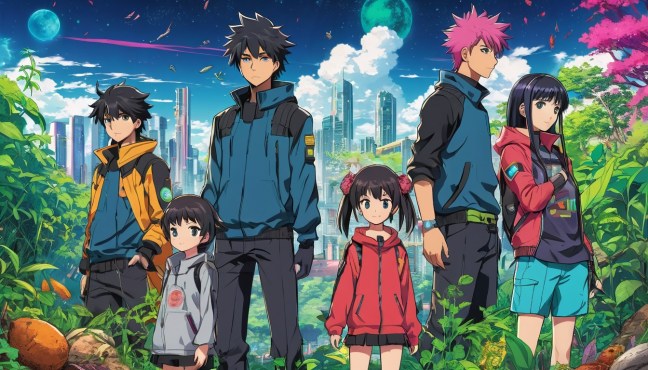
Generative AI and Nature Disconnection – some thoughts

I’m thinking a bit more about AI… and I’m no Luddite, by the way. I’ve been an early adaptor since Roydon County Primary School got its first computer sometime in the 80s. Also, to be clear, I’m aware that AI, as a tool in the right hands, has the potential for good. In medical diagnosis, for example.

But…

Generative AI is different from what’s gone before. There’s the extractivist theft from people who make a living from their creativity. And the enormous amount of carbon it emits. And, of course, the way it can be used to create fake news, manipulate voters, creep under the radar of broadcast regulators and fundamentally re-write our relationship with the truth. Not to mention how it exponentially increases the advantages of those privileged with access to tech. And the fact that it makes us more productive (in capitalist terms) at a time when we really need to learn how to celebrate and sustain what we already have. Oh, and the fact that, at some point, it’ll pass the Turing test, and we’ll have a massive ethical and legal dilemma on our hands. 

That, however, is not all.

This AI-generated dystopia sits within a much wider context of alienation and atomisation – from each other, from society and from nature – that has been gathering pace for centuries but has been accelerated by high-tech neoliberalism, from smartphones and Amazon to fake lawns, plastic-wrapped bananas and robot pets. 

Of course, some of these mod cons offer huge, even life-saving benefits to individuals with specific needs. But their cumulative effect on society leads to a kind of Nature disconnection. And that’s what I want to talk about because I think AI has the potential to accelerate this to a frightening degree.

Continue reading Generative AI and Nature Disconnection – some thoughts