Does environmentalism transcend left and right?

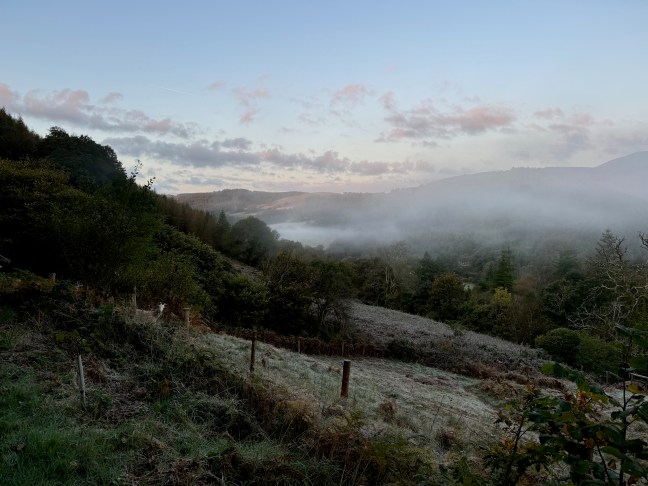
A view of hills shrouded by cloud, with a patch of early-morning sunlight, and a goat in the foreground

Back in the 90s when, as a teenager, I was first getting into green politics, it was often said that green would transcend the ‘grey’ politics of left and right. You don’t hear that much any more. Maybe we should. Is right-wing environmentalism part of the answer to the multiple ecological crises the world faces? Can we meaningfully create a consensus outside our socio-economic political differences and find ways to work together?

I’ve been thinking about this a lot recently because of a discussion on the topic I was part of. I will boil the conversation down to its two main arguments. The proposition, as it were, is that we exist in a bubble of other like-minded, progressive, evidence-led people while, in the wider world, people are falling for dishonest and divisive far-right rhetoric. It is as if we live in separate universes with entirely different understandings of reality. The counterargument is to acknowledge that people on the right also care about the environment – some of them, at least – and start to build a consensus that transcends the old left-right binary. You can have right-wing and left-wing environmental politics. Rightwing environmentalism might look like Tories caring about the countryside, for example, or eco-fascism, or a belief that capitalism will come up with a green technofix.

Continue reading Does environmentalism transcend left and right?
What is Green Criticism?

The last time I was purposefully academic was probably when I sat my finals. Even then, we’d only been educated in the historical contexts of the writers we studied; there was little contemporary theory. Since then, I’ve taught at half a dozen universities at least, but always as a practitioner. Academically cutting edge I am not! But I do want to understand how the work I and my colleagues do in the arts fits with the urgent need, in the face of imminent climate breakdown, to view society as part of an ecological system. The question ‘what is green criticism?’ therefore seems to me to a pressing one. Green thought has provided us with a sophisticated analysis of society and its relationship to planet. How can we apply it to artistic practice?

Around the time I did my English degree, there were some books emerging that used ecology as way to approach literature: Jonathan Bate’s Romantic Ecology springs to mind, and Kim Taplin’s Tongues in Trees; I probably should re-read them. The aim of these books was to understand how writers related to nature: how ‘green’ they were. But that approach is about ecology; it’s not employing ecology as a critical tool. I wrote an extended essay in my third year about depictions of landscape in literature and painting at the time of the first generation Romantics. I was interested in the sublime and the beautiful, not out of any kind of swooning romanticism but because they suggest two ways of modelling our desire for the external. I’d noticed how some writers saw nature as a force that transformed the tiny figures traversing its landscapes, while some saw it as something that framed or provided a kind of extension to/illustration of heroic anthropocentrism. I was somewhat out on a limb, frankly. It probably wasn’t my best work. And it was also mainly ‘about’ the natural world. Yet it made me realise that there are analyses of nature which can – and probably should – be be applied to any kind of discourse.

So what might real green criticism be? Is anyone writing about how ecology could be a useful way to look at culture?  Continue reading What is Green Criticism?