Maybe AI can save us (by accident)

Given the rapid growth of generative AI and society’s addiction to manipulative, corporately controlled online platforms, you might think this is the end of skilled creativity. If anyone can make a film or a song or a novel in seconds, what’s left for skilled artists and craftspeople? 

Well, quite a lot, I think. 

Yes, we need to fight tooth and nail against the wholesale theft of our work by tech corporations, the loss of livelihoods, and the flooding of culture with soulless, vacuous simulacrums of creativity. Let alone the ecological damage and data harvesting. But I keep thinking about how MP3s and file sharing were going to kill live music, which has, in fact, flourished. At the time, it felt that, after the initial excitement waned, the ubiquity of downloads ended up increasing the value of in-person experience. 

AI is now a spectacle in both the everyday and Debordian senses of the word. But as it is revealed as a kind centripetal force, pushing culture into smooth unoriginality, it will, I believe, remind us of our profound need for human community and connection, and for originality, creativity and craft. It will increase the cultural value of things evidently made by humans, using their skill and expressing something original, meaningful and authentic. It will help us appreciate the rough edges – the grit in the oyster – which allow art to take us to new and challenging places; places we didn’t expect to go.

That is good in itself and gives me hope for the creative sector, both professional and participatory, whether it’s live performance, art manifestly made by human hands, author readings and book signings, craft workshops, communal music-making and dancing… All the myriad points of creative connection that help hold society together.

But I have another hope, too; that if more and more people step away from the circus of corporate spectacle, see the atomised, narcissistic and easily exploitable society it fosters, and seek meaning and fulfilment through human creativity – especially co-creativity – we may also find we’re nurturing the conditions needed for meaningful, radical political change.

Fly, you fools! (or How Popular Culture Can Help Tell the Climate Crisis Story)

We win or lose through the stories we tell. They’re what changes the world. And the most important story we need to tell today is the one that gets the people of Planet Earth to take meaningful action on the ecological breakdown.

The stories we’re offering now, however, aren’t working.

It’s fine to tell those who respect science about how we’re on track for catastrophe, because they understand evidence. It’s fine to tell those already awake to social and environmental injustice how climate change is driven by our economic system and the power structures that maintain it, because that fits their existing worldview. But what’s the story for everyone else?

Humans are brilliant at denial. Being able to put aside thoughts of suffering and mortality, to compartmentalise and not feel everyone else’s suffering too deeply, helps keep us sane. It seems that’s how the majority of people respond when faced with the facts of impending apocalypse too, and it’s understandable. Climate change is deeply frightening and it’s coming at us like juggernaut with broken brakes.

Continue reading Fly, you fools! (or How Popular Culture Can Help Tell the Climate Crisis Story)

A Letter From an Old Democracy to One Struggling to be Born

Dear students,

I’m writing to you from 5,929 miles away in London, while you risk both your safety and your liberty in the struggle for democracy in Thailand. I worry about your wellbeing, of course, but mainly I’m proud of you for standing up for what you believe in.

I want to say a few words to those of you I’ve had the honour to teach, and to any others who are interested in the perspective of someone with many years’ experience of British politics. I want to say something about why I think democracy matters. It may not be for the reasons you think.

Continue reading A Letter From an Old Democracy to One Struggling to be Born

How Not to Save the World

There’s a vanguardist streak in the environmental movement which I think does more harm than good. It can lead to an alienating kind of arrogance that we can’t afford. We desperately need more people on our side if we are to build up the critical mass of public opinion necessary for the scale of change we need. Not that we don’t need people to take the lead. But taking a lead is not an end in itself. It’s pointless if you don’t take people with you. The vanguard is not the movement; the vanguard is a possible catalyst for the movement.

There are many lessons to learn from the twin fiascos of Trump and Brexit: one is that people act on their feelings, not on rational analysis. Another thing to consider is that most of the damage inflicted on the environment is carried out by wealthy people and corporations. It’s important for the rest of us to be good, green consumers, but that’s nothing compared to the scale of change we need, which is radical and systemic. Basically, we need government action and, while protest and publicity stunts are fine for bringing issues to attention, large-scale change is only going to happen if enough people care. Most politicians will only do what gets votes. Put all these things together and, as I’ve been saying for a long time, the way to save the environment is for people to want it to be saved. They need to feel it’s their struggle, to choose to make the necessary sacrifices now so that future generations may live bearable lives. Continue reading How Not to Save the World

On the Loss of Citizenship

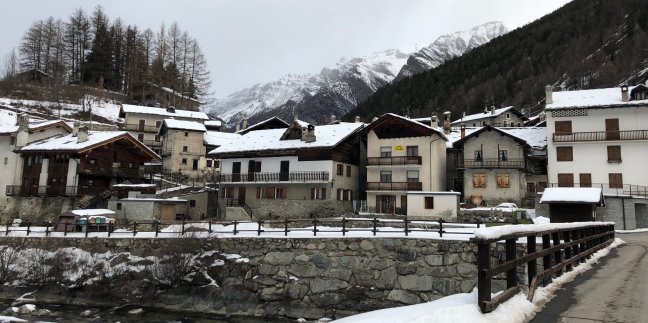
This is probably my last night here as a citizen. My family’s been coming here since my aunt worked in Italy in the 70s. It’s a modest, friendly ex-mining village in a beautiful corner of the Alps: lovely for walking in the summer and cross-country skiing in the winter. It has a downhill slope too, which is OK but not great. And good mountain-biking, if you like that kind of thing. It’s unpretentious. It’s not expensive, as these things go. Some crazy Brits and others come to risk their lives climbing frozen waterfalls but most the people who come here are Italian. It’s very white and I’d guess a fair few residents voted for the fascists of La Lega. There’s some poverty. People are generally kind, and go out their way to be helpful. There are things that drive me crazy and many things I love, the same as in the UK.

We have long-standing friends here. We always stay in the same apartment. My aunt knows most the village. I haven’t been coming here as long as her but when I go to the shops I meet people I know. My aunt comes here twice a year, and after she retired she spent 11 months here. She sometimes gives free English lessons. And when she’s been ill, or had a problem with the car, or had any other kind of trouble, there’s never been any shortage of help. We’re not locals, but we feel at home here. And of course we share citizenship. You see more regional than national flags here, and you also see plenty of EU ones. Continue reading On the Loss of Citizenship

What is Green Criticism?

The last time I was purposefully academic was probably when I sat my finals. Even then, we’d only been educated in the historical contexts of the writers we studied; there was little contemporary theory. Since then, I’ve taught at half a dozen universities at least, but always as a practitioner. Academically cutting edge I am not! But I do want to understand how the work I and my colleagues do in the arts fits with the urgent need, in the face of imminent climate breakdown, to view society as part of an ecological system. The question ‘what is green criticism?’ therefore seems to me to a pressing one. Green thought has provided us with a sophisticated analysis of society and its relationship to planet. How can we apply it to artistic practice?

Around the time I did my English degree, there were some books emerging that used ecology as way to approach literature: Jonathan Bate’s Romantic Ecology springs to mind, and Kim Taplin’s Tongues in Trees; I probably should re-read them. The aim of these books was to understand how writers related to nature: how ‘green’ they were. But that approach is about ecology; it’s not employing ecology as a critical tool. I wrote an extended essay in my third year about depictions of landscape in literature and painting at the time of the first generation Romantics. I was interested in the sublime and the beautiful, not out of any kind of swooning romanticism but because they suggest two ways of modelling our desire for the external. I’d noticed how some writers saw nature as a force that transformed the tiny figures traversing its landscapes, while some saw it as something that framed or provided a kind of extension to/illustration of heroic anthropocentrism. I was somewhat out on a limb, frankly. It probably wasn’t my best work. And it was also mainly ‘about’ the natural world. Yet it made me realise that there are analyses of nature which can – and probably should – be be applied to any kind of discourse.

So what might real green criticism be? Is anyone writing about how ecology could be a useful way to look at culture?  Continue reading What is Green Criticism?

A Long Wait for Radical History

My personal projects always seem to take ages to get off the ground. I suppose this is because all the work that leads up to getting funding has to happen in the gaps between everything else, not least designing shows for other people. Which I love doing and I get paid for. I’m not complaining. Still, getting a project underway takes a while and this one is taking even longer.

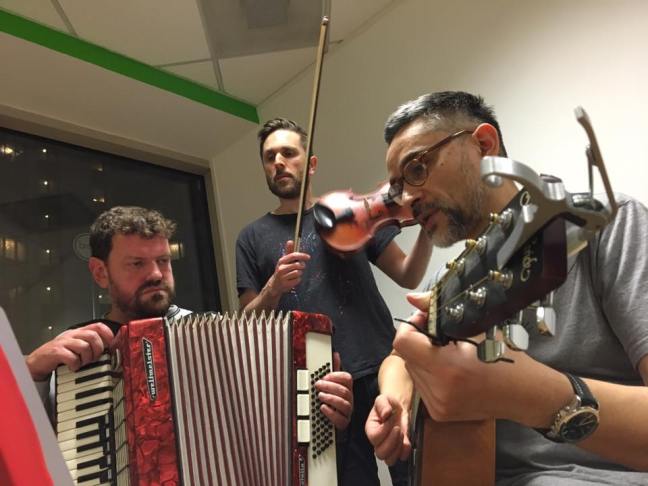
I had the idea for a project about English radical history around eight years ago, I think. At any rate, it was while I was directing A Place at the Table. Our stage manager at the time, Peter Barnett, was another fan of folk music. I remember discussing the exciting new idea with him, so I can roughly date it. This was also roughly around the same time as the Black Smock Band emerged from a series of gay folk nights in Vauxhall. A lot has happened since, with the far right seemingly in the ascendent, but even then it felt as though the narrative of dissent and radicalism in English history needed a bit of rescuing, from all that nonsense about how the Empire wasn’t so bad really and migrants are ruining our way of life. (Quite how you can hold both beliefs at once I don’t know. Anyway.) A major part of what we do as a band is explore the links between then and now, often updating traditional songs to explore their resonances to our contemporary social or political situation. Oh and making them less bloody heteronormative. It made sense to bring these two things – the band and the idea of a performance around English radical history – together. Continue reading A Long Wait for Radical History

Letter to a Brexit Voter

Dear friend,

I wasn’t a passionate supporter of the EU until the referendum made me stop and think. The thing I really valued highly was my European citizenship. The freedom to travel and to work in the EU. The sense of being part of of an expanding world. Of taking a small step towards that Star Trek dream of united Earth. But I could see that the Union’s democratic structures were as flawed as the UK’s, that the Euro was being torn between the very different economies of the richer and poorer nations, and that sometimes the bureaucracy could slide into absurdity. Plenty to criticise. Plenty to reform.

Then came the referendum. So I did my homework and it swiftly become evident that it was overwhelmingly in our best interests to remain. Not only because of the direct political and economic benefits to the UK but also the strategic benefits in the fight for social justice. Chief among these was that a Leave result would fuel the fanatics: not just the anti-European ones but the racists, antisemites and Islamophobes. Other forms of bigotry too, no doubt. As for the UK’s political and economic interests, the reasons have been given thousands of times in thousands of articles. The Guardian seems to be running several post-mortems a day in its opinion section. I’m not going to go over all that again.

Instead, I am going to talk about my personal experience. Why? Because I want you to know that we’re not enemies. And then I want to talk about how we can move on. Politicians and media alike have painted us as opposites in some kind of culture war. I disagree. I think we’ve fallen out over a big misunderstanding.  Continue reading Letter to a Brexit Voter

Why We Won’t Shut Up

I feel as though I should write something personal to explain why I’m so hurt and bewildered by what has just happened. Especially since plenty of people seem to think folks like me should shut up. In the lead-up to the vote I focused on facts; on the direct disadvantages of leaving and the possible political consequences. I didn’t make it personal; I’m involved with politics because I care about our country and the wider world. I would never normally make the kind of argument I’m about to make now. I’m even going to try, for once, to resist discussing the bigger implications. But these are exceptional times.

Firstly, however, let’s remind ourselves that this wasn’t an election for politicians who can do only limited damage over only a limited period; it was a decision with massive, long-term ramifications. These are not only political. Many of the consequences put severe limits on our personal freedoms; so for those of us who embraced those freedoms, the decision to leave the EU restricts the way we live our lives and, as I’m going to argue, is a kind of censoring of the way we see ourselves. Continue reading Why We Won’t Shut Up

I’m done with the economics, how about the revolution?

I’ve tended to be quite ambivalent about the EU in the past. But I now find myself pretty passionate about staying in. I wanted to articulate why.

One thing to get out of the way first. If conventional economics are your thing then the economic arguments for the UK staying in the UK are overwhelming. Even som’eone without much economic expertise – like our Chancellor, say –  can see that. Conventional economics is clearly a load of cobblers though. Look at what a complete mess it’s making of, well, everything; it’s a mix of ideology (the invisible hand of the market will work for the common good? Yeah, right!), guesswork (cos trickledown will definitely happen) and a ridiculously unscientific attitude to growth and the planet’s resources. So I’m moving on to the more serious stuff right away.   Continue reading I’m done with the economics, how about the revolution?