Every Brilliant Thing (not just Some Brilliant Things)

A wonderful part of the story of this hugely successful play is missing from this Guardian article. Sure, part of being a designer is being in the background, but in this case, it’s not just us; it’s a wonderful collaborative effort involving thousands of members of the public.

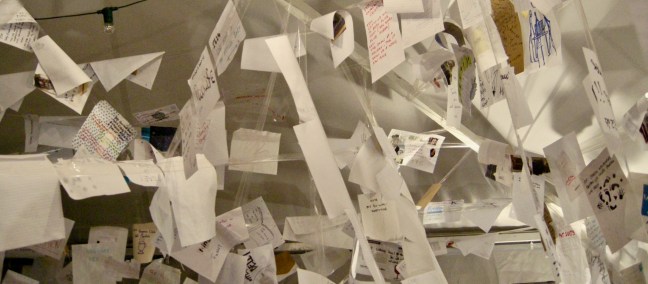
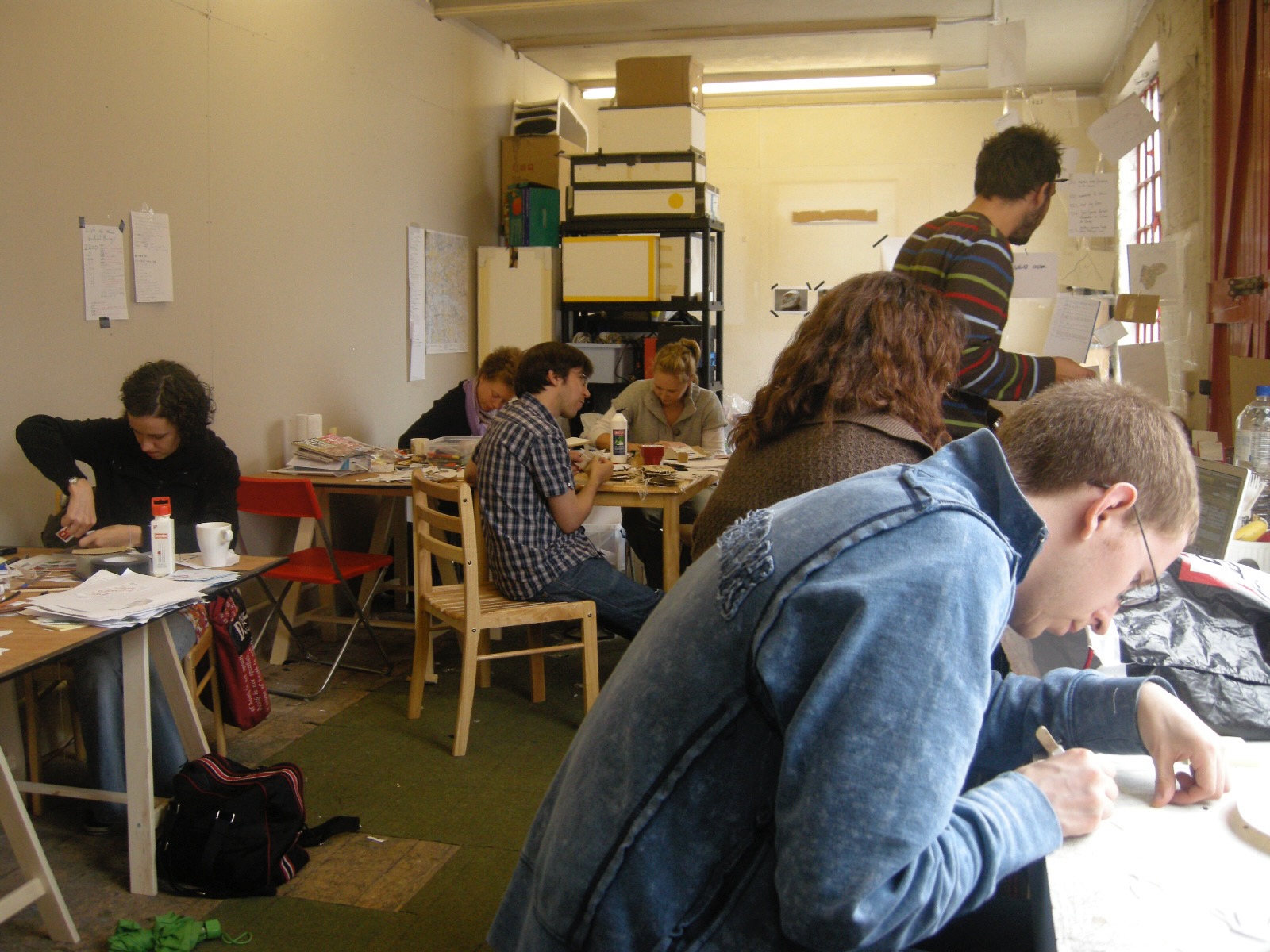
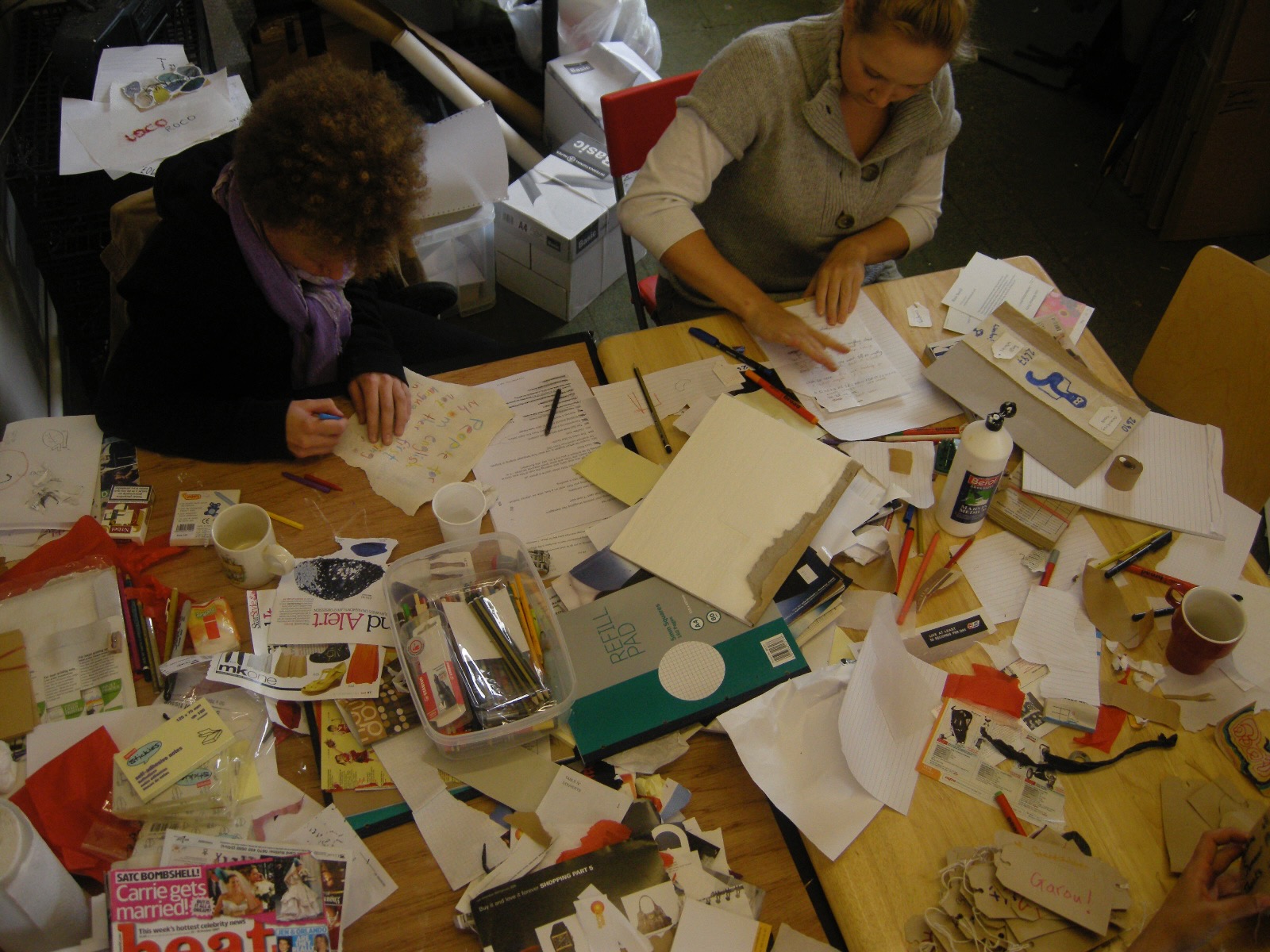
Simon Daw and I, then working under the collective name Scale, were approached by Duncan and George to create an installation to accompany readings of the short story that would eventually become Every Brilliant Thing. If memory serves, it was then called Sleeve Notes. We assembled a team of volunteers at our studio to write the list.

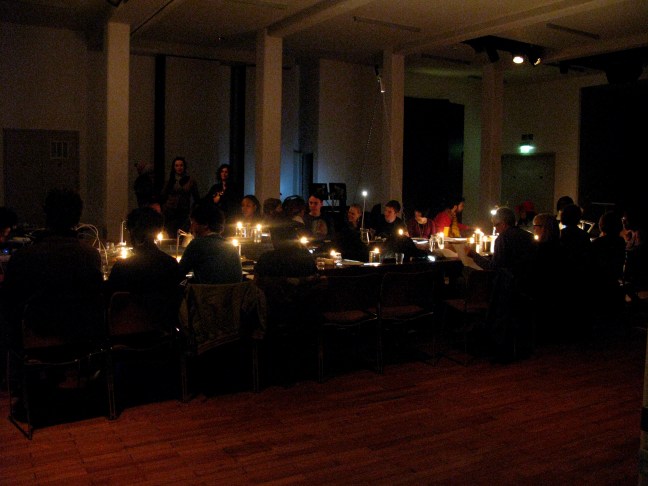
The installation was then shown at the Village Underground in Shoreditch, East London, as part of a club night, the name of which I’ve now forgotten. People were encouraged to add to the list. I have no idea how many did, but it was quite a lot.

Continue reading Every Brilliant Thing (not just Some Brilliant Things)

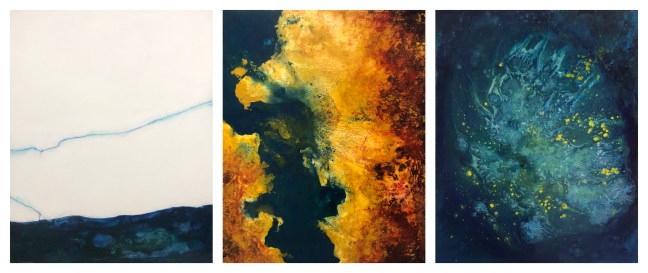
A climate triptych (and some thoughts on painting)

I take painting pretty seriously. It hugely informs my theatre design work, and I’ve frequently created video material from it. The work I did for the Dulwich Picture Gallery commission was a kind of digitally animated painting (involving a lot of very real painting on a wall). I’ve done several painting commissions. My first pocket money job was scenic painting at Harlow Playhouse.

Allow me a brief tangent, as I’ve just noticed a nice parallel. The pocket money job at Harlow Playhouse came about because I did work experience there aged 14. They must have liked what I did because occasionally, over the next few years, they got me in after school if they were short-handed on a paint call. My first properly paid work in theatre was, rather similarly, after doing a work placement. This was at Shakespeare’s Globe. They kept me on as an assistant in the wardrobe, where I worked on several ‘original practice’ techniques, including painstaking work slashing patterns in silk. I also helped source calico, silk, leather, pewter buttons and other period-appropriate items, and got an excellent working knowledge of London as a result. It was a really fantastic job, to be honest, and it led me eventually to design the sets for a full-scale Globe show.

Continue reading A climate triptych (and some thoughts on painting)

A call for collaborators

Queens Theatre Hornchurch, where I’m on the Environmental Responsibility Subcommittee, is committed to the idea that its journey towards environmental sustainability should be reflected in its creative output. As part of this, David Shearing led This Story is True for Most of Us as part last summer’s the Blueprint Festival. I was a creative associate on the project, which took a vegan meal on the theatre’s roof as a basis for an exploration of time, locality, ecology and – of course – our relationship with food.

Now QTH has given me space to start developing a new piece of theatre. I don’t know what the end result will be, except that it will be open, accessible and connected to the community. But I do know where we’re starting; by looking at our relationship with Nature through the lenses of language, culture and queer ecology. This is how I like to work, starting with research and, by applying my design process to the directing process, working collaboratively to find a logic and a shape to the piece.

Continue reading A call for collaborators

Bubble Dreams: the movie

Actually a lovely (and very short) film about how Carolyn Defrin and I made Bubble Dreams, an interactive video installation for Tessa Jowell Health Centre, London, commissioned by Dulwich Picture Gallery. Have a watch, and if you’re in the Dulwich area, pop in. It’s in the children’s waiting area; you’ll need to ask to be let in.

I can’t post this without also mentioning the amazing team we worked with: creative technologist Rob Hall, production manager Thomas Wilson, painting assistant Carly Brownbridge and children’s workshop leader Holly Dabs. Particular thanks also to Dulwich Picture Gallery’s Alexander Moore for being so supportive and maintaining such a good balance between the needs of the commissioner and artistic freedom.

Lockdown update

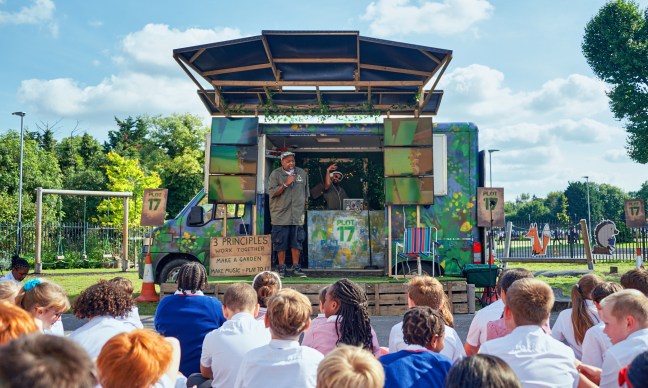
(Top photo: Kenny Baraka with DJ Conrad Kira in Plot 17. Photo: Suzi Corker)

I was asked to summarise, briefly, what I got up to during lockdown. But I couldn’t. It was too varied, and lots of things required some explanation. I guess everyone knows that the theatre sector has been hit very hard by the pandemic. Many workers have left to get sensible, less precarious, less stressful jobs. I haven’t. But I have, as they say, diversified. Perhaps, I thought to myself, that’s worth a blogpost. So here goes.

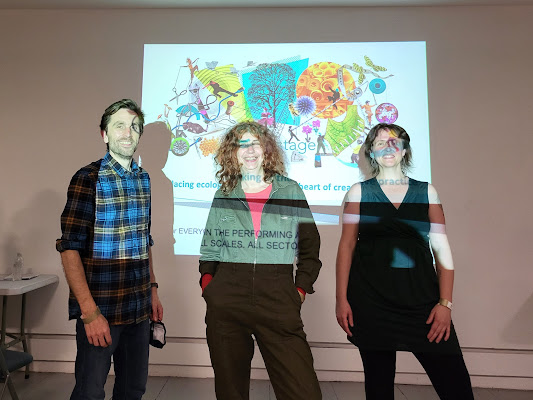
Myself, Andrea Carr and Mona Kastell at the Ecostage Launch, CCA Glasgow, during COP26. (Photo: Kanatip Soonthornrak)

To start with, I used the opportunity afforded by the Self-Employment Income Support Scheme to help set up the Society of British Theatre Designers’s first working group on sustainability, taking on the role of co-ordinator. I also become one of the directors of Ecostage, an initiative for supporting ecological thinking in the performing arts. Along with Andrea Carr, Mona Kastell, Ruth Stringer and some volunteers, I helped rebuild the project from the ground up as a go-to platform for green-minded performing arts professionals. The new website, ecostage.online, was launched at COP26 last month. Various other advisory roles then followed, including helping gather material for The Green Book, joining the advisory panel on sustainability for the Queens Theatre Hornchurch and informally helping co-ordinate knowledge-sharing with other sustainable performing arts groups around the world. 

In the past I’ve joked that, because of the huge disconnect between workload and pay in the sector, my ideal working model would be to get some kind of stipend, then offer my services for free as I see fit. SEISS felt a bit like that, and for a while I was almost a full-time volunteer.

Continue reading Lockdown update

Assistant designer needed

Edit: the callout is closed early. It’s genuinely humbling how many amazing, talented people applied.

Here’s the call:

Assistant designer needed for Cece’s Speakeasy, a night of entertainment with storytellers, poets and musicians sharing new work that explores hope and action during the climate emergency. And the possible end of cocoa and coffee. The piece is being made and shown at The Albany, Deptford.

You will ideally be based in or near the SE London area and available for a minimum of 4 days pro rata in the second half of June. Prepping stuff at the venue from 21st June, with the get-in on 28th and the show opening on 30th. Key areas I need help with are sourcing/adapting costume and painting set, but there’s scope to be involved more widely, according to your interests. An enthusiasm for sustainable theatre design would be beneficial, as we are seeking to make this production as green as we can.

Students and recent graduates are welcome to apply; it’s fine to be learning/developing skills on the job and you will be supported by me and the team. But you will also need to be happy getting on with stuff independently.

We are particularly interested in working with artists that have a connection to cocoa and coffee growing countries.

£100 per day.

Deadline 12 noon Mon 14th June. No particular process for applying! Just drop me a line if you’re interested, and feel free to spread the word.

And while we’re on the subject, the callout for a creative assistant for East is also still live. [Edit: this callout has now closed but do always feel free to get in touch about Daedalus projects]

Love and Information

I’ve just done a great project with Pegasus Young Company: a production of Carol Churchill’s Love and Information, directed by Corinne Micallef. The cast members were a great ensemble, highly supportive of each other, and really engaged with the piece at a conceptual level. It was really collaborative and we had some great discussions about how the design should work dramaturgically, as well as working through stuff practically, including with the modelbox.

I pulled together a bunch of images from my process for the marketing team to use, including a video of my sketchbook. And I thought I would share them here. Continue reading Love and Information

Staging Places: UK Design for Performance

A big part of my life recently has been the Staging Place project.

The Prague Quadrennial (PQ) is the world’s leading exhibition of design for performance. It’s an amazing thing: professional and student displays from all over the globe, talks, discussions, performances, exhibitions… The UK has traditionally done well at it too, frequently winning major prizes, though this is pretty much never reported in the UK press.

It’s also become something of a tradition for us to show the display at the V&A Museum in London after bringing it back from Prague. And sometimes to tour it to other venues in the UK.

The Society of British Theatre Designers takes the lead on this rather complex project. I’m on the SBTD committee but I didn’t want to get too involved as it’s very time consuming.

Reader, I got very involved. Continue reading Staging Places: UK Design for Performance

Let’s Talk About Participation

I’ve missed shows I really wanted to see because the threat of audience participation made me so anxious. And yet, at Daedalus and elsewhere, I make participatory theatre. Is this hypocrisy?

My view of participation is that it shouldn’t be about persuading or pressuring people to do things. It should be even less about picking on people, forcing participation on them. It’s about creating an environment in which people can find their own degree of involvement as equals. This might be because you advertise the piece as participatory so they know what they’re letting themselves in for, such as Shunt, Metis or Punchdrunk. But I want to talk about performances where people come to see a show but we, the artists, want them to have not the experience of a well-made performance but also a deeper kind of engagement. Continue reading Let’s Talk About Participation

A Long Wait for Radical History

My personal projects always seem to take ages to get off the ground. I suppose this is because all the work that leads up to getting funding has to happen in the gaps between everything else, not least designing shows for other people. Which I love doing and I get paid for. I’m not complaining. Still, getting a project underway takes a while and this one is taking even longer.

I had the idea for a project about English radical history around eight years ago, I think. At any rate, it was while I was directing A Place at the Table. Our stage manager at the time, Peter Barnett, was another fan of folk music. I remember discussing the exciting new idea with him, so I can roughly date it. This was also roughly around the same time as the Black Smock Band emerged from a series of gay folk nights in Vauxhall. A lot has happened since, with the far right seemingly in the ascendent, but even then it felt as though the narrative of dissent and radicalism in English history needed a bit of rescuing, from all that nonsense about how the Empire wasn’t so bad really and migrants are ruining our way of life. (Quite how you can hold both beliefs at once I don’t know. Anyway.) A major part of what we do as a band is explore the links between then and now, often updating traditional songs to explore their resonances to our contemporary social or political situation. Oh and making them less bloody heteronormative. It made sense to bring these two things – the band and the idea of a performance around English radical history – together. Continue reading A Long Wait for Radical History