Maybe AI can save us (by accident)

Given the rapid growth of generative AI and society’s addiction to manipulative, corporately controlled online platforms, you might think this is the end of skilled creativity. If anyone can make a film or a song or a novel in seconds, what’s left for skilled artists and craftspeople? 

Well, quite a lot, I think. 

Yes, we need to fight tooth and nail against the wholesale theft of our work by tech corporations, the loss of livelihoods, and the flooding of culture with soulless, vacuous simulacrums of creativity. Let alone the ecological damage and data harvesting. But I keep thinking about how MP3s and file sharing were going to kill live music, which has, in fact, flourished. At the time, it felt that, after the initial excitement waned, the ubiquity of downloads ended up increasing the value of in-person experience. 

AI is now a spectacle in both the everyday and Debordian senses of the word. But as it is revealed as a kind centripetal force, pushing culture into smooth unoriginality, it will, I believe, remind us of our profound need for human community and connection, and for originality, creativity and craft. It will increase the cultural value of things evidently made by humans, using their skill and expressing something original, meaningful and authentic. It will help us appreciate the rough edges – the grit in the oyster – which allow art to take us to new and challenging places; places we didn’t expect to go.

That is good in itself and gives me hope for the creative sector, both professional and participatory, whether it’s live performance, art manifestly made by human hands, author readings and book signings, craft workshops, communal music-making and dancing… All the myriad points of creative connection that help hold society together.

But I have another hope, too; that if more and more people step away from the circus of corporate spectacle, see the atomised, narcissistic and easily exploitable society it fosters, and seek meaning and fulfilment through human creativity – especially co-creativity – we may also find we’re nurturing the conditions needed for meaningful, radical political change.

Does environmentalism transcend left and right?

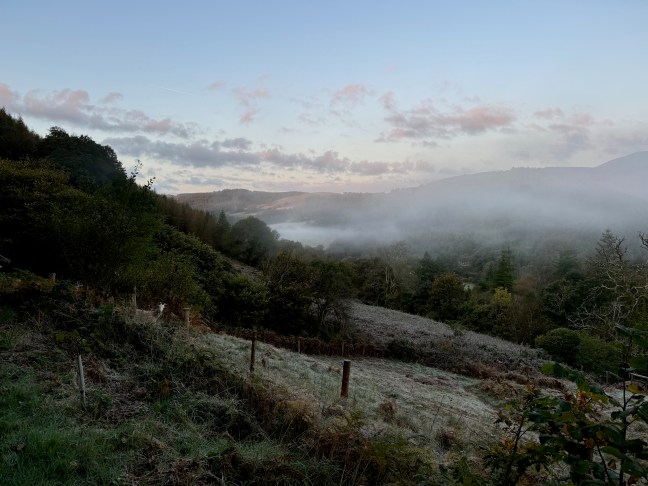
A view of hills shrouded by cloud, with a patch of early-morning sunlight, and a goat in the foreground

Back in the 90s when, as a teenager, I was first getting into green politics, it was often said that green would transcend the ‘grey’ politics of left and right. You don’t hear that much any more. Maybe we should. Is right-wing environmentalism part of the answer to the multiple ecological crises the world faces? Can we meaningfully create a consensus outside our socio-economic political differences and find ways to work together?

I’ve been thinking about this a lot recently because of a discussion on the topic I was part of. I will boil the conversation down to its two main arguments. The proposition, as it were, is that we exist in a bubble of other like-minded, progressive, evidence-led people while, in the wider world, people are falling for dishonest and divisive far-right rhetoric. It is as if we live in separate universes with entirely different understandings of reality. The counterargument is to acknowledge that people on the right also care about the environment – some of them, at least – and start to build a consensus that transcends the old left-right binary. You can have right-wing and left-wing environmental politics. Rightwing environmentalism might look like Tories caring about the countryside, for example, or eco-fascism, or a belief that capitalism will come up with a green technofix.

Continue reading Does environmentalism transcend left and right?

Lost in Improvement: a Quick Postcript to My Previous Post

Further to my thoughts on the dangers of generative AI not just to our livelihoods but to how we relate to Nature in its broadest sense, I also want to flag up a smaller issue I have with this new technology. The biggest impact of AI in my working life so far has been improved captioning, and spelling and grammar checks. They’re still quite* inaccurate, but as someone who learned to do a lot of things the long way because there were no other options (or no other affordable options), I appreciate how hugely time-saving they are. I appreciate how much they’re improving. The inaccuracy matters, though.

Most generative AI suggestions are great reminders that fundamentally, what this tech is doing is taking an input, comparing it to other similar things, and suggesting an option that’s closer to commonly used patterns. You end up with a grammatically correct piece of text that, at best, has had its individuality sanded away and, at worst, means something entirely in contradiction to what you’re trying to say. In the case of Grammarly, for example, it offers to ‘improve’ your text, but really, it’s a kind of normalisation.

For transparency, I should say that I use Grammarly regularly, and its spelling and grammar checks are the best I’ve found, though I reckon I only accept 75-80% of the suggestions, and I’ve never been happy with the generative AI suggestions.

It’s the latter I want to highlight. I tried re-writing a paragraph from my previous post with Grammarly’s generative AI. Here’s the original:

Continue reading Lost in Improvement: a Quick Postcript to My Previous Post

Generative AI and Nature Disconnection – some thoughts

I’m thinking a bit more about AI… and I’m no Luddite, by the way. I’ve been an early adaptor since Roydon County Primary School got its first computer sometime in the 80s. Also, to be clear, I’m aware that AI, as a tool in the right hands, has the potential for good. In medical diagnosis, for example.

But…

Generative AI is different from what’s gone before. There’s the extractivist theft from people who make a living from their creativity. And the enormous amount of carbon it emits. And, of course, the way it can be used to create fake news, manipulate voters, creep under the radar of broadcast regulators and fundamentally re-write our relationship with the truth. Not to mention how it exponentially increases the advantages of those privileged with access to tech. And the fact that it makes us more productive (in capitalist terms) at a time when we really need to learn how to celebrate and sustain what we already have. Oh, and the fact that, at some point, it’ll pass the Turing test, and we’ll have a massive ethical and legal dilemma on our hands. 

That, however, is not all.

This AI-generated dystopia sits within a much wider context of alienation and atomisation – from each other, from society and from nature – that has been gathering pace for centuries but has been accelerated by high-tech neoliberalism, from smartphones and Amazon to fake lawns, plastic-wrapped bananas and robot pets. 

Of course, some of these mod cons offer huge, even life-saving benefits to individuals with specific needs. But their cumulative effect on society leads to a kind of Nature disconnection. And that’s what I want to talk about because I think AI has the potential to accelerate this to a frightening degree.

Continue reading Generative AI and Nature Disconnection – some thoughts

Update on my sustainability work (and other things)

As many of you will know, I’ve been prioritising my work on sustainability recently. Building on the voluntary work for Ecostage and the Society of British Theatre Designers that I’ve been doing since before the pandemic, I’m now nearly halfway through a part-time MSc at the Centre for Alternative Technology.

I look forward to having more availability for design work next year, and applying the sustainability principles and practices I’ve been learning and developing. In the meantime, as some of you haven’t heard from me in a while, I’d like to share an update.

Working with the SBTD and Footprint Scenery, I co-organised and co-facilitated Makers and Designers Assemble! at the National Theatre. As the title suggests, this event brought theatre designers and makers together to talk about how better to support each other’s efforts to work in a more environmentally responsible way. There was a particular emphasis on circular economy; in fact, the event was part of Circular Economy Week. It started some exciting conversations beyond the event itself… which was precisely the aim!

Continue reading Update on my sustainability work (and other things)

Every Brilliant Thing (not just Some Brilliant Things)

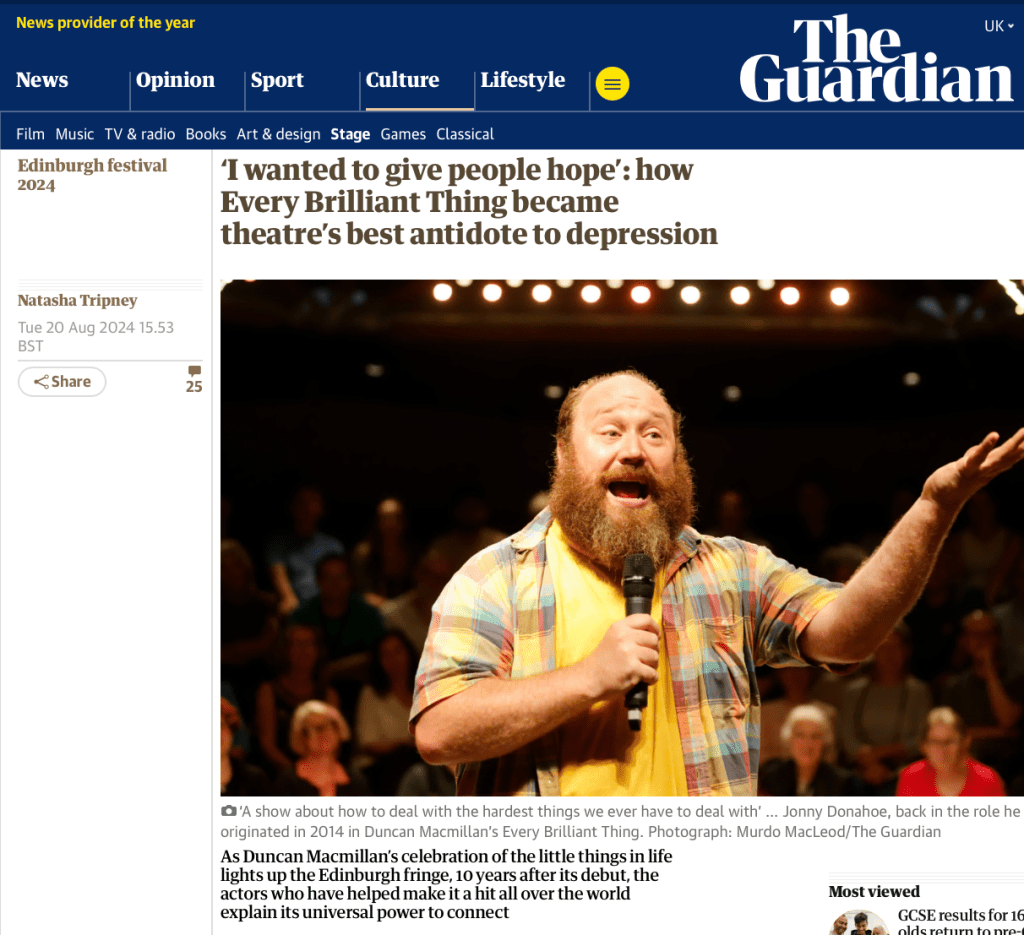
A wonderful part of the story of this hugely successful play is missing from this Guardian article. Sure, part of being a designer is being in the background, but in this case, it’s not just us; it’s a wonderful collaborative effort involving thousands of members of the public.

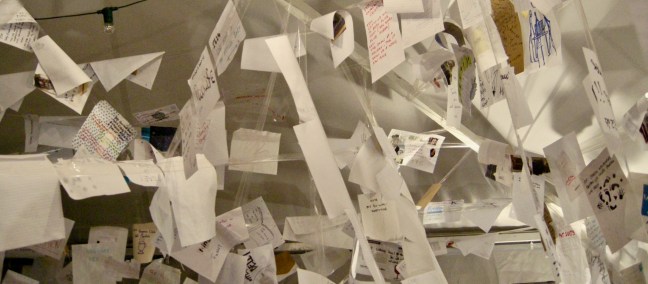
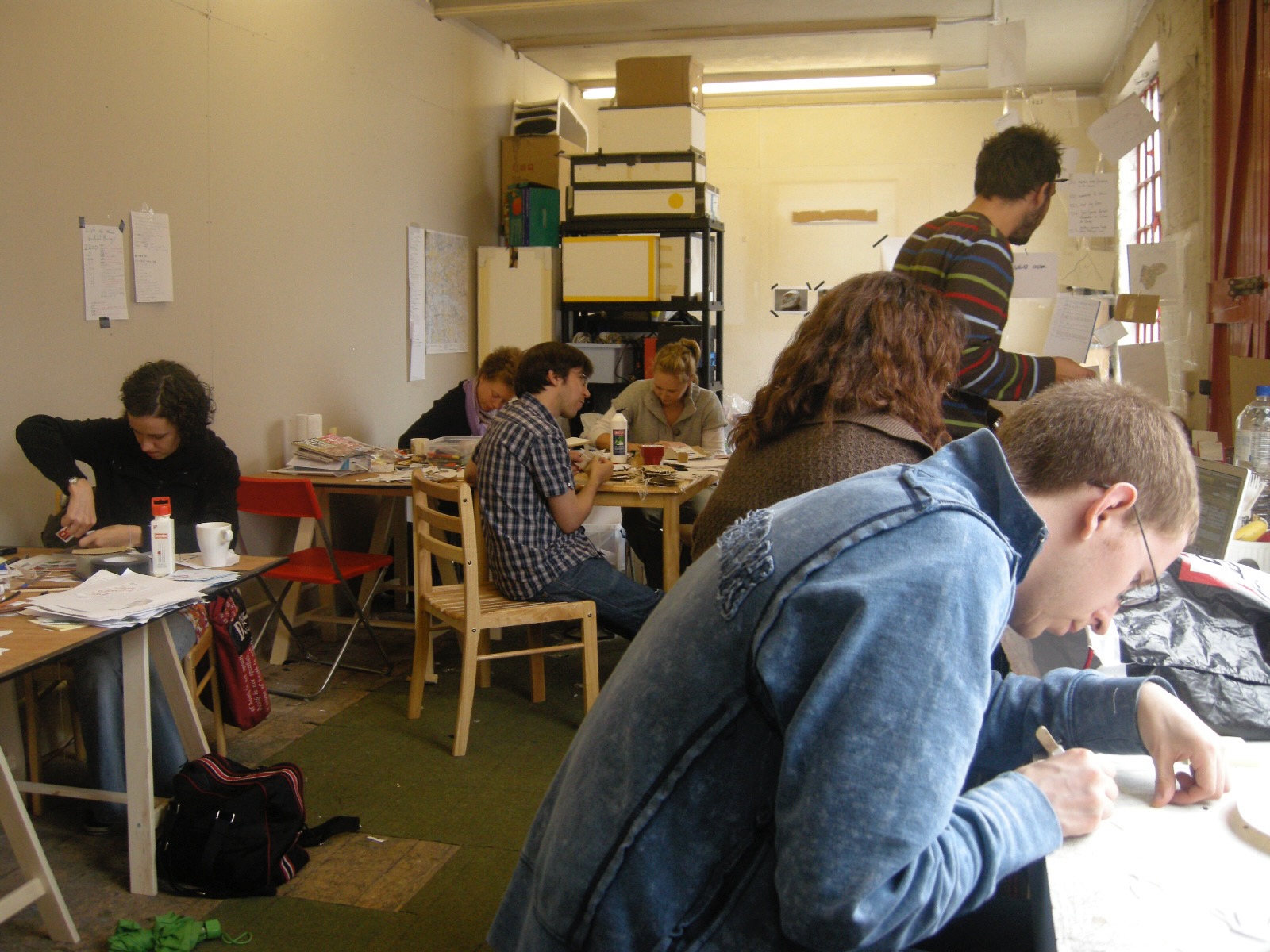
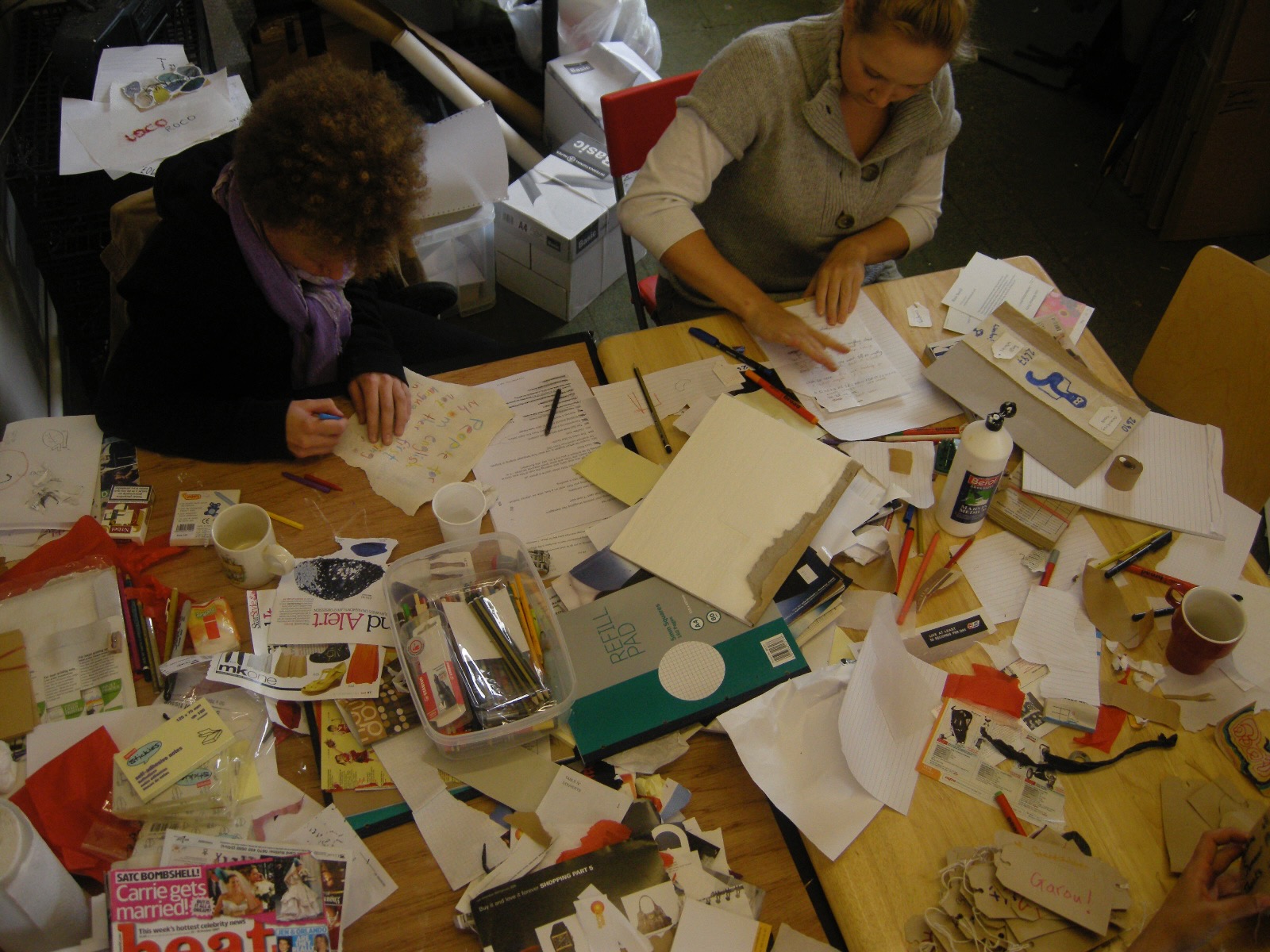
Simon Daw and I, then working under the collective name Scale, were approached by Duncan and George to create an installation to accompany readings of the short story that would eventually become Every Brilliant Thing. If memory serves, it was then called Sleeve Notes. We assembled a team of volunteers at our studio to write the list.

The installation was then shown at the Village Underground in Shoreditch, East London, as part of a club night, the name of which I’ve now forgotten. People were encouraged to add to the list. I have no idea how many did, but it was quite a lot.

Continue reading Every Brilliant Thing (not just Some Brilliant Things)

A Tree for the Barbican

This project was an absolute joy.

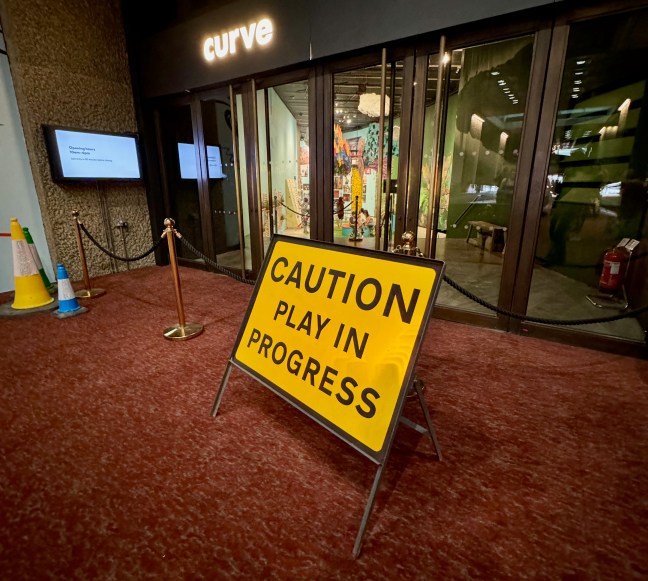
I was invited to create a tree from children’s imagination as part of Our Street, a project by the Barbican Centre’s Communities and Neighbourhoods team. They had an opportunity between Very Serious Arts Exhibitions to transform the prestigious Curve gallery space into an ‘anti-exhibition’ for local families over the summer holiday. This would be a space where kids can play and make stuff without being told to be quiet, respectful, and not touch anything. But it would also be created by artists channelling all their skill, experience, and creativity into making a space for childish imagination and playfulness to be let loose.

A class from St Luke’s Primary, just up the road, had been brought on board as consultant for the project, so I joined a creative session led by members of the Barbican team at the school, and got the kids drawing the most weird and wonderful trees they could conjure up. I then adapted, working with sustainable set builders Footprint Scenery and the Barbican to come up with something practical as well as dramatic and celebratory.

The other major partner in this was Eletric Pedals, run by Colin Tonks. Electric Pedals creates a range of amazing pedal-power things, including outdoor discos for school playgrounds powered entirely by the kids. Part of my brief was working with them to create special effects for the tree. After trying a few things out, Colin, who, let’s face it, is a bit of a genius, came up with thunder, lightning and some individually selectable park sounds, all powered by two bikes and a hand crank.

Here’s some pics from the process.

Continue reading A Tree for the Barbican

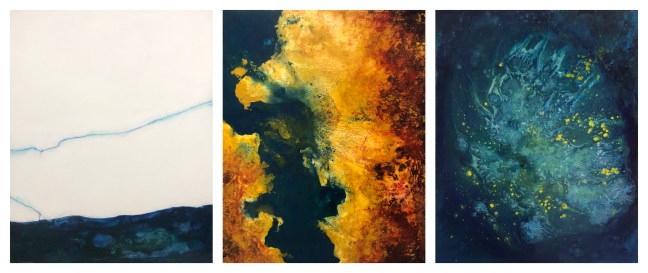
A climate triptych (and some thoughts on painting)

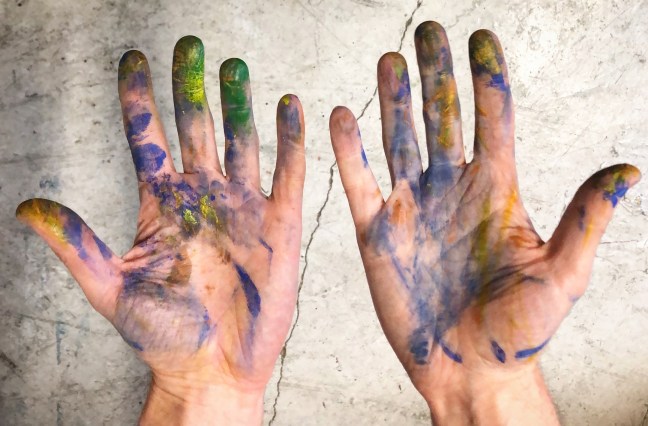
I take painting pretty seriously. It hugely informs my theatre design work, and I’ve frequently created video material from it. The work I did for the Dulwich Picture Gallery commission was a kind of digitally animated painting (involving a lot of very real painting on a wall). I’ve done several painting commissions. My first pocket money job was scenic painting at Harlow Playhouse.

Allow me a brief tangent, as I’ve just noticed a nice parallel. The pocket money job at Harlow Playhouse came about because I did work experience there aged 14. They must have liked what I did because occasionally, over the next few years, they got me in after school if they were short-handed on a paint call. My first properly paid work in theatre was, rather similarly, after doing a work placement. This was at Shakespeare’s Globe. They kept me on as an assistant in the wardrobe, where I worked on several ‘original practice’ techniques, including painstaking work slashing patterns in silk. I also helped source calico, silk, leather, pewter buttons and other period-appropriate items, and got an excellent working knowledge of London as a result. It was a really fantastic job, to be honest, and it led me eventually to design the sets for a full-scale Globe show.

Continue reading A climate triptych (and some thoughts on painting)

Plot 17 x Hello Stranger

Every four years The Society of British Theatre Designers celebrates UK theatre design with a combination of books, exhibitions and events. This also feeds into the UK display at the Prague Quadrennial.

Last time round, we had an exhibition at the V&A, which included my design for Deafinitely Theatre’s 4.48 Psychosis. This time round, it’s a three-part publication series including a catalogue representing the breadth and diversity of UK theatre design, and a programme of regional events and exhibitions.

My entry this time round is the set – a converted horsebox, in fact – that I designed for Plot17. One of my favourite projects, it’s a mobile hip-hop block party for ages 7+, travelling the world raising awareness, inspiring action and spreading the message of “making things green”. The lead artist on the project, Kenny Baraka, is himself a force of nature, producing amazing lyrics and inspiring the youth up and down the land. It’s a great show, made a brilliant team, but it’s also a doing something really important by making the business of caring about nature and the environment accessible and cool for thousands of kids. And it’s out touring again this year.

Continue reading Plot 17 x Hello Stranger

David Hockney helped me with my schoolwork

The 1985 Hockney Paints the Stage exhibition at the Hayward Gallery made a huge impression on me as a child. When I came to choosing a topic for my ‘A’ Level art project, and I saw that Hockney was designing a new production for the Royal Opera House, I knew what I had to do.

The new production was Richard Strauss’s Die Frau Ohne Schatten, directed by John Cox, with whom Hockney had already worked on several operas including the celebrated Rake’s Progress, a harmony of music and scenography that makes it one of the most perfect operatic designs I’ve seen. 

I wrote to the Opera House and Susan Usher, head of production, very generously invited me to watch a design meeting. At the end of that meeting I was told I could come to a further meeting attended by Hockney. A few days later I was in the production office at Covent Garden, a few feet away from one of titans of my teenage world, with his blue and red hearing aids and a personal supply of camomile tea bags. By this stage there was a close-to-final model but it wasn’t Hockney’s own. He’d made one at 1:8 scale. The ROH had then made the rather more accurate 1:25 version we were now looking at. At one point it became apparent that he had to remake the Emperors’ throne. ‘I can’t work this size – too niggly for me!’ he declared. He ended up making it at 1:8 when he got back to LA, and sending it over to be scaled down.

Continue reading David Hockney helped me with my schoolwork