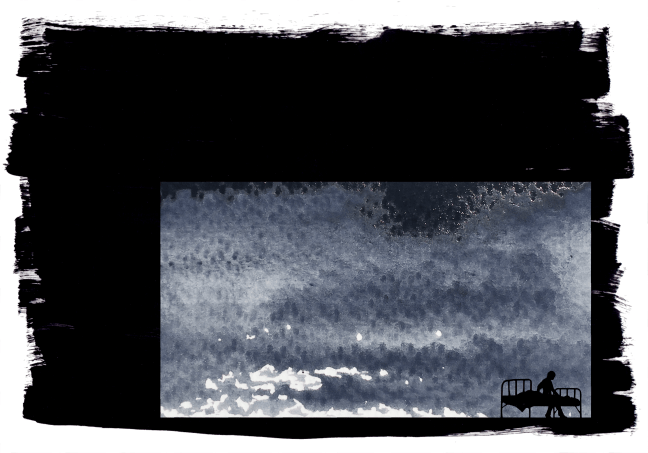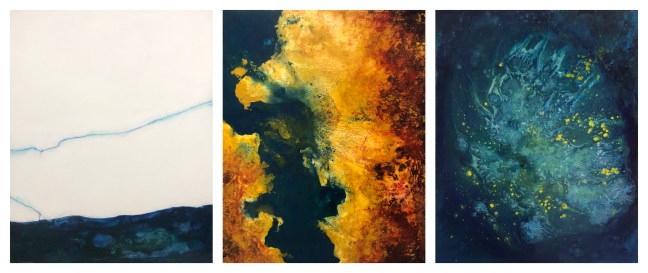
A climate triptych (and some thoughts on painting)

I take painting pretty seriously. It hugely informs my theatre design work, and I’ve frequently created video material from it. The work I did for the Dulwich Picture Gallery commission was a kind of digitally animated painting (involving a lot of very real painting on a wall). I’ve done several painting commissions. My first pocket money job was scenic painting at Harlow Playhouse.

Allow me a brief tangent, as I’ve just noticed a nice parallel. The pocket money job at Harlow Playhouse came about because I did work experience there aged 14. They must have liked what I did because occasionally, over the next few years, they got me in after school if they were short-handed on a paint call. My first properly paid work in theatre was, rather similarly, after doing a work placement. This was at Shakespeare’s Globe. They kept me on as an assistant in the wardrobe, where I worked on several ‘original practice’ techniques, including painstaking work slashing patterns in silk. I also helped source calico, silk, leather, pewter buttons and other period-appropriate items, and got an excellent working knowledge of London as a result. It was a really fantastic job, to be honest, and it led me eventually to design the sets for a full-scale Globe show.

Continue reading A climate triptych (and some thoughts on painting)
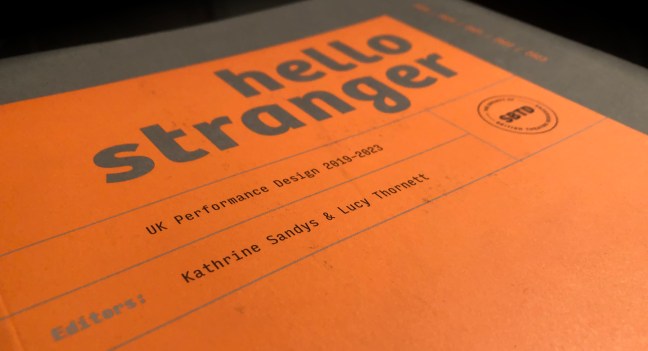
Plot 17 x Hello Stranger

Every four years The Society of British Theatre Designers celebrates UK theatre design with a combination of books, exhibitions and events. This also feeds into the UK display at the Prague Quadrennial.

Last time round, we had an exhibition at the V&A, which included my design for Deafinitely Theatre’s 4.48 Psychosis. This time round, it’s a three-part publication series including a catalogue representing the breadth and diversity of UK theatre design, and a programme of regional events and exhibitions.

My entry this time round is the set – a converted horsebox, in fact – that I designed for Plot17. One of my favourite projects, it’s a mobile hip-hop block party for ages 7+, travelling the world raising awareness, inspiring action and spreading the message of “making things green”. The lead artist on the project, Kenny Baraka, is himself a force of nature, producing amazing lyrics and inspiring the youth up and down the land. It’s a great show, made a brilliant team, but it’s also a doing something really important by making the business of caring about nature and the environment accessible and cool for thousands of kids. And it’s out touring again this year.

Continue reading Plot 17 x Hello Stranger

David Hockney helped me with my schoolwork

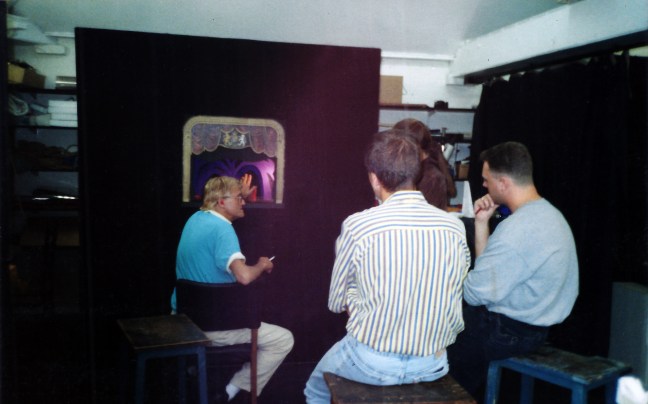
The 1985 Hockney Paints the Stage exhibition at the Hayward Gallery made a huge impression on me as a child. When I came to choosing a topic for my ‘A’ Level art project, and I saw that Hockney was designing a new production for the Royal Opera House, I knew what I had to do.

The new production was Richard Strauss’s Die Frau Ohne Schatten, directed by John Cox, with whom Hockney had already worked on several operas including the celebrated Rake’s Progress, a harmony of music and scenography that makes it one of the most perfect operatic designs I’ve seen. 

I wrote to the Opera House and Susan Usher, head of production, very generously invited me to watch a design meeting. At the end of that meeting I was told I could come to a further meeting attended by Hockney. A few days later I was in the production office at Covent Garden, a few feet away from one of titans of my teenage world, with his blue and red hearing aids and a personal supply of camomile tea bags. By this stage there was a close-to-final model but it wasn’t Hockney’s own. He’d made one at 1:8 scale. The ROH had then made the rather more accurate 1:25 version we were now looking at. At one point it became apparent that he had to remake the Emperors’ throne. ‘I can’t work this size – too niggly for me!’ he declared. He ended up making it at 1:8 when he got back to LA, and sending it over to be scaled down.

Continue reading David Hockney helped me with my schoolwork

Ecological Values

Given some of the awkward conversations I’ve had over the course of my career, I’ve added something to my website about my values, my expectations, and what I bring to the proverbial table. It’s very much a work-in-progress which I’ll doubtless keep refining. Do please feel free to let me know your thoughts!

Environmental ethics and artistic practice: can they speak the same language? What does environmentally careful design look like?

This is the text I prepared for the above-named panel, at Making Theatre Green, at the National Theatre, London, 6th June 2022. What I actually said was inevitably a little different, but this version is clearer to read than a transcript with all my ums, errs, omissions and mistakes!


When I was around 12 or 13, I dug out my old Playmobil figures and made scale model sets for them. They’re quite close to 1:25, actually! I first painted the back wall of the school hall for a show when I was about 15. An early starter, you might think?

Well. According to a newspaper clipping, my mum found the other day, I got a brief write-up in the Harlow Star, aged 10, for saving up my pocket money to plant trees. 

And, frankly, it escalated from there.

So… I’ve been involved in environmental campaigning longer than I’ve been designing shows. But the crazy thing is how, until a few years ago, I totally compartmentalised the two.

Why did it take so long for me to bring these two obsessions together?

Continue reading Environmental ethics and artistic practice: can they speak the same language? What does environmentally careful design look like?

Assistant designer needed

Edit: the callout is closed early. It’s genuinely humbling how many amazing, talented people applied.

Here’s the call:

Assistant designer needed for Cece’s Speakeasy, a night of entertainment with storytellers, poets and musicians sharing new work that explores hope and action during the climate emergency. And the possible end of cocoa and coffee. The piece is being made and shown at The Albany, Deptford.

You will ideally be based in or near the SE London area and available for a minimum of 4 days pro rata in the second half of June. Prepping stuff at the venue from 21st June, with the get-in on 28th and the show opening on 30th. Key areas I need help with are sourcing/adapting costume and painting set, but there’s scope to be involved more widely, according to your interests. An enthusiasm for sustainable theatre design would be beneficial, as we are seeking to make this production as green as we can.

Students and recent graduates are welcome to apply; it’s fine to be learning/developing skills on the job and you will be supported by me and the team. But you will also need to be happy getting on with stuff independently.

We are particularly interested in working with artists that have a connection to cocoa and coffee growing countries.

£100 per day.

Deadline 12 noon Mon 14th June. No particular process for applying! Just drop me a line if you’re interested, and feel free to spread the word.

And while we’re on the subject, the callout for a creative assistant for East is also still live. [Edit: this callout has now closed but do always feel free to get in touch about Daedalus projects]

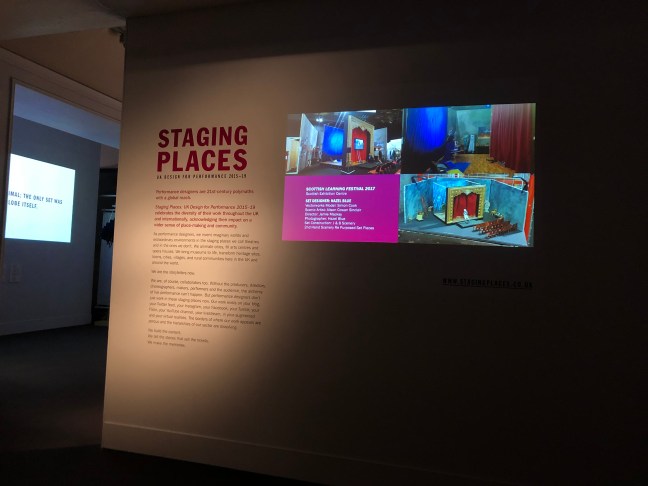
Staging Places at the V&A

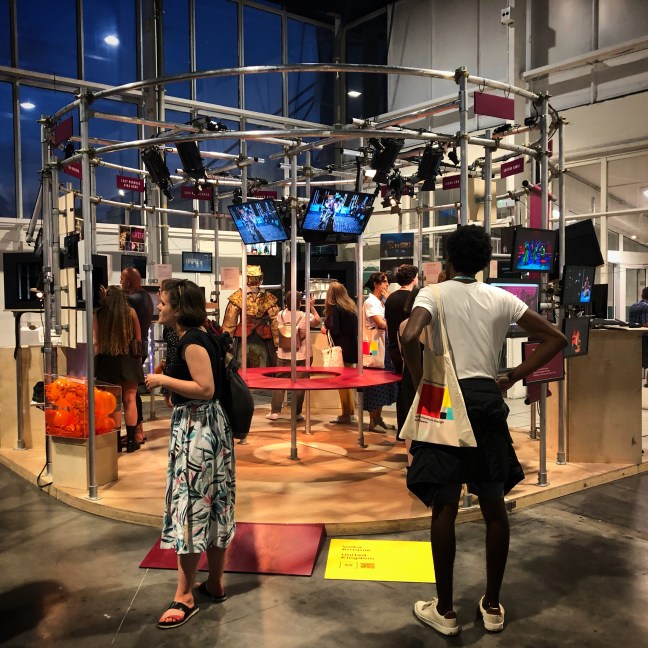
You only have till the middle of March to catch Staging Places at the V&A. Curated by Fiona Watt and designed by Andreas Skourtis, it’s a great exhibition that not only reflects design for performance by practitioners active in the UK over the last four years, but also delves into and attempts to demystify the design process. In the same open and exploratory spirit, the exhibition design incorporates a round table, at which we’re hosting events and discussions. Follow The Society of British Theatre Designers on Twitter, Instagram or Facebook to keep up-to-date. Or better still, join!

Panos Andrianos has made a teaser video for the exhibition, with sound by design by Romanos Papazotos:

Continue reading Staging Places at the V&A

4.48 Psychosis is back

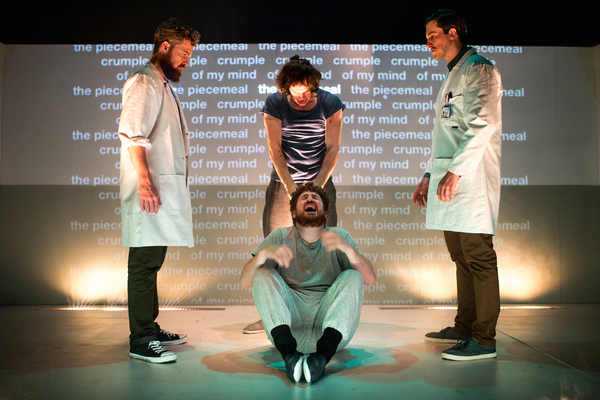
I’m rather delighted that not only is my design for 4.48 Psychosis featured in the SBTD‘s exhibition Staging Places: UK Design for Performance, currently at the V&A Museum, the production itself is also being revived. A huge, sell-out success last year, Deafinitely Theatre‘s bilingual production will soon be in London, Derby and Cardiff, with a new cast but the same design. You can book tickets here, but do hurry up as they’re selling fast.

On the other hand, there’s plenty of opportunity to see the exhibition. It’s been extended till March. I shouldn’t praise it too much, as I had a small role in the team that put it together, but I can safely say I’m very pleased indeed with what we achieved. I wrote about it previously here.

Finally, there’s an amazing Staging Places website that has been created as a kind of online gallery to accompany the exhibition. My page on it is here but it features a lot more designers, in addition to those of us in the physical exhibition. It’s definitely worth spending some time with.

Staging Places: UK Design for Performance

A big part of my life recently has been the Staging Place project.

The Prague Quadrennial (PQ) is the world’s leading exhibition of design for performance. It’s an amazing thing: professional and student displays from all over the globe, talks, discussions, performances, exhibitions… The UK has traditionally done well at it too, frequently winning major prizes, though this is pretty much never reported in the UK press.

It’s also become something of a tradition for us to show the display at the V&A Museum in London after bringing it back from Prague. And sometimes to tour it to other venues in the UK.

The Society of British Theatre Designers takes the lead on this rather complex project. I’m on the SBTD committee but I didn’t want to get too involved as it’s very time consuming.

Reader, I got very involved. Continue reading Staging Places: UK Design for Performance

Designing Deafinitely Theatre’s 4.48 Psychosis

We’ve been getting some very enthusiastic responses from audience members for our production of Sarah Kane’s 4.48 Psychosis, and some great reviews, so I thought it might be worth sharing some thoughts on my design process.

The play is hard to read on the page: hard in two senses of the word. It’s gruelling emotionally but also abstracted, opaque, fractured and ambiguous. It’s constructed from fragments of naturalistic dialogue, inner monologue and poetry, all shored up into a kind of barrier against obvious interpretation. The author’s own distressing experiences are rendered into a set of cyphers that hide her personal truths from the people watching, reading or making a performance of the play. The temptation, therefore, is to try to find the key to unlock the code and expose her original meanings, but this seems to me to be a pointless – and impossible – quest. Instead, each production should create its own key, and decode these fragments into a new set of meanings that resonate for the artists involved. That’s very much what happened here, with director Paula Garfield’s emphasis on two overlapping crises of mental health – one amongst the deaf population and one amongst men – and the communication failures and lack of comprehension that exacerbate them. Continue reading Designing Deafinitely Theatre’s 4.48 Psychosis