Does environmentalism transcend left and right?

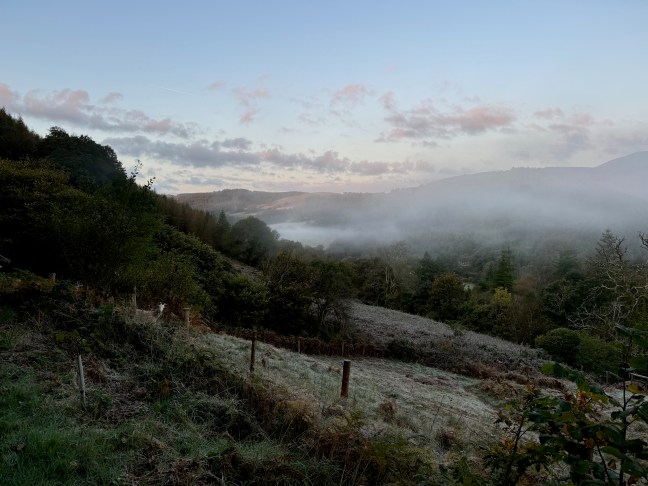
A view of hills shrouded by cloud, with a patch of early-morning sunlight, and a goat in the foreground

Back in the 90s when, as a teenager, I was first getting into green politics, it was often said that green would transcend the ‘grey’ politics of left and right. You don’t hear that much any more. Maybe we should. Is right-wing environmentalism part of the answer to the multiple ecological crises the world faces? Can we meaningfully create a consensus outside our socio-economic political differences and find ways to work together?

I’ve been thinking about this a lot recently because of a discussion on the topic I was part of. I will boil the conversation down to its two main arguments. The proposition, as it were, is that we exist in a bubble of other like-minded, progressive, evidence-led people while, in the wider world, people are falling for dishonest and divisive far-right rhetoric. It is as if we live in separate universes with entirely different understandings of reality. The counterargument is to acknowledge that people on the right also care about the environment – some of them, at least – and start to build a consensus that transcends the old left-right binary. You can have right-wing and left-wing environmental politics. Rightwing environmentalism might look like Tories caring about the countryside, for example, or eco-fascism, or a belief that capitalism will come up with a green technofix.

Continue reading Does environmentalism transcend left and right?
Generative AI and Nature Disconnection – some thoughts

I’m thinking a bit more about AI… and I’m no Luddite, by the way. I’ve been an early adaptor since Roydon County Primary School got its first computer sometime in the 80s. Also, to be clear, I’m aware that AI, as a tool in the right hands, has the potential for good. In medical diagnosis, for example.

But…

Generative AI is different from what’s gone before. There’s the extractivist theft from people who make a living from their creativity. And the enormous amount of carbon it emits. And, of course, the way it can be used to create fake news, manipulate voters, creep under the radar of broadcast regulators and fundamentally re-write our relationship with the truth. Not to mention how it exponentially increases the advantages of those privileged with access to tech. And the fact that it makes us more productive (in capitalist terms) at a time when we really need to learn how to celebrate and sustain what we already have. Oh, and the fact that, at some point, it’ll pass the Turing test, and we’ll have a massive ethical and legal dilemma on our hands. 

That, however, is not all.

This AI-generated dystopia sits within a much wider context of alienation and atomisation – from each other, from society and from nature – that has been gathering pace for centuries but has been accelerated by high-tech neoliberalism, from smartphones and Amazon to fake lawns, plastic-wrapped bananas and robot pets. 

Of course, some of these mod cons offer huge, even life-saving benefits to individuals with specific needs. But their cumulative effect on society leads to a kind of Nature disconnection. And that’s what I want to talk about because I think AI has the potential to accelerate this to a frightening degree.

Continue reading Generative AI and Nature Disconnection – some thoughts

Fly, you fools! (or How Popular Culture Can Help Tell the Climate Crisis Story)

We win or lose through the stories we tell. They’re what changes the world. And the most important story we need to tell today is the one that gets the people of Planet Earth to take meaningful action on the ecological breakdown.

The stories we’re offering now, however, aren’t working.

It’s fine to tell those who respect science about how we’re on track for catastrophe, because they understand evidence. It’s fine to tell those already awake to social and environmental injustice how climate change is driven by our economic system and the power structures that maintain it, because that fits their existing worldview. But what’s the story for everyone else?

Humans are brilliant at denial. Being able to put aside thoughts of suffering and mortality, to compartmentalise and not feel everyone else’s suffering too deeply, helps keep us sane. It seems that’s how the majority of people respond when faced with the facts of impending apocalypse too, and it’s understandable. Climate change is deeply frightening and it’s coming at us like juggernaut with broken brakes.

Continue reading Fly, you fools! (or How Popular Culture Can Help Tell the Climate Crisis Story)

Environmental ethics and artistic practice: can they speak the same language? What does environmentally careful design look like?

This is the text I prepared for the above-named panel, at Making Theatre Green, at the National Theatre, London, 6th June 2022. What I actually said was inevitably a little different, but this version is clearer to read than a transcript with all my ums, errs, omissions and mistakes!


When I was around 12 or 13, I dug out my old Playmobil figures and made scale model sets for them. They’re quite close to 1:25, actually! I first painted the back wall of the school hall for a show when I was about 15. An early starter, you might think?

Well. According to a newspaper clipping, my mum found the other day, I got a brief write-up in the Harlow Star, aged 10, for saving up my pocket money to plant trees. 

And, frankly, it escalated from there.

So… I’ve been involved in environmental campaigning longer than I’ve been designing shows. But the crazy thing is how, until a few years ago, I totally compartmentalised the two.

Why did it take so long for me to bring these two obsessions together?

Continue reading Environmental ethics and artistic practice: can they speak the same language? What does environmentally careful design look like?

Assistant designer needed

Edit: the callout is closed early. It’s genuinely humbling how many amazing, talented people applied.

Here’s the call:

Assistant designer needed for Cece’s Speakeasy, a night of entertainment with storytellers, poets and musicians sharing new work that explores hope and action during the climate emergency. And the possible end of cocoa and coffee. The piece is being made and shown at The Albany, Deptford.

You will ideally be based in or near the SE London area and available for a minimum of 4 days pro rata in the second half of June. Prepping stuff at the venue from 21st June, with the get-in on 28th and the show opening on 30th. Key areas I need help with are sourcing/adapting costume and painting set, but there’s scope to be involved more widely, according to your interests. An enthusiasm for sustainable theatre design would be beneficial, as we are seeking to make this production as green as we can.

Students and recent graduates are welcome to apply; it’s fine to be learning/developing skills on the job and you will be supported by me and the team. But you will also need to be happy getting on with stuff independently.

We are particularly interested in working with artists that have a connection to cocoa and coffee growing countries.

£100 per day.

Deadline 12 noon Mon 14th June. No particular process for applying! Just drop me a line if you’re interested, and feel free to spread the word.

And while we’re on the subject, the callout for a creative assistant for East is also still live. [Edit: this callout has now closed but do always feel free to get in touch about Daedalus projects]

Latest blogpost for the SBTD: The Green Book

I’ve been on the committee of the Society of British Theatre Designers (SBTD) for quite a few years now, and just before the pandemic I was one of a small team of designers that, as a result of a roundtable we organised at the V&A during our Staging Places exhibition, set up a new working group for the SBTD to focus on sustainability. Now called the Sustainable Design Group (SDG), it has nearly 60 members and regular four-weekly meetings, with various subgroups (materials, costume, training etc.).

Through the SDG, I also got involved with Ecostage and am now part of core team re-imagining the Ecostage principles and pledge, along with creating a new website. I’ll be sure to tell you a lot more about all this once the website has launched.

Being part of these two projects has led to me being stupidly busy while many of my theatre colleagues were getting into baking and houseplants, and I do feel as though maybe I should have taken more of a chance to breath. But it has also been deeply rewarding and has led to all sorts of interesting connections in the UK and internationally.

One particularly interesting thing over the last few months has been contributing to the creation of The Green Book. This is a project to create an authoritative guide to sustainable theatre for the UK sector. Part One is out in beta form for you to download and trial. Led by the theatre architect Paddy Dillon, working with Buro Happold, it was initiated by the Theatres Trust and the ABTT. I’ve written about it in more detail in my latest post for the SBTD.

The cover image for the SBTD blogpost, which is in the background of the cover image for this post, is from a project by SDG member and amazing designer Alison Neighbour: the original image with an explanation and full credits can be found in the post itself.

If you do have feedback on Part One, I’ve offered to compile any feedback that comes in through the SDG, so feel free to contact me and I’ll add it to our group’s feedback document, which I’ll pass on to Paddy and his team.

Meanwhile there’s lots of other stuff in the pipeline from the various things I’m involved with, ranging from the Ecostage website launch to new design-focused carbon literacy training. Plus some actual design work is creeping hesitantly back… Fingers crossed for that.

In the meantime, if you work in theatre, please have a read of my SBTD blogpost, then download The Green Book and give it a test run.

Crowdfunding Awkwardness

So… this is tricky.

It’s not often I do any crowdfunding for things I’m working on. But now two crowdfunding drives have come along at once. Oops.

One is for the theatre company I run, Daedalus. We need some funds to move our community storytelling project East online. If you follow me on social media, you’ll know about that because I’ve been posting about quite a lot.

And now there’s Ecostage, an initiative led by a group of theatre designers to foster sustainable practice in the performing arts. I’ll be telling my social media followers more about that over the coming days, and doubtless post something here too.

But for now, I want to say why I think crowdfunding is the right thing to do.

Continue reading Crowdfunding Awkwardness